Pricing strategy and price proposals tied to the total value of a B2B product are always a tough call. Should you always bid low, or bid high? If low price alone decided the outcome, every product on Earth would be 'Made in China,' but reality is different. In autumn 2023, the iPhone 15 was released, and overheating and durability issues have been controversial since launch. The parts that make up an iPhone fall broadly into OLED panels, semiconductors, cameras, MLCCs (Multi Layer Ceramic Capacitors), batteries and more. I imagined a price negotiation between Samsung Display, the OLED panel supplier, and its customer, Apple.
* You are a B2B salesperson at Samsung Display. You are negotiating the sale of 80 million OLED displays to Apple, maker of the iPhone 16. (Your target supply price: KRW 100,000 (≈ US$75) per OLED display)
* Apple’s purchasing manager has told you that LG Display offered a supply price of KRW 95,000 (≈ US$71) and BOE offered KRW 90,000, (≈ US$67) and is pressing you for a discount. That is the situation now.
* What would you do? Would you discount the supply price? If so, by how much?
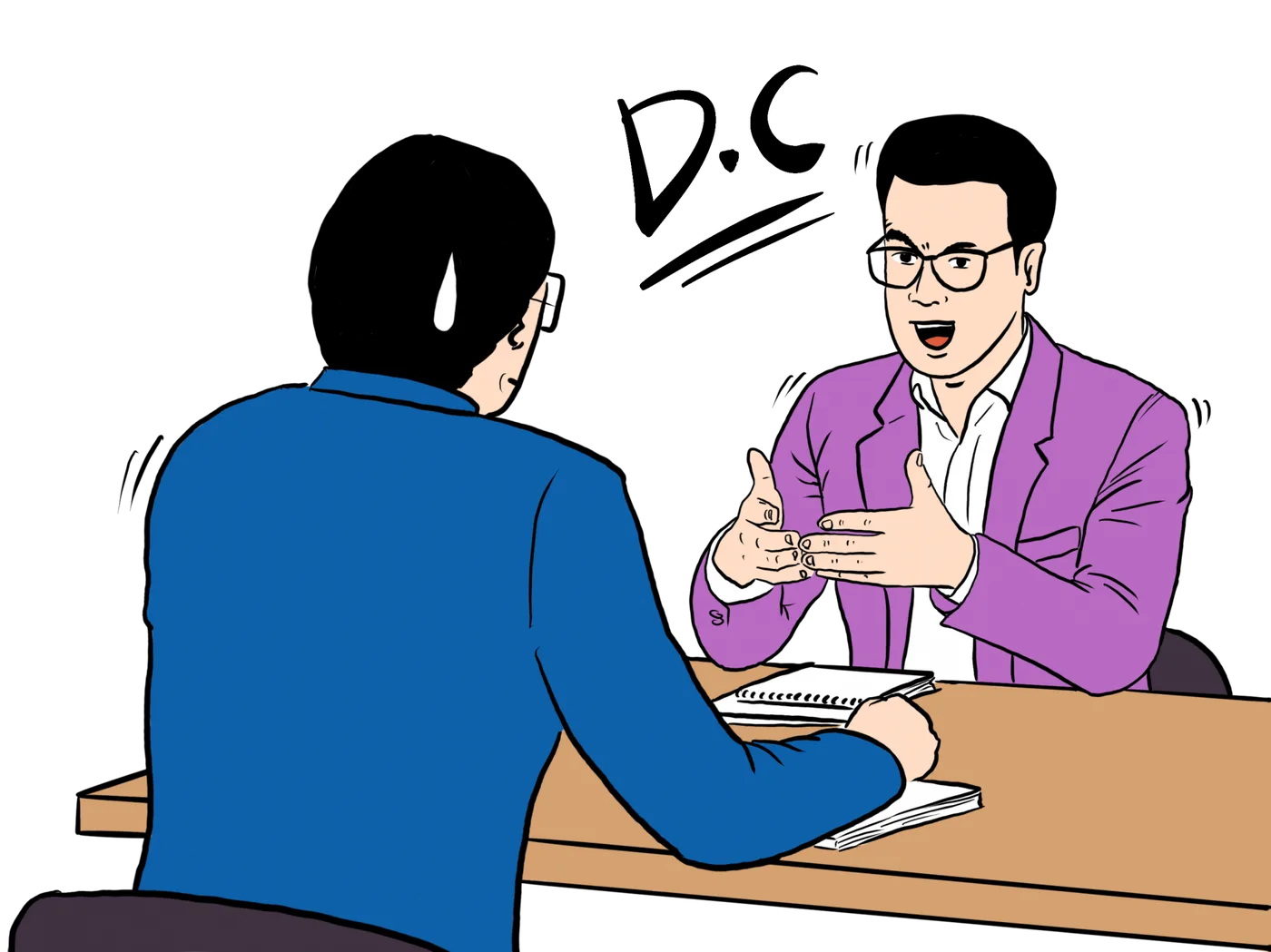
Apple’s purchasing manager keeps pressing for supply price discounts in all sorts of ways. Total iPhone 16 volume is expected to be around 120 million units. Apple says that if you offer an acceptable price, it will guarantee about 70% of the total, or roughly 84 million units, and that depending on the price offered, the current supply split under discussion (Samsung Display 70%, LG Display 20%, BOE Display 10%) could change. Delivering 84 million units at KRW 100,000 (≈ US$75) comes to KRW 8.4 trillion (≈ US$6,284,602,700); at KRW 95,000 (≈ US$71) it is KRW 7.98 trillion (≈ US$5,970,372,600) (KRW 420 billion (≈ US$314,230,100) less); and at KRW 90,000 (≈ US$67) it is KRW 7.56 trillion (≈ US$5,656,142,500) (KRW 840 billion (≈ US$628,460,300) less). An enormous amount of money rides on this price negotiation. Veteran salespeople generally take a volume discount for granted as the cost of securing such a huge order, but that raises a question.
The total value of a product varies with many factors, so is it fair to compare supply prices on the same basis?
That’s right. To keep it simple, let’s sort the value of a B2B product into just five categories: 'basic value,' 'productivity,' 'quality improvement,' 'sales improvement,' and 'relationships.'
1. Basic Value
The most basic requirement is the supply 'spec'. If you can’t meet the 'spec' the customer sets, you won’t even get a chance to quote or run a test. Next comes the 'supply price'. This 'supply price' can vary with the many value factors described below, so you shouldn’t quote a price on the assumption that everything else is equal. Take corporate training instructors as an example: each instructor’s credentials, content, and teaching skills differ in value, so the choice can’t be made on the instructor fee alone. Then there is 'compliance'. In May 2022, production volume of OLED panels for iPhones from the Chinese display maker BOE dropped sharply. BOE, which had struggled to improve its production yield, boldly changed its design without the consent of its customer, Apple, widening the thin-film transistor circuit line width of its OLED panels. That disrupted BOE’s plan to supply tens of millions of display panels. Just as the recent iPhone 15 overheating is suspected to stem from the 3nm-process chip made by TSMC, in a smartphone built from many different parts even a very minor design change can have enormous consequences, so Apple was likely furious. The problem came from ignoring the most basic requirement.
2. Productivity
Even for the same component, you can help a customer cut costs by improving their productivity. A part better suited to an automated production system can reduce labor costs, and one that eases the strain and hassle for production staff can raise hourly output. I’ve been watching a series on Netflix lately.
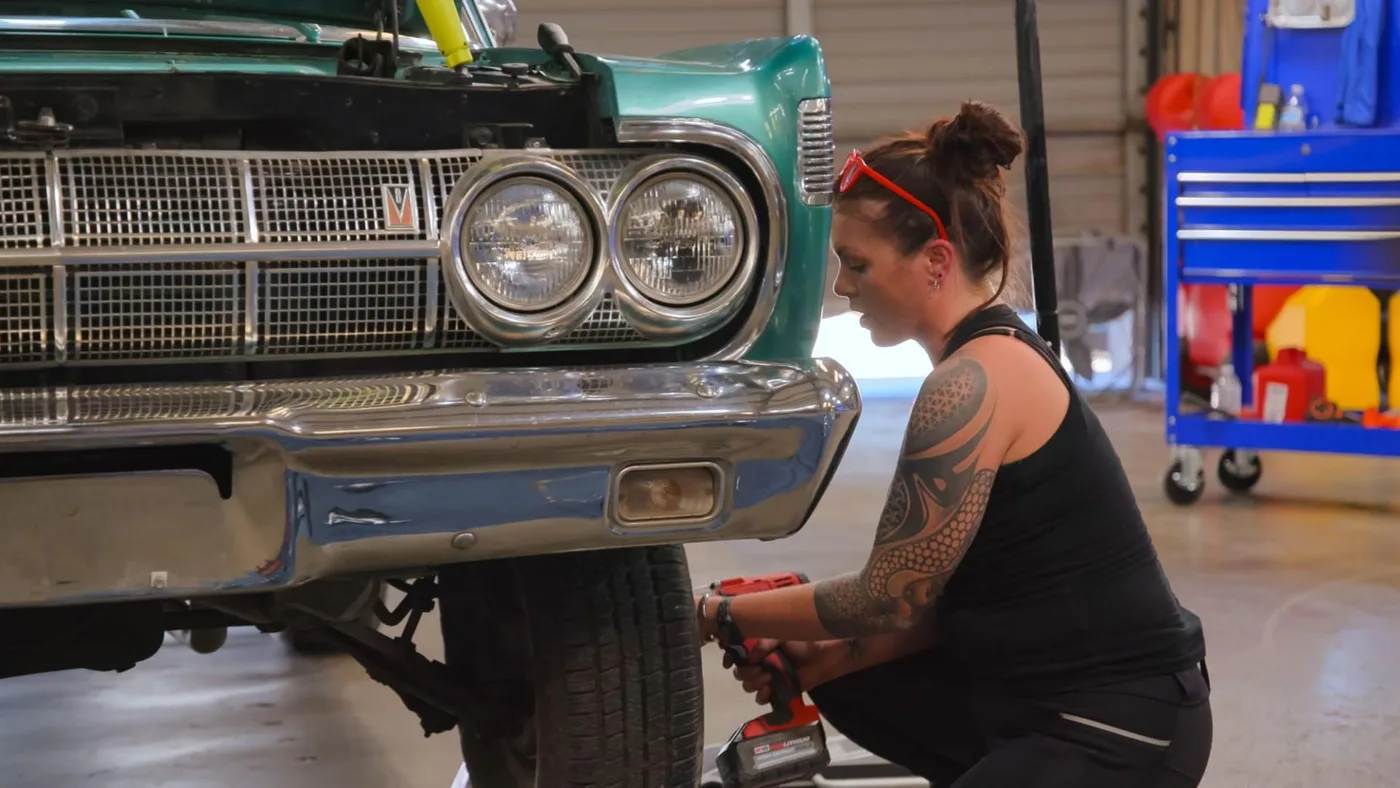
This is a series called TEXMEX, in which a crew buys cheap junk cars in Mexico, brings them to El Paso, Texas, restores them and sells them. Six people handling exterior, interior, engine, sales and operations are celebrating at a party over the total profit of $164,000 they earned in two months, and everyone seems satisfied. But Jamie, who handles the engine and interior, looks unhappy. "Given the hours we put in, this is not a profit. We work seven days a week with no days off, in 100°F-plus heat, with overtime on top of that. I came all the way from home and gave up a lot to do this work, and this profit isn’t enough. So many problems keep coming up, and it’s exhausting and a hassle." Jamie, who has been grinding away with overtime all week on the engine and interior, is in a situation that simply isn’t sustainable. If there were equipment that eased Jamie’s strain and hassle and raised hourly productivity, you could decide whether to buy it by the numbers, comparing the productivity gain against the equipment price and operating costs.
3. Quality improvement
Let’s split quality into lifespan and core performance (quality). Is a longer product lifespan good or bad? If the lifespan is too short, production costs rise, so customers won’t choose the product. What if it is too long? A company that developed a wet-mop cleaner lasting over 15 years stopped production because demand fell. A kitchen knife maker went bankrupt because its carefully made knives lasted more than 10 years. A tablet that works fine for over 10 years can even cut into its own sales. Isn’t finding the point at which quality naturally begins to decline the real know-how of a manufacturer? Core performance (quality) is the Core Value that buyers of a product or service care about most: speed and capacity for a PC, megapixels for a digital camera, taste and cleanliness for a restaurant. So what is the consumer-facing Core Value of a display supplied for smartphones? Apple’s promotion of the recently released iPhone 15 highlights 'Dynamic Island, colors infused throughout, and glass that’s tough in every corner.' There is also a 2010 case, when Apple used LG Display’s AH-IPS (Advanced High pergormance-In-Plane Switching) display in the iPhone 4. The technology was hard to promote, so Apple renamed it with the marketing term Retina, put it front and center, and scored a huge hit. LG’s Retina display greatly improved the iPhone 4’s consumer-facing performance (quality) and delivered value that even boosted sales.
4. Sales improvement
What value must a supplied part deliver to lift the sales of the final product? Let’s narrow it to display modules supplied to smartphones. If a foldable display module is supplied, the smartphone’s 'design' changes, and the new form factor offered to consumers could drive sales. If the display delivers performance such as a refresh rate above 120 frames per second, it gives smartphone gamers 'enjoyment', and sales may rise. Think of Intel: the short 'Intel Inside' jingle in its ads and the sticker on every PC case gave it strong brand awareness among end consumers. If Samsung Display or LG Display likewise appealed to consumers with a B2B brand such as 'LED made by Samsung', it would improve their 'market reputation' and could lift sales. ESG branding that consumers can see also matters these days. If a smartphone maker uses parts from Samsung Display or LG Display, companies that care about the environment, embrace diversity, give back to their communities and run transparent, ethical businesses, its final product can appeal to consumers who value fairness and the environment, and may sell more as a result.
5. Relationships
Let’s limit relationships to B2B vendors, such as suppliers of parts, materials or equipment, and their B2B customers. Supplier A is a domestic company you can reach anytime, so communication is easy. Supplier B beats A on both lifespan and quality, but it is a foreign company, so it is hard to reach and hard to get customized service from. What then? Even at a similar supply price, the customer may prefer Supplier A. But if Supplier B sets up a new communication channel by appointing an industry expert with real expertise as its agent in that country, things can change. And if Supplier B adds a reference, showing it has supplied a top-tier overseas customer reliably, with no quality or delivery problems, the customer may prefer B even at a higher price. Where cultural differences once kept the two sides distant and unfamiliar, a sales-savvy distributor can bridge the gap, strengthen the relationship and deliver even more value. The risk of this approach: relying too heavily on a single distributor or agent weakens your bargaining power with them in the value chain, and if they start acting as a distributor for a competitor, the customer can switch to that competitor quickly and easily. That is why headquarters must keep working steadily to improve its own relationship with the B2B customer (account).
Let’s go back to the opening case and think from the standpoint of Samsung Display’s B2B salesperson. Is Samsung Display’s OLED product equal in value to LG Display’s and BOE Display’s products in every respect? Surely not. Supply cost naturally differs with each supplier’s production technology, know-how and volume. From the customer’s side, add up trust and the relationship between the companies, quality stability, fit with the customer’s systems, delivery, production efficiency, lifespan, consumer-facing quality and reputation. Even if Samsung Display’s final supply price is KRW 10,000 (≈ US$7) per unit higher than BOE’s, its OLED delivers KRW 15,000 (≈ US$11) more in real value per unit. So without any price cut, the customer can still come out ahead (+KRW 5,000 (≈ US$4) per unit). From BOE’s side, its base price would have to be KRW KRW 85,000, (≈ US$64) 15,000 below Samsung Display’s OLED part, and to raise its share aggressively, lower its production costs and secure a reference as an Apple supplier, it might have to bid even lower, even at a loss. Right?
To be continued