The biggest difference between B2B marketing and the B2C marketing most people know is that the customer is an organization, not an individual. Right now, across industries and niches worldwide, B2B vendors supply materials, parts, raw materials, machinery, equipment, software, corporate training, and more to a wide range of clients. If you are new to B2B marketing and sales, you may wonder what types exist. Here are the three most common purchase types in B2B business.
1. Straight Rebuy
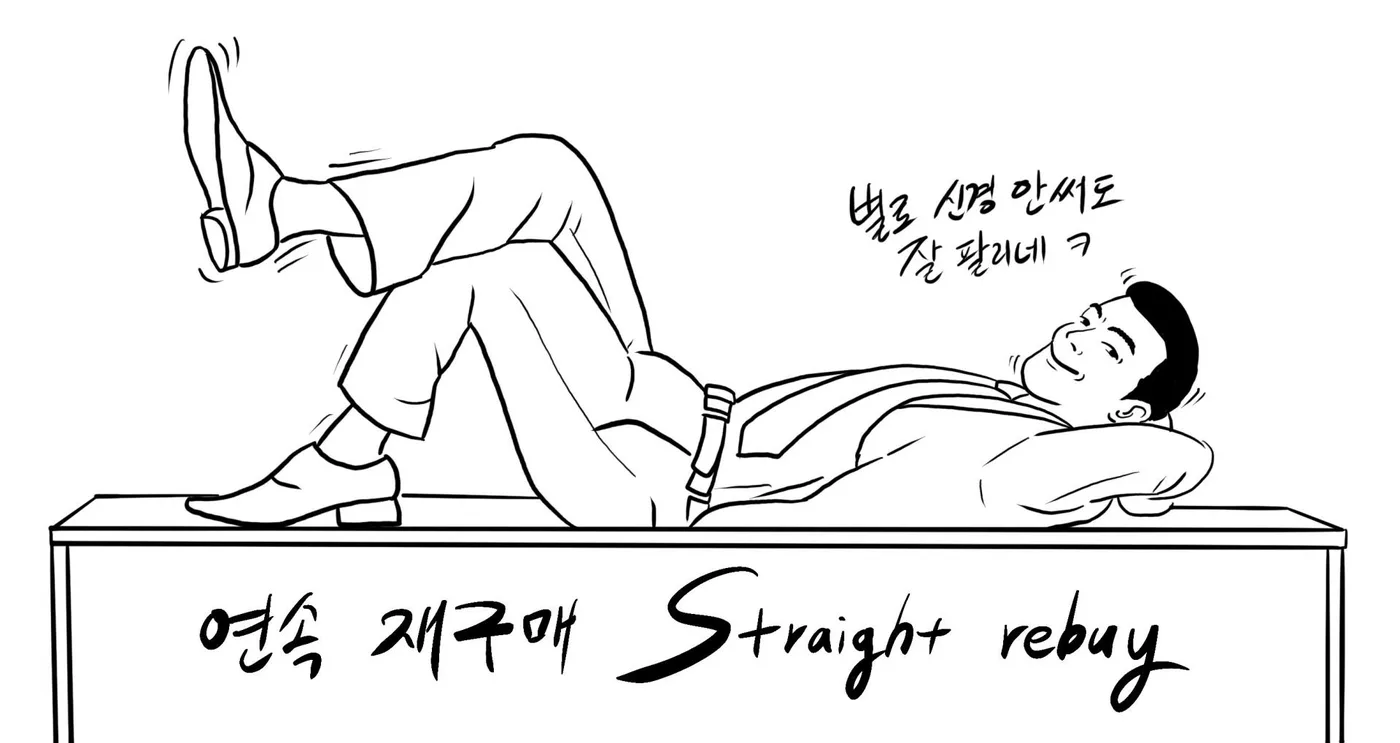
Suppose you supply metal balls to a bearing manufacturer. As a new supplier making your first delivery, you have a lot to consider. You check and verify the diameter, composition, hardness, magnetism, elasticity, friction coefficient, standardization, and compatibility of your product, sign a supply contract, and have an initial batch tested. If it passes, it goes to the mass-production line, and quality is inspected very closely for a period. Delivering 100,000 units once a month builds up a record of 120 deliveries over 10 years. If there were no major problems in that time, the client would likely cut back on, or stop, the constant search for and vetting of new suppliers. In a straight rebuy, the customer buys the same quantity on a regular cycle, whether daily, weekly, or monthly. Specifications and conditions for this type of product stay unchanged for a long time. The client has worked with the supplier for years, and products of consistent quality arrive on schedule. If quality and delivery stay consistent, and you also take the hassle off the client by automating ordering and connecting it to their systems, the client gets both convenience and lower costs, so there is little reason to switch suppliers or add new ones.
Sellers can also feel that such clients don’t need extra effort or time, which makes complacency more likely. Oddly enough, once a supplier gets complacent, problems appear in quality, delivery or service, and a new competitor moves in. So with a good client like this, where both sides can keep earning stable, lasting profit, a supplier should not try to squeeze out maximum profit or cut costs. Instead, assign a capable account manager (sales rep), keep the quality of products and services at the highest level, and keep raising the barrier to entry. If you are the one trying to break in, wait for the incumbent to grow complacent and leave gaps in quality, delivery or after-sales service, then move in the moment they appear. This is the type of purchase where relatively simple items, such as bolts, nuts and fasteners, are bought repeatedly and routinely, with no new information or requests.
2. Modified Rebuy

A modified rebuy is not a repeat purchase of the same product or service, as in a straight rebuy. Instead, the order is revised in various ways from time to time. Take company vehicles as an example. Depending on economic conditions, the vehicles employees use can change. The manufacturer, vehicle type, buy or lease, usage period, fuel type, contract cycle and purpose by role can all shift. That makes things a bit more complicated than a straight rebuy. Now take laptops supplied to a company. A client that bought 250 identical Korean-made laptops at once and used them for three years may see its needs change. Say 100 units go to construction sites, so the client will pay more for sturdier models to use for five years. Another 20 go to developers who need high-performance machines for three years. 50 go to staff who need fast video production and editing, also for three years. And 80 are standard office models on a five-year rental. Management starts to get complicated. The timing of outreach differs by laptop type, the specs you need to propose vary over time, and needs become more granular by use case. You also need detailed plans for irregular upgrades and after-sales service.
Physical products such as commercial vehicles, trucks, heavy equipment, machinery and computers are typical examples of the modified rebuy. Corporate training and consulting also fall under this type. Until the early 2010s, companies ran largely unchanged two-night, three-day programs for dozens of people at training centers. Today, they break employee needs into finer segments and keep modifying the format and content to find the best fit. Corporate training providers now need to deliver customized services quickly and fine-tune them based on deep experience. Purchasing projects also often start unplanned, on the orders of top management. Buyers have no need to keep going back to the same vendor, either, and sometimes deliberately intensify competition to raise quality and cut costs. For this reason, account managers and sales reps must contact existing clients regularly, identify their pain points and needs, and respond in real time.
3. New Task (Custom Product)
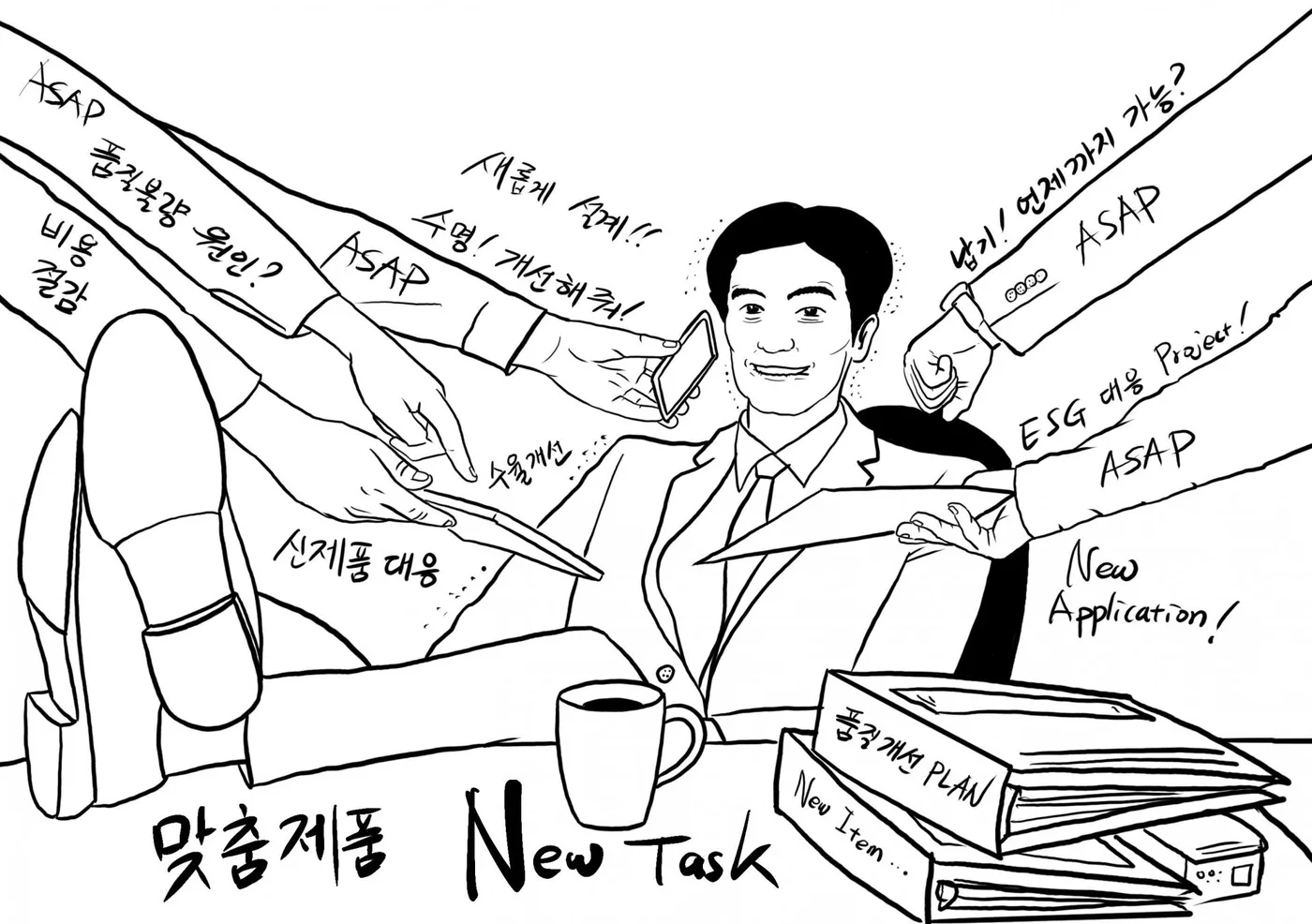
The industries where I worked in marketing and sales, such as industrial tools and materials, fit this type. In a typical new-task purchase, the corporate buyer sends an RFP (Request for Proposal) when first buying a product to get proposals and quotes, then runs multiple rounds of testing, which takes a lot of effort and time from both vendor and client. Suppose a tool maker receives an RFP for industrial tools with better cutting power and longer life at a lower purchase cost. It might propose a tool made by mixing tough, hard-to-break diamond powder with a new metal powder, at a somewhat higher price, and argue that the longer life lowers the tool cost per hour. Vendors that supply materials, parts and equipment to fast-changing industries such as semiconductors, electric vehicles, robotics, AI and smartphones worry about whether their products and services will perform as expected at customer sites full of unpredictable factors.
The products your clients make are, in most cases, strategically and financially critical. If you deliver the same product made under the same conditions and a completely different type of quality problem appears, you may have to work through the contributing factors with the client, and if you lack experience and knowledge, you may end up taking the blame. Under a straight rebuy, buyers only try new purchase conditions when they launch a new product or service. But to make products for diverse applications and customers at high yield with guaranteed reliability, as in a semiconductor foundry, every single process needs countless customized products (new tasks), and vendors of materials, parts, equipment and tools must be asked for customization and tuning to fit each situation. The new task is the hardest of the three B2B purchase types, with the highest barrier to entry, because you cannot get in quickly or easily. Many vendors have tried and failed after looking only at easy-to-see material properties and applications.
To be continued