3) The client contact
In B2B business, the traits and tendencies of the client’s contact person clearly affect the vendor. They have a major influence on how a business relationship starts, how a deal closes, and how the relationship is maintained and grown. Beyond cultural factors, authority and responsibility, communication style, decision-making style, and attitude toward change can all shift the speed, flow, and intensity of a deal. Let’s look at each in detail.
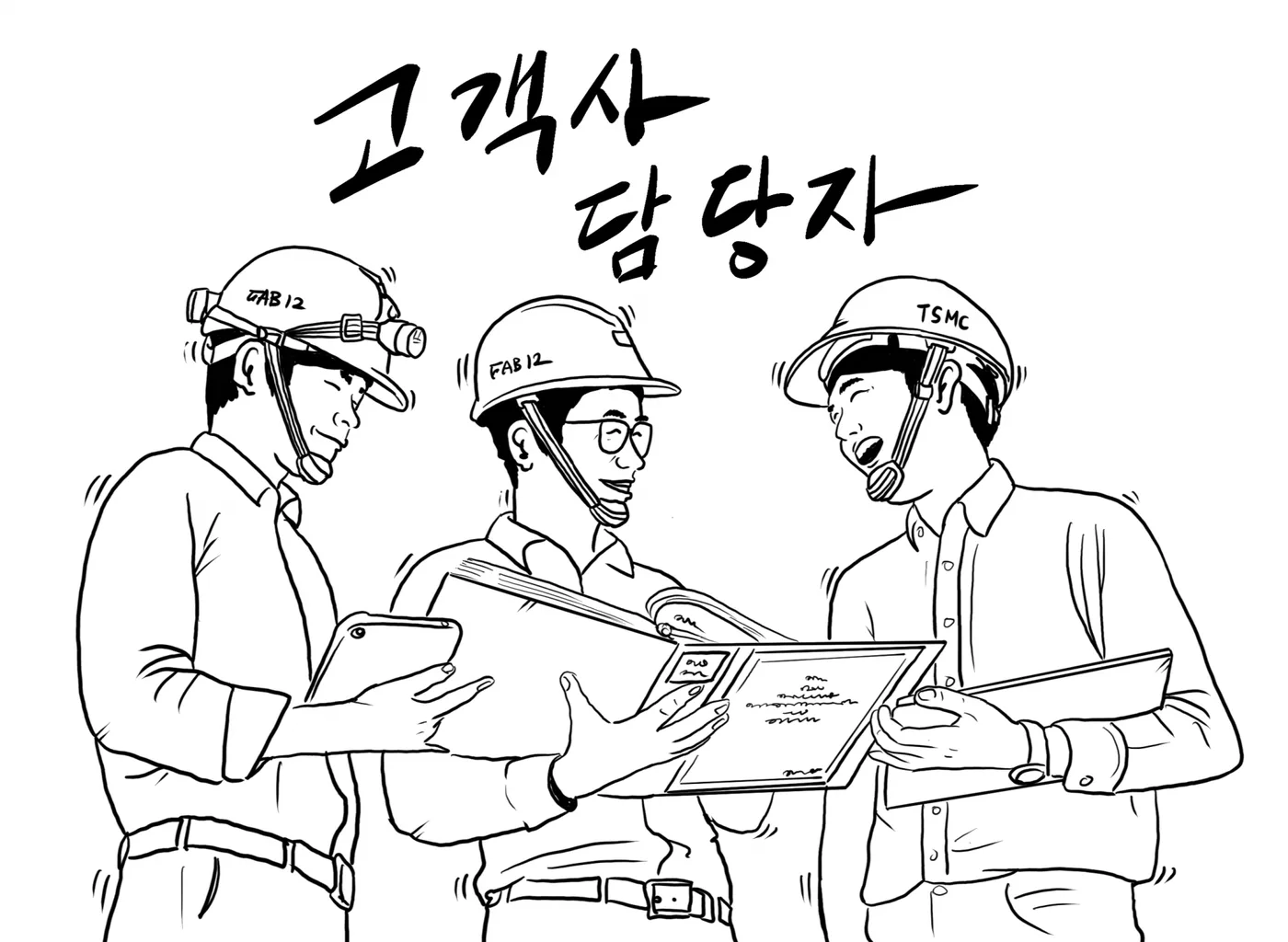
① Authority, status, and title
More than 20 years ago, when I was a sales rookie, I started new-business sales at a major corporation. I found out that the client’s purchasing manager, three or four years older than me, was an alumnus of my high school. Using the company’s sales budget, we had meals and drinks together and built a friendship. He said, "Just trust me. I’ll make sure you get a chance, run the test successfully, and get you onto the mass-production line. We’re family, aren’t we?" I invested a great deal of time and money in the effort, but the project failed. I never even got a chance to test. My senior, a manager-level contact, simply had no decision-making authority. A client contact’s job title determines the kind and scope of decisions they can make. For example, senior managers and executives can make major decisions such as signing contracts, approving budgets, and forming strategic partnerships, while lower-level staff typically have authority only over routine operational decisions and small purchases. A higher title doesn’t guarantee a fast decision, either. Decisions often require consultation with many stakeholders, which can slow things down considerably, and the real influence of on-the-ground staff may be stronger. A vendor’s sales rep must take this into account. There is always someone whose internal influence exceeds their visible authority, rank, or title. If you win that person over, they can sway higher-level decision makers, users, and others in the buying center in your favor.
② Nationality and background
In 2007, during a meeting with an executive on TSMC’s purchasing team, I heard a remark that surprised me: “I don’t like Korea.” At first I thought it was a joke, but he meant it. Born in the early 1960s, the executive was in his late 40s at the time, and he vividly remembered Korea severing diplomatic relations with Taiwan in 1992. Many countries around the world cut ties with Taiwan and established relations with China back then, yet it is true that many Taiwanese feel particularly hurt by Korea. I was surprised to hear that he disliked Korea, but I also felt relieved. I stopped leading the sales effort myself, put the Taiwanese sales representative at our distributor in front, and shifted to a supporting role behind the scenes. It becomes easier to understand when you consider China’s guanxi (關係) culture, which is even stronger than the regional, school, and family ties we know in Korea. It was only one small example, but nationality and origin are awkward to mention openly, yet they clearly have an influence. They show up in many forms: business practices and etiquette, cultural differences and communication styles, language barriers, understanding of the market, decision-making styles, and understanding of laws and regulations. Deciding which sales representative to assign, senior or junior, based on the client contact’s nationality and background is one of the important choices a B2B vendor makes.
③ Gender
In 2010, two senior executives from one of our Norwegian client companies visited Korea to audit our factory. The plant where I worked was in Ulsan, so I had planned an itinerary around Korean food and an evening of drinks. When both executives turned out to be women, I was stunned. It is hard to tell a Norwegian person’s gender from their name, and I had prepared everything assuming they would be men. I hurriedly overhauled the plan. I had a flower arrangement and a card with a welcome message placed in each hotel room. After dinner, we had just a light cocktail at an atmospheric live jazz cafe. I set aside one day of the trip for an excursion to Gyeongju so they could experience Korean culture, and on the day of their departure I even prepared gifts for their families. Quite a few things shift with gender. Compared with men, who tend to communicate competitively and directly, women often communicate in a more collaborative and inclusive style, pay closer attention to business details, and differ in business etiquette and in how they build relationships. The share of women among client contacts is growing faster in developed countries than in developing ones, and the same is true in Korea. Gender diversity is becoming an increasingly important topic in the business world, and understanding it and responding appropriately is becoming a key factor in B2B success.
④ Age
The biggest difference by client contact age is probably communication style. We have seen firsthand that channels and methods change with the age of the corporate training manager. Even among those who reach out by clicking an ad, the mix of anonymous chat, email, and phone varies by age. So do meeting formats, email habits, messenger and phone use, and preferred presentation styles. Older managers tend to decide based on experience and seek stability, while younger managers may be more innovative and more willing to take risks. This also affects how readily they adopt new technology. Younger managers tend to be more attuned to the latest market trends and consumer preferences. It is not absolute, but older managers may resist change and be less flexible, while younger ones may embrace change more easily and adapt faster. Values, temperaments, and preferred styles can also differ by age when you build relationships. Understanding these differences helps you build relationships effectively: how and where to build personal rapport, how and where to build formal relationships, message length and frequency, and views on careers and work. In industries where contacts turn over quickly from one generation to the next, prepare a strategy and respond accordingly.
⑤ Education level
A client contact’s level of education relates to how they understand and perceive information. The sales rep needs to adjust how they present the value proposition to match the contact’s background and training. Contacts with a technical background or specialized training understand complex technical content better, while others may not follow complicated material, or may pretend to. The sales rep must find simpler ways to explain things. Be careful with advanced vocabulary and specialized terms. Dress, appearance, and way of speaking should also adapt so the client feels at ease. Contacts also differ in their ability to solve complex problems, so help those with weaker problem-solving skills in a way that doesn’t make them feel bad. Highly educated contacts generally prefer decisions based on data and analysis, and may have higher expectations and more specific requirements. To meet them, provide specific, detailed information and emphasize the advanced functions and features of your product or service. They may also be more open to new ideas and innovation, which matters when you are introducing a new product or service.
⑥ Character and personality
Readers, do you know your own MBTI type? When I was in sales, I sometimes imagined how great it would be to know a new customer’s MBTI type before meeting them. I even imagined stats floating above their heads like characters in an RPG: vitality, intelligence, magic power, and so on. You can’t ask customers to take an MBTI test, but you can estimate their Social Style from their communication patterns and behavior. The four types are: Analytical, who communicate clearly and systematically using specific, accurate information; Driver, who give direct, essential information and decide quickly; Expressive, who are enthusiastic and build strong personal relationships; and Amiable, who communicate in a warm, friendly way and show personal interest and care. By understanding the client contact’s Social Style and tailoring your approach to it, you can build effective sales strategies and tactics. A contact’s personality shapes their communication style, decision-making style, relationship building, and negotiation approach. Negotiation, in particular, feels very different depending on the contact’s personality. Some take a hard line and force their position, while others look flexibly for a compromise while still protecting their own interests.
⑦ Emotional state
In any company, some people get their proposals approved easily, while others get raised voices and a scolding every time they submit one. The content isn’t very different, so why the gap? I think it comes down to who submits, where, when, and under what circumstances. People who sense the right moment and get approval quickly when the boss is in a good mood understand that the other person’s emotional state strongly affects whether a project goes ahead. A customer who is stressed or angry may find it hard to take in information or talk logically, and tends to avoid risk at all costs and become defensive. A positive mood makes people more relaxed, flexible, and cooperative at the negotiating table. Negative emotions can sometimes make a customer’s evaluation more critical or strict. Know the customer’s name, preferences, interests, and purchase history so you can personalize your approach. Listen carefully, communicate honestly and transparently, and show courtesy and respect. It is best to meet or contact the customer when they are in a good mood, but if you find they are in a negative state, having a strategy to manage and shift that mood is also an important business skill.
⑧ Empathy
It goes without saying that empathy is an essential skill for a vendor’s sales representative. It lets them feel the customer’s pain and arrive at effective solutions more easily. The empathy of the client’s contact person can also have a major impact on the success of the business relationship and the deal. Such a contact can communicate more effectively between the vendor and the end user (the final customer) and resolve problems and conflicts. Problems come up constantly in business. A contact with strong empathy understands the supplier’s position, which reduces misunderstandings. In conflicts, they understand the other side’s position and move problem-solving forward more actively and effectively. They also better understand the needs and concerns of partners up and down the value chain, and can make decisions based on mutual trust. If a client’s contact has low empathy, respond with patience and composure. Communicate with clear, specific information and with objective data and facts, identify the other party’s requirements and goals precisely, and address them directly. This is where the sales representative’s questioning skill is needed. You have to frame and pose questions effectively to draw out the other person’s thoughts and information. It is better to communicate based on facts and logic rather than emotion.
⑨ Persuasiveness
For a vendor’s sales representative to work with the client’s purchasing contact and win over other client departments (for example, product development, advanced development, process engineering, manufacturing, and quality), the persuasiveness of the client’s purchasing contact matters. A persuasive contact can speed up the internal decision-making process. They can persuade other stakeholders and decision-makers to decide faster. A persuasive client contact can exert influence within their own organization, which can shape a project’s direction and strategic decisions. Such a contact can use that ability in ways that help the vendor, but if the vendor harms their interests, they can just as readily act as a gatekeeper who gets in the vendor’s way. A contact with strong influence and persuasiveness should always be brought in as an ally of the sales representative. They can play a key role in resolving problems and crises, and they are also important for building a long-term business relationship. When a new supplier is entering, a persuasive contact plays a key role in winning internal support. Once you reach the negotiation stage, they may get more out of the vendor, but it is best to think of that as the natural reward for the positive influence they provide.
⑩ Appetite for risk
A contact person with a spirit of adventure is more likely to be open to new and innovative products or services. One without it is unlikely to try new solutions outside traditional methods. For an employee who is not the company’s owner, taking risks and trying something new is not easy. To instill a sense of adventure in employees and encourage innovative thinking, it is important to create a safe environment and build a culture that encourages creative risk-taking. Creative thinking and adventurousness can be nurtured by treating failure as a learning opportunity, creating an environment where people can try new ideas without fear of failure, granting a certain level of autonomy, and respecting their ideas and opinions. Rewards and recognition would strengthen motivation as well. Seventeen years ago, when I was selling in Taiwan to TSMC, the buyer on the purchasing team received a bonus of 1% of the cost savings he achieved. Because of that incentive, he took very aggressive risks and actively tried to adopt the tools from the small Korean company I worked for. Rather than fearing change, he saw it as an opportunity and tried to lead it. To win new customers in a new market, you need client contacts with a spirit of adventure.
To be continued