Buyer Benefit Example: Insulated Windows for a Japanese Hot Spring Inn
④ Buyer benefits in B2B marketing
ⓐ What buyer benefit means
Let me give one example. In Japan, many elderly people die suddenly in winter from heat shock. The main cause is a sharp rise or fall in blood pressure from rapid temperature changes, leading to fainting, myocardial infarction, or cerebral infarction. If you travel to Japan in winter, you may be startled by how cold it is indoors. In cold regions such as Harbin, China, buildings are well insulated and heated, so people stay warm. But apart from northern areas like Hokkaido, Japan generally has a milder climate than the Korean Peninsula, so demand for winter insulation is said to be low. Wood is the main building material, and many buildings were constructed when building regulations and standards were less strict, so insulation and energy efficiency received little attention. Because insulation is expensive, builders mostly use aluminum, which is easy to work with, but it conducts heat readily and insulates very poorly.
Suppose you want to sell Window A in the Japanese market. It insulates very well and costs slightly more to supply than existing aluminum windows. Which customers should you target? You would first need to understand Japan's regional climate conditions and segment customers by region. There would be many kinds of customers: people building new homes, people renovating existing homes, builders, and building material distributors. 'Energy savings' and 'cost efficiency' are good for the homeowners or tenants who live there, but the cartel that controls the existing distribution network will resist change. If it means lower profit, more hassle, and more time, why would they recommend new windows to consumers?
Then why not target the B2B or B2G market? Your prospects could include architecture and design firms looking for high-quality building materials; construction material distributors and wholesalers who want to create new demand with new windows; real estate developers who want highly insulated windows in new residential and commercial projects; remodeling and renovation contractors who modernize old buildings or improve their function; project sponsors focused on eco-friendly, sustainable construction; and government or public agencies that value energy savings and sustainability. If you target the building owners behind remodeling and renovation contractors, which types of buildings make sense? 'Historic buildings' that must balance preservation and modernization; 'residential buildings' such as houses and apartments, where the goals are better energy efficiency and a safer, more comfortable living environment; 'commercial buildings' such as offices, retail stores, and lodging, where the goals are to improve the business image and cut operating costs at the same time; 'educational buildings' such as schools, universities, and research institutes, which need continuous upgrades to improve the learning environment; and 'medical facilities' such as hospitals, clinics, and nursing homes, where the comfort and health of patients and staff come first.
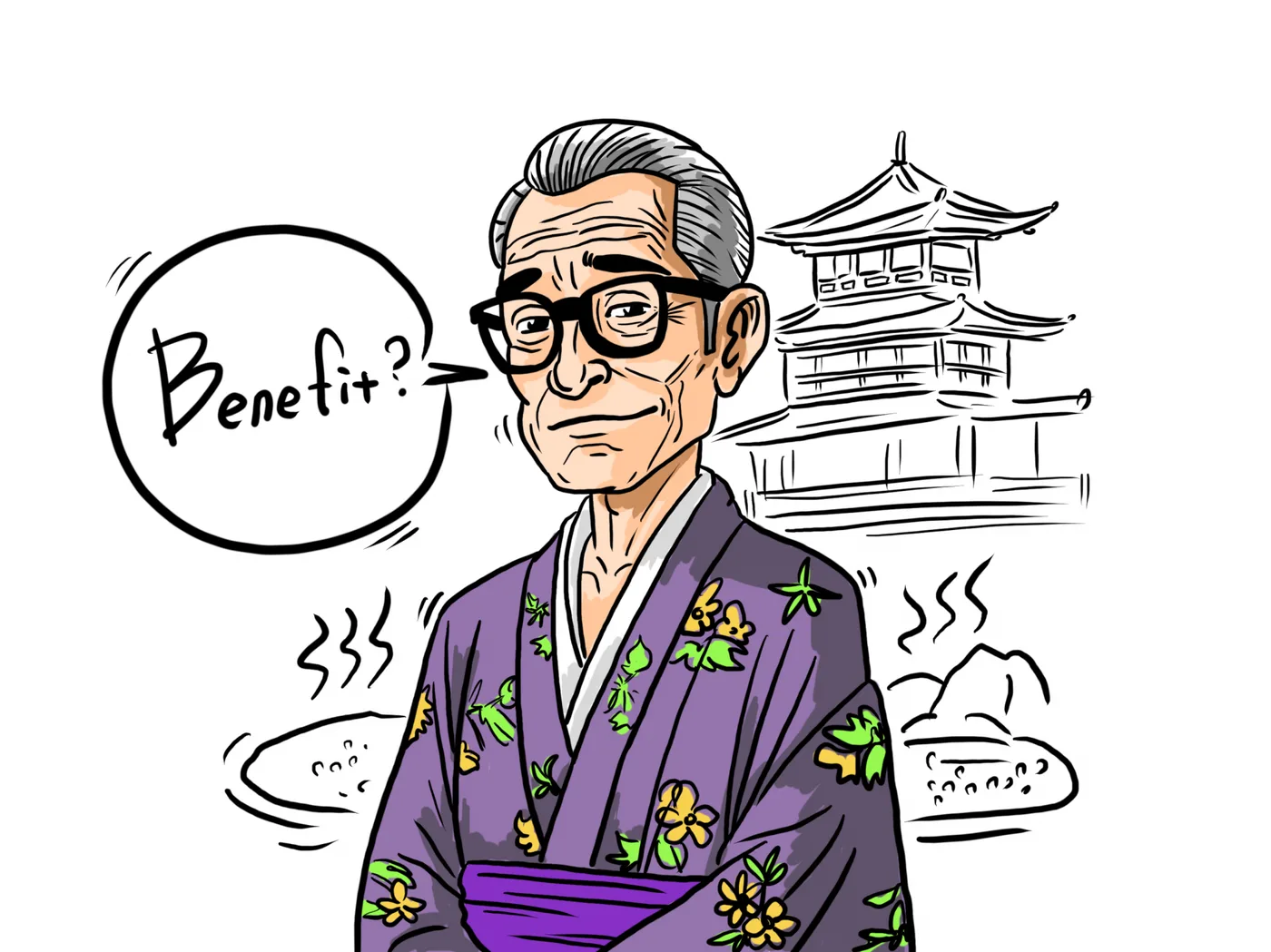
As Japan's population keeps aging, what if sudden deaths from Heat Shock during winter hot spring trips start to surge? That would open a new opportunity for us. A high-end hot spring inn can use highly insulated windows to improve its business image faster than competitors and cut operating costs. To reach these B2B customers and explain your strengths, you first have to get a foot in the door. Start by providing hot spring lodgings in Japan with information on the dangers of Heat Shock and why insulated windows matter for prevention. If the decision-makers at your target companies are older, hold in-person seminars and workshops that explain, with real cases, how insulated windows can improve the safety and comfort of elderly hot spring guests. At the same time, work with regional hot spring associations or tourism associations that the lodgings belong to, and develop association-level recommendations or support programs together. You also need to develop financing options such as installment plans, low-interest loans, and government subsidies to reduce the upfront cost burden. You can also assess each lodging's current insulation and offer specific improvement consulting free of charge, and propose insulated window solutions tailored to each property's characteristics and needs. What you need for all of this is Buyer Benefit analysis in B2B marketing and sales.
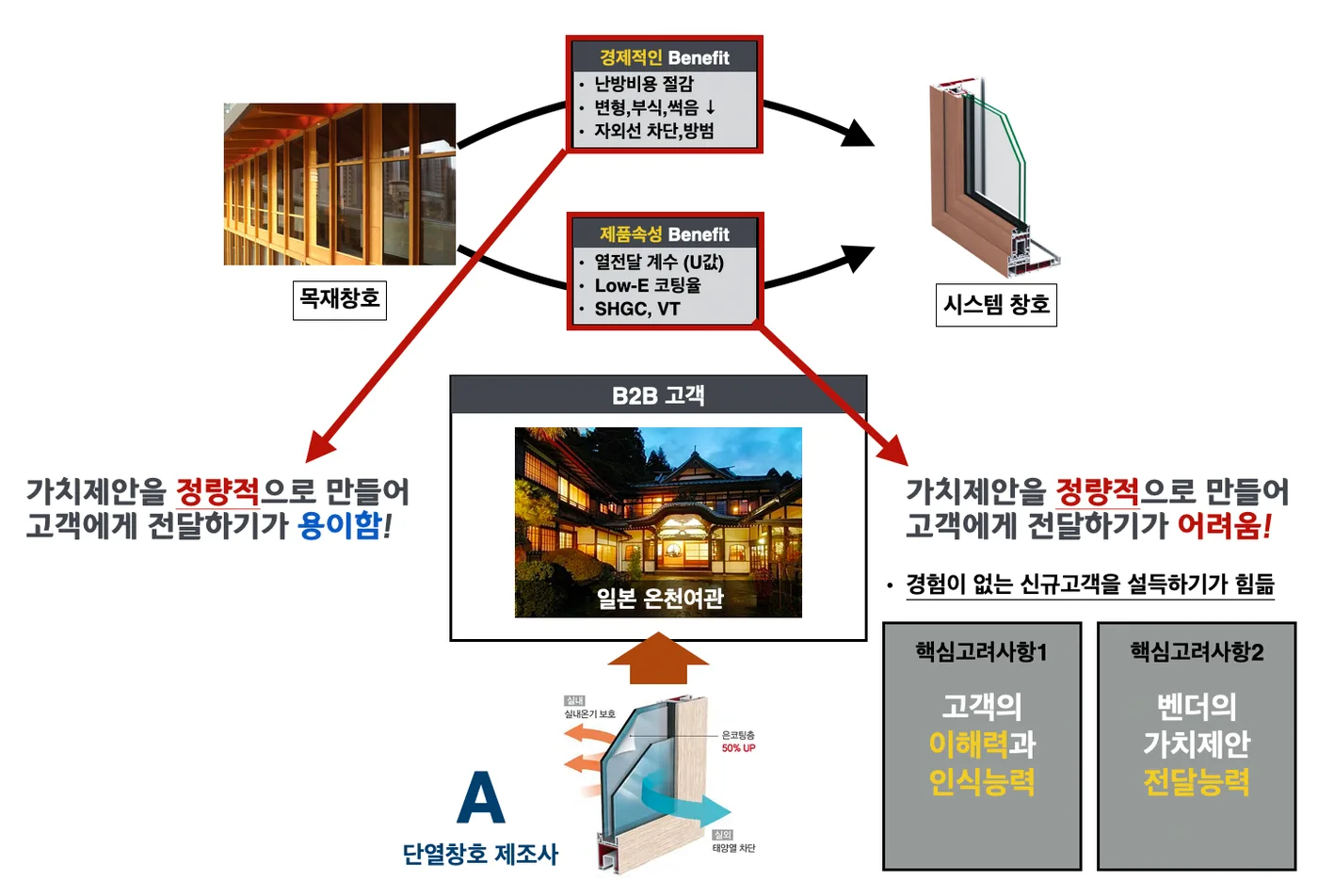
When you meet the hot spring inn's decision-maker and present your value proposition, the benefit that is easiest to quantify and communicate is called the 'economic benefit.' Let's pitch it as 'heating cost savings.' "Your inn's average heating bill over the three winter months is JPY 1 million per month. Installing our insulated windows saves 30% in energy through reduced heat loss. That is a saving of JPY 300,000 per month. Over three months you save JPY 900,000, and with JPY 200,000 saved each month over the remaining nine months, you recover the window replacement cost of over JPY 2 million in just nine months, less than a year after installation. Up to 30% of the installation cost can be covered by government subsidies. We will handle the paperwork for you."
Next, let's compare against the aluminum and wood windows currently in use on 'deformation rate, corrosion, and rot.' "Aluminum is a lightweight, high-strength material (praise first). But its insulation performance is low, and it inevitably deforms from expansion and contraction with temperature changes. In a hot spring environment, corrosion can also occur. Even without counting energy savings, aluminum windows last 20-30 years on average, while UPVC insulated windows last 30-40 years or more. Over the long run, that clearly reduces the financial burden of replacement costs. Wood gives a truly natural look and a certain level of insulation (praise first). But in hot spring areas, high humidity and temperature changes cause frequent expansion and contraction, so the deformation rate is very high. Over time it can rot. Beyond installation costs, you need maintenance costs such as regular preservative treatment and repainting, and rotted parts must be replaced and repaired again and again. Wood windows last 15-20 years on average, while UPVC insulated windows last 30-40 years or more. In the long run, our windows are a guaranteed win. Worried about the exterior design? We can reproduce the texture and color of wood almost exactly. Don't worry."
Next, pitch the stronger ‘UV protection’ compared with existing windows. “The glass in our windows has especially strong UV-blocking performance, which protects tourists’ skin health and helps prevent long-term skin damage and related diseases. You can even use this to promote your hot spring inn. This feature matters a great deal to families and to travelers who value health and relaxation. By effectively blocking strong UV rays, it also softens the light indoors, reducing eye strain and creating a comfortable interior. After installation, you will notice a clear difference in your guest satisfaction surveys. Satisfied guests are more likely to return, and their positive reviews and word of mouth help you win new customers. Offering a special discount or an extra service to guests who write reviews is also a good idea. This is especially effective in summer and spring, when the sun is strong.”
You can also pitch stronger ‘security’ than existing wooden windows. “Our windows are made from high-strength and composite materials. They are much sturdier than conventional wooden windows and effectively stop physical break-ins from outside. (It helps to show this in a YouTube video.) This safety gives tourists a more secure place to stay, which raises guest satisfaction and repeat visits. If you add extra security features such as multi-point locks and impact sensors, you won’t need a separate security system. That can greatly cut your overall installation and maintenance costs. We also offer app-based and web-based security solutions. They are easy to install, connect, and manage, so just let us know if you need them. They are far cheaper and safer.”
A value proposition that is hard to quantify and hard to get across to customers is called a ‘product attribute benefit.’ It is difficult to persuade new customers who have little experience with the product. Most customers feel they don’t need to know about this kind of thing. The key considerations here are whether the vendor’s salesperson can explain it clearly and simply, and whether the customer has enough understanding and awareness to grasp it. Let’s look at an example.
Let's start with the 'heat transfer coefficient.' "The structural compactness of this window maximizes resistance to the flow of heat, helping minimize thermal exchange with the outside environment. This is achieved through laminated multilayer composite materials and advanced thermal insulation technology, with remarkable efficiency in suppressing thermal transmittance. The heat transfer coefficient of this window system, the U-value, is an index that quantifies the ratio between heat flow rate and temperature gradient at thermodynamic equilibrium. Moreover, optimizing the thermal performance of this window also improves the environmental indicators of sustainable building operation. By reducing greenhouse gas emissions and improving energy efficiency, it eases the burden on the global environment and raises the likelihood of earning green building certification."
What if you pitched it with the 'Low-E coating rate'? "The Low-Emissivity coating technology built into this window system takes an innovative approach that dramatically reduces emissivity, the key parameter of thermal radiation. It is achieved by nanometer-scale layering of metal oxide films finely tuned for optical and thermodynamic properties, transmitting as much of the visible band of the solar spectrum as possible while significantly suppressing thermal radiation in the infrared band. Low-emissivity coating plays an important dual role in thermal exchange. It optimizes solar heat gain indoors while minimizing the release of indoor heat energy to the outside, maximizing energy efficiency and helping reduce greenhouse gas emissions. In the process, the window system precisely regulates indoor-outdoor heat exchange at thermodynamic equilibrium, minimizing heating and cooling loads. The technology builds on the latest research in nanotechnology and materials science, with a particular focus on optimizing the interaction between optical properties and heat transfer characteristics."
What if you pitched it with 'SHGC and VT' values? "SHGC (Solar Heat Gain Coefficient) quantifies the proportion of solar radiation that passes through a window. This window takes a highly technical approach that regulates the absorption of infrared thermal energy from the solar spectrum and its transfer indoors. By reducing the transmittance of radiant heat, it controls the main cause of rising indoor temperatures and lowers dependence on energy consumption. The window system focuses on optimizing solar energy gain while minimizing thermodynamic inefficiency, contributing to a sustainable indoor environment. VT (Visible Transmittance) indicates the proportion of visible light passing through a window. Designed around the interplay between optical transparency and thermal efficiency, this window maximizes the natural light entering the interior. This enriches the optical texture of indoor spaces, improves visual comfort and health, and reduces reliance on artificial lighting. By regulating the amount of light, the window system creates optical balance in the indoor environment, which plays an important role in improving the visual experience of interior spaces."
If the owner of a high-end Japanese hot spring inn is an older man, you are far better off showing easy-to-grasp benefits in numbers, with cost savings and installation costs quantified, than explaining 'product attribute benefits' in technical specs that are hard to follow.
To be continued