③ Interest costs
Do you know Doosan Infracore? Founded in 1937 under Japanese colonial rule, Joseon Machinery Works supplied military equipment to the Japanese army. After liberation it operated as a state-owned enterprise, and in 1963 it was renamed Korea Machinery Industry. In 1976 it was acquired by Daewoo Group and merged with Daewoo Machinery to become Daewoo Heavy Industries. In 2005 it was acquired by Doosan Heavy Industries and renamed Doosan Infracore. After the 1991 Nakdong River phenol spill pushed it to the brink, the Doosan Group shifted its business structure from a B2C focus, with OB Beer and Coca-Cola, to a B2B focus. In 2007 it acquired Bobcat, the U.S. construction equipment maker known for excavators, forklifts, compressors, and generators, along with two other companies, for about KRW 5 (≈ US$1) trillion, the largest sum in Korean corporate history. The acquired companies had annual sales of USD 2.6 billion and operating profit of USD 370 million, so at first glance the price seemed reasonable.
The problem was timing. Just as the KRW 5 trillion (≈ US$3,740,835,000) M&A closed at the end of 2007, the subprime mortgage crisis hit and the financial crisis arrived. Because the acquisition was financed with USD 3.9 billion in borrowing, annual interest costs alone came to nearly KRW 300 (≈ US$1) billion, more than operating profit, and total borrowings swelled more than fivefold, from KRW 1.3 trillion (≈ US$972,617,100) before the acquisition to KRW 7 trillion (≈ US$5,237,168,900). From 2011, three years after the deal, a tailwind in the U.S. construction market began to revive Doosan Infracore and Doosan Bobcat, but a wave of unsold apartments and commercial buildings built by Doosan Engineering & Construction brought roughly KRW 3 trillion (≈ US$2,244,501,000) in losses over ten years and dealt a fatal blow to the Doosan Group. In 2020, Hyundai Heavy Industries acquired the company and ran it as Hyundai Doosan Infracore, then renamed it HD Hyundai Infracore in 2023.
Doosan Engineering & Construction, acquired by the Doosan Group in 2004, and Doosan Infracore, acquired in 2007, went into restructuring because of poorly timed acquisitions and failed market analysis. It is a classic case of a company hit hard by the enormous funds it borrowed at the worst possible time and the resulting interest costs. High interest costs reduce net income and hurt credit ratings, weakening financial health and leaving too little money for R&D, market expansion, and investment, which naturally harms B2B suppliers whose customer is that company.
④ Technology Change Cycles
In the early 2000s, TVs and monitors were rapidly shifting from large, heavy CRT tubes to thin, light PDP and LCD displays. In 2004, the Shanghai, China plant of Asahi Glass, the giant Japanese glass maker I was in charge of at the time, produced glass for CRT tubes and supplied it to low-cost TV and monitor makers. With the technology cycle shifting quickly to LCD, Asahi Glass built a new LCD glass substrate plant in Gumi, Korea and scaled back CRT glass production in China, and I remember seeing firsthand how sales of the industrial tools supplied to that plant dropped sharply.
Do you remember the periods of sudden technological change? For me, they are 1997, 2009, and 2023. In early 1997, after finishing 26 months of military service, I was preparing to return to university and attending English and Japanese conversation classes. The floor below was an internet cafe. I spent hours at a computer, browsing mostly American websites with Netscape, then the standard web browser, and I was thrilled. I was amazed that anyone, anywhere in the world, could communicate as long as they had an internet connection. Internet cafes soon turned into PC bangs, and PCs and high-speed internet changed my daily life profoundly. Twelve years later, in early 2009, I finished an overseas posting and changed jobs. Seeing that company issue the Galaxy Omnia to its executives was my first encounter with a smartphone. At the second company I joined, in late 2010, I was issued an iPhone 4. The angular metal body, the Retina display, and the wide range of apps I could freely download from the App Store gave me a whole new level of user experience. A moving internet! I felt in my bones that the true mobile era had arrived. Then, thirteen years later, came the shock of encountering ChatGPT in 2023. It was a historic moment when artificial intelligence at enormous scale became easy to use even for ordinary people, not just IT experts. It will probably change human society in ways that dwarf the internet and the smartphone. Let's look at some companies that failed to respond properly to the 'technology change cycle.'
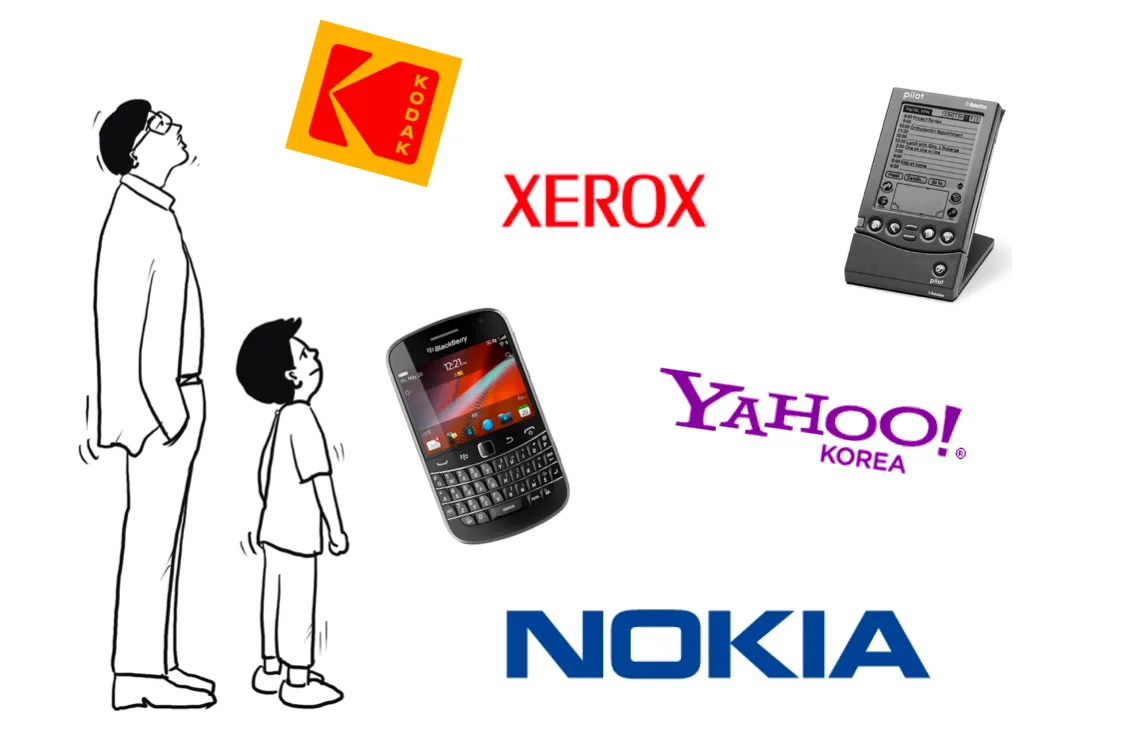
What image comes to mind when you hear Kodak? Some people even take it for a fashion brand like Discovery. Founded in 1888, Eastman Kodak dominated the film industry with the world's first portable camera, convenient printing methods, and new film formats, and it smoothly navigated the shift to separate camera bodies, lenses, and film. It is astonishing that Kodak invented the world's first digital camera in 1975. Yet Kodak went bankrupt in 2012 because it failed to respond to the shift from film to digital. To protect its film business, then its cash cow, Kodak deliberately delayed bringing its own digital camera to market and never commercialized it. It seems to have been the arrogance of believing it could slow technological change. This is why the term 'Kodak Dilemma', a version of the winner's curse, was coined. It also brings to mind LG Electronics, which followed McKinsey's 2007 advice that smartphones were premature, missed the right moment to enter the smartphone market, and withdrew from that industry in 2021.
Today we take the GUI (Graphical User Interface), which lets us operate computers and smartphones by tapping picture icons, as much for granted as air. But I used to type commands one character at a time on the black screen of DOS (Disk Operating System), so Windows 95 struck me as a genuine technological leap. Who developed this technology? The copier company Xerox. In 1979, Steve Jobs visited Xerox's research lab, PARC (Palo Alto Research Center), and famously said, "Good artists copy, great artists steal." He then built a GUI-based operating system into the computer Apple was developing. Microsoft's Bill Gates copied it as well and developed the operating system called Windows. The GUI, the mouse, the laser printer, Ethernet: much of the technology we use today came out of that one lab. Xerox never grasped the lab's value and had no interest in commercializing its work. It failed to adapt to the shift toward email and electronic documents, and in 2018 it was absorbed by Fujifilm.
Do you know what a PDA is? It stands for Personal Digital Assistant. Before smartphones, it evolved from the electronic organizer, with early products from companies such as Atari and Apple. It became famous in 1996 with the Pilot 1000, released by Palm, a name meaning the palm of your hand. Its long battery life, small size, and portability made it a commercial success. It enjoyed a brief heyday from the late 1990s to the early 2000s. Later, it quickly showed its limits against PDAs running Windows Mobile, PDA phones from handset makers such as Samsung and LG, and above all the staggering pace of progress in the iPhone and Android smartphones. Palm tried to retake the market with products on its own operating system and with Windows Mobile devices, but once smartphones arrived in earnest, it was acquired by HP in 2010 and disappeared. It only served as a bridge between the PC and the smartphone, enjoying a brief 15-year heyday. It failed to respond properly to a changing market and powerful new competitors, and sank almost overnight.
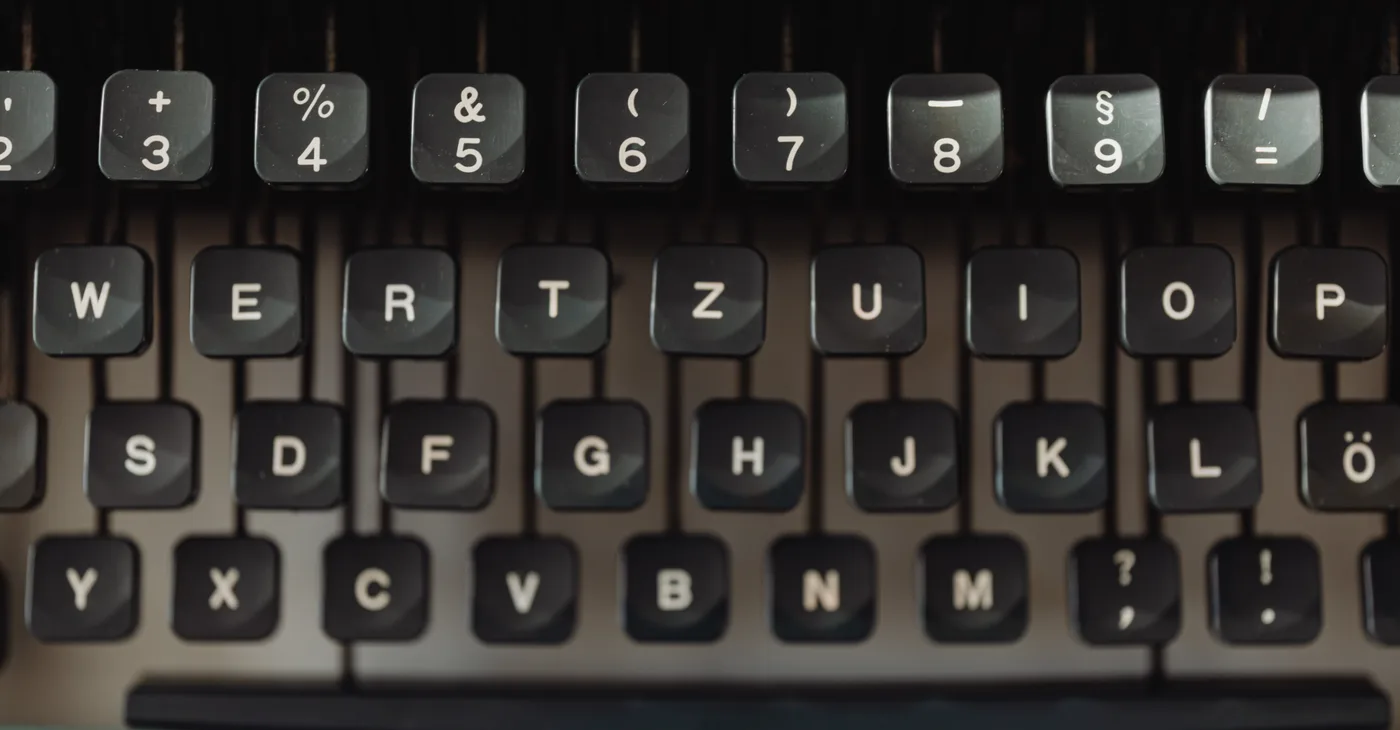
Do you know the Canadian phone maker named BlackBerry because its physical QWERTY keyboard along the bottom looked like a blackberry? It built its business on a few core strengths: strong security based on data encryption, its own messenger, and mobile email. By 2008, its share of the US mobile phone market reached 45%. Business people and politicians were its main users. The iPhone, launched in 2007, and the Android operating system, released for free in 2008, hit its business hard. The expanded app ecosystem let people use a wide range of messenger and email apps, security had improved so there was no need to rely on BlackBerry alone, and rival products had none of the limits of a physical keyboard. BlackBerry tried several moves, including adopting Android OS and handing development, production, and marketing to the Chinese company TCL, but it had already missed its chance to move into another field. It is a classic case of a company that grew complacent about a fleeting success and collapsed almost overnight.
Which search engines from the 1990s do you remember? There was Lycos, famous for the ad line "Lycos did well"; AltaVista, known for its fast searches; Simmani, built by Hangul and Computer; Empas, Korea's first natural-language search service; and Daum and Naver, which are still around today. But the portal (literally a gateway or entrance) that comes to mind first is Yahoo. Taiwanese-American Jerry Yang founded it in 1994, and for a time it was the largest search company in the world. It failed to acquire Google in 2002, Facebook in 2004, and YouTube in 2006, and it never caught up with the mobile revolution that began with the iPhone in 2007. In 2008, Yahoo turned down a Microsoft acquisition offer worth about KRW 50 trillion (≈ US$37,408,349,500). Its investment in the Alibaba Group later paid off, but the tax bill on that gain became a problem. Yahoo then sold its core business, trademark included, to Verizon, renamed itself Altaba, and became an investment company that is now liquidating its assets.
Founded in Finland in the late 19th century, Nokia was a fast-changing, innovative company. It moved from its original business of paper to rubber and cables, began making electronics in the 1960s, and from the 1990s rose to prominence in the mobile phone market. In 1998 it overtook the U.S. handset maker Motorola to become the world's No. 1 vendor. In 2007 it held a 40% global share and accounted for 25% of Finland's GDP. 2007 was also the year the iPhone launched. Against innovative smartphones led by iOS and Android, Nokia seemed to lack agility and the will to change. With a mix of products running its own operating systems and products running Microsoft Windows, it was hard to survive in a smartphone market going through unprecedented innovation. After it sold its handset division to Microsoft in 2014 it seemed destined to be forgotten, but it has been successfully transforming into a B2B company providing network equipment, data centers, software solutions, and security services to corporate customers.
To be continued