Do you remember your first car? Recently, I said goodbye to my All New Carnival (“Nibal-i”), which had been with me through thick and thin for nine years, and welcomed a Palisade as my new companion. A car seems to give its owner and family so many memories. Do you remember the first car you ever had? In 2003, I was riding a scooter to get to university while working part-time jobs. It struggled up hills, made an awful 'brrrrrrt' noise, and, most decisively, made it hard to go anywhere with my girlfriend, so I decided I needed a car. This was before buying used cars online had taken off, so I vaguely asked a taxi driver, "Where should I go to buy a used car?" He answered, "In Seoul, that would be Jangan-pyeong. Shall I take you there?" So I ended up at the Jangan-pyeong used car market, where a smooth-talking salesman with a buzz cut pulled me in the moment I stepped out of the taxi.
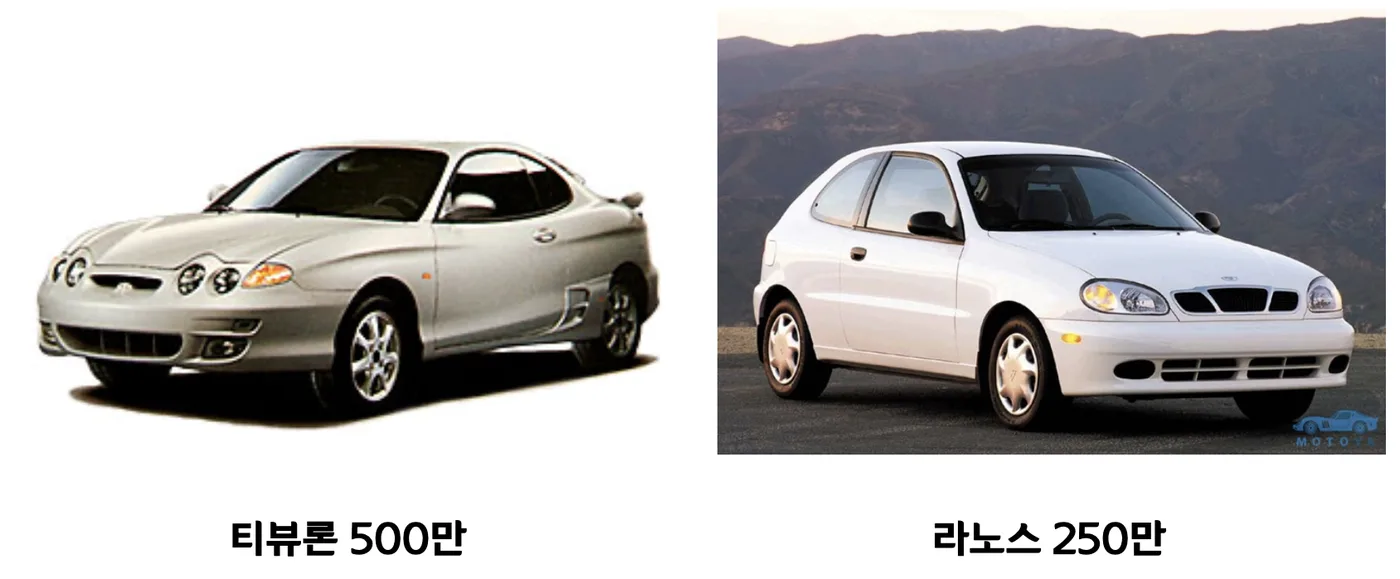
The first car he showed me was the Hyundai Tiburon, a sports car released in 1996 (at least among young people with no money...). The Hyundai Tuscani, launched in 2001, was my dream car, but a new one cost at least KRW 15 (≈ US$1) million, which was out of reach, and even used ones were close to KRW 10 million (≈ US$7,480). So I considered the Hyundai Tiburon a realistic alternative. I asked the price: KRW 5 million (≈ US$3,740). KRW 5 million (≈ US$3,740) to a 50-year-old in 2023 and KRW 5 million (≈ US$3,740) to a 30-year-old in 2003 feel completely different. With a monthly income of about KRW 1.7 million (≈ US$1,270) from tutoring and a few other part-time jobs, KRW 5 million (≈ US$3,740) was a fortune I couldn’t even dream of. The salesman quickly read the hesitation in my eyes and suggested another option: the Daewoo Lanos. It was released in 1996, so it was an 8-year-old car, and the asking price was KRW 2.5 million (≈ US$1,870). It seemed a fair price, so I said I would buy it without even negotiating. I was wrong to think only KRW 2.5 million (≈ US$1,870) would go out! Taxes, insurance and other costs were added to the price, the salesman took KRW 300,000 (≈ US$225) as an “introduction fee,” and I remember being stunned as more than KRW 3 million (≈ US$2,240) vanished in one go. I drove it happily until I started working in Incheon, but from around 2006 I was embarrassed to show it to my girlfriend, now my wife, so I rented nicer cars to go on drives and left this one abandoned in the dormitory parking lot. When I later tried to dispose of it, the unpaid taxes had piled up and cost more than the car was worth — a dark chapter of my youth.
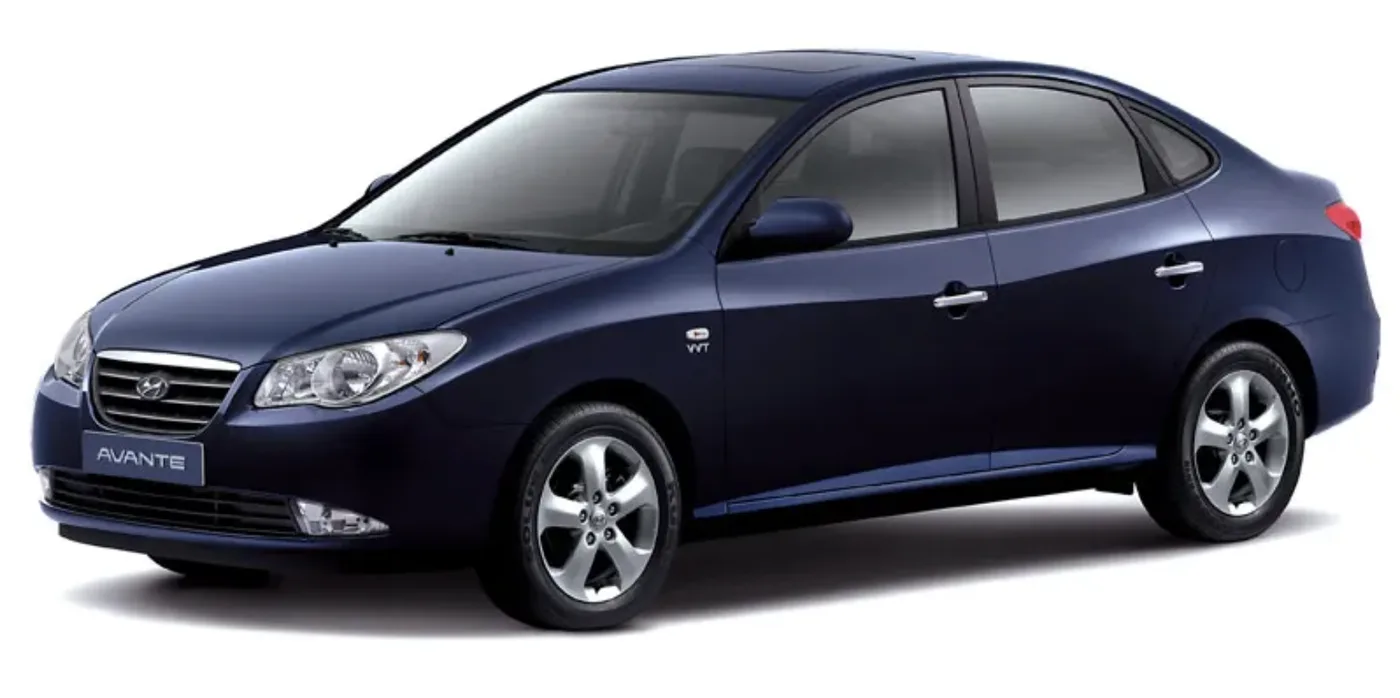
I figured my first used car had taught me a lot. For the next several years, overseas business trips and expatriate assignments meant I had no need to buy a car of my own, and I mostly used Toyota or Honda rental cars. Then, in early 2009, I came back to Korea. As an overseas sales employee, I wasn’t given a company car the way domestic sales staff were, so I had to buy one, and this time I searched for used cars online for about a week. I can’t even remember the model now, but I was lured by a shockingly low price, called, and took a taxi to the dealer. Once I arrived, they told me that car was listed cheaply because of a major defect, and asked if I’d like to see a better one. It was dark after sunset, and there under its lit headlights stood a sleek 2–3-year-old Avante HD. An automatic sunroof, a big navigation screen, great music from the speakers, a lovely smell, the softness of the leather — it all gave me an enormous urge to buy. I signed on the spot for KRW 10 (≈ US$1) million, a price that seems absurd when I think about it now, drove it off, and felt proud. After five happy years of commuting, business trips and travel, I handed it over to my brother-in-law, and when I had it inspected I found out that the front chassis had been in a serious accident. I could have bought it for much less at the time. In the end, both used cars I bought before buying a new one were poor choices. Buying a cheap new compact car would have been the better decision. Then as now, many used car buyers are young people who don’t know much about cars, and it must be very hard for them to get reliable information about the car they want to buy.

Did you see "The Roundup: No Way Out" (2023)? Remember Chorong-i, the used-car dealer from Incheon's dealer lot, in a skin-tight black designer shirt and orange shorts, with a menacing look and a designer clutch? Plenty of viewers could relate. Fake bait listings, flood-damaged and accident-history cars, rolled-back odometers, opaque pricing, even threats, confinement, and forced loans: the character embodied everything that comes to mind when people think of used-car dealers. Because of that image, most consumers who have ever bought a used car are probably glad that Hyundai Motor is entering the used-car market starting in 2023, three years after it announced its plans in October 2020. The plan is to buy back its own brand's vehicles that are under five years old with under 100,000 km on the odometer, and sell only hand-picked "near-new used cars" that pass 200 quality-verification tests. Like me, consumers worn out by traditional dealers like Chorong-i, with their fake bait listings, unclear prices, and false information, are likely to see this in a positive light.
Do you remember the first time you tasted a lemon? I remember it clearly. Looking at the appetizing yellow of the lemon, I expected it to be fresh and sweet like a mandarin, and I was shocked by how incredibly sour it was. That is why “lemon” is used as slang for a defective product that is not what it appears to be.
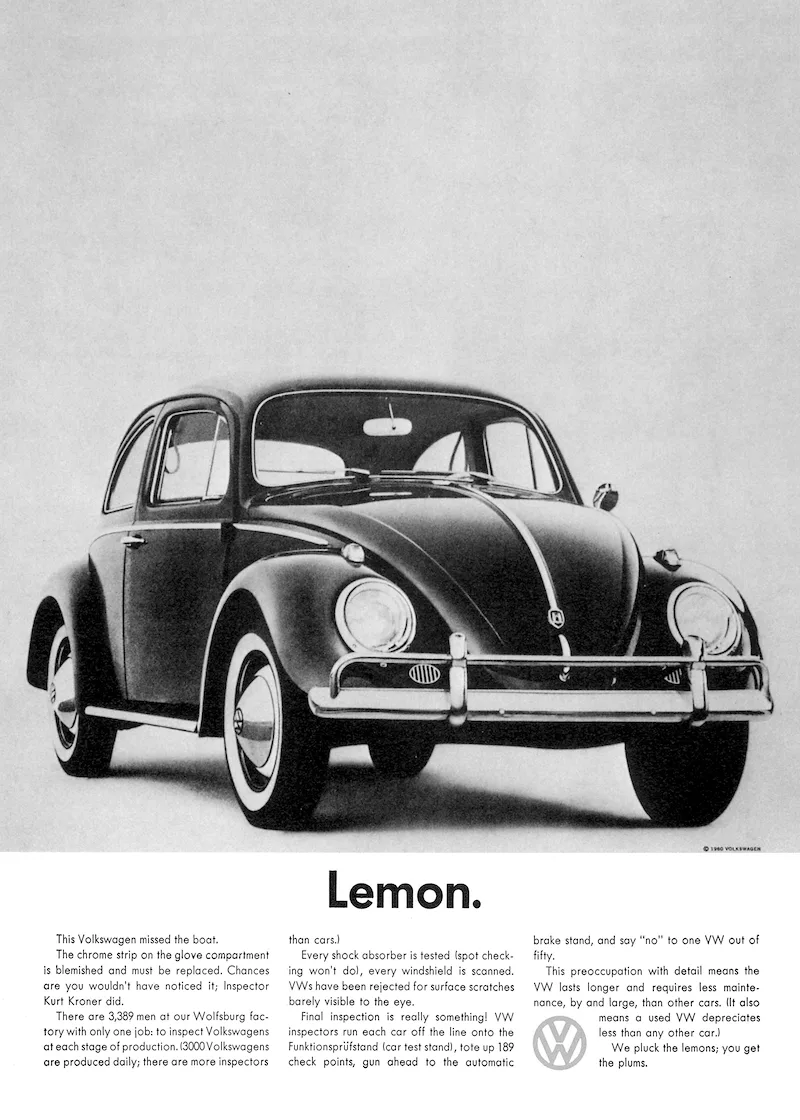
In 1961, German automaker Volkswagen ran a famous ad campaign for the 'Beetle' that called it a lemon (a defective product).
The chrome plating on this car’s glove box door on the passenger side has a tiny scratch and must be replaced. It was spotted by an inspector named Gruth Kroner, who works at the Wolfsburg plant in Germany. We thoroughly inspect every stage of the production process with 3,389 inspectors.
That was their ad copy. It was tongue-in-cheek, wasn't it? By joking about flaws this tiny, they showed that even the smallest defects get managed, and put their rigorous quality control on display.
In the late 1960s, an economist named 'George Akerlof' published a paper arguing that information asymmetry can cause market failure. He studied the used car market, where quality varies enormously from car to car. Sellers know the details of a used car — whether it has been in an accident, how well it was maintained, whether it has defects — while buyers can hardly know the truth about the product unless they buy it and use it for a while. A situation in which the amount and quality of information about a product differ between seller and buyer is called 'information asymmetry.' Suppose used cars fall into two quality types, good (Peach) and bad (Lemon), in a 50:50 ratio. Dealers want at least KRW 10 million (≈ US$7,480) for a good car and at least KRW 6 million (≈ US$4,490) for a bad one, while buyers are willing to pay about KRW 11 million (≈ US$8,230) for a good car and KRW 7 million (≈ US$5,240) for a bad one. But buyers can’t tell whether a given car is good or bad. With only a 50% chance of picking a good one, they offer the midpoint of KRW 11 million (≈ US$8,230) and KRW 7 million (≈ US$5,240): KRW 9 million (≈ US$6,730). Sellers of good cars (Peaches), who wanted KRW 10 (≈ US$1) million, leave the market, while sellers of bad cars (Lemons), who would have accepted KRW 6 (≈ US$1) million, sell at KRW 9 million (≈ US$6,730) — 50% more than expected. If this continues, good cars gradually disappear from the market and only Lemons remain. A situation of asymmetric information like this is described as having a 'Hidden Characteristic,' and the problem in which only Lemons are left in the market as a result is called 'Adverse Selection.'
To prevent this kind of adverse selection caused by information asymmetry, the information needs to be balanced. Before making a loan, banks thoroughly check the borrower’s credit to confirm they can repay it, and life insurers sometimes require a medical checkup before signing a contract. In today’s used car market, sellers provide a vehicle’s accident history, affected areas and insurance records, and even offer a quality warranty for a set period. They are putting safeguards in place before the market becomes one of only Lemons and collapses altogether.
To be continued