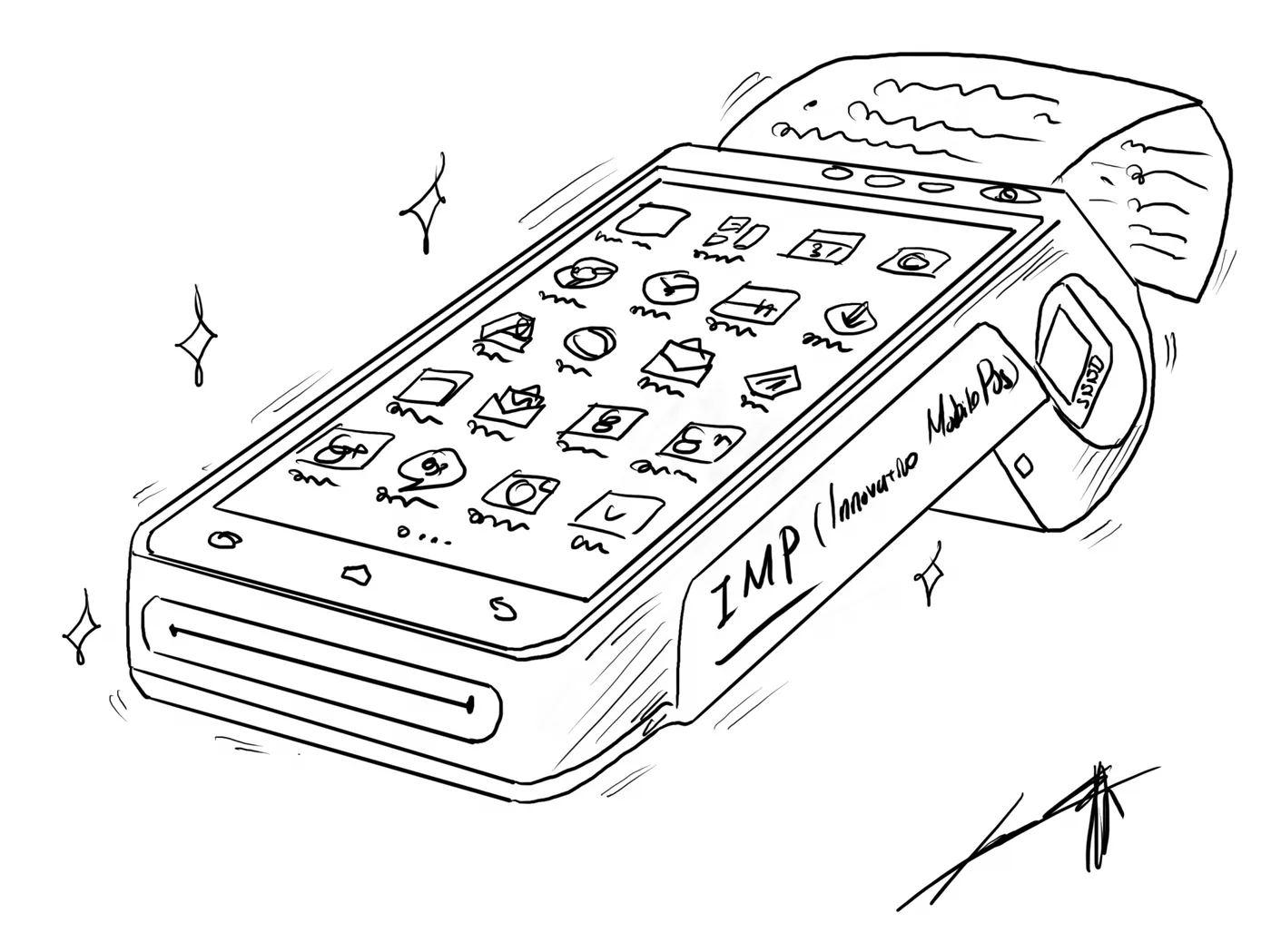
What is the best way to do B2B distribution? Suppose you have developed a B2B industrial product. Let's work out together how to bring it to market. The product you developed is an innovative mobile POS (Point of Sale) payment device. It is lightweight and portable, runs Android, has all-day battery life, prints receipts, and accepts credit cards, Samsung Pay, and Apple Pay. Development is done and the product name is final: 'IMP (Innovative Mobile POS)'. Sounds good, right? : )
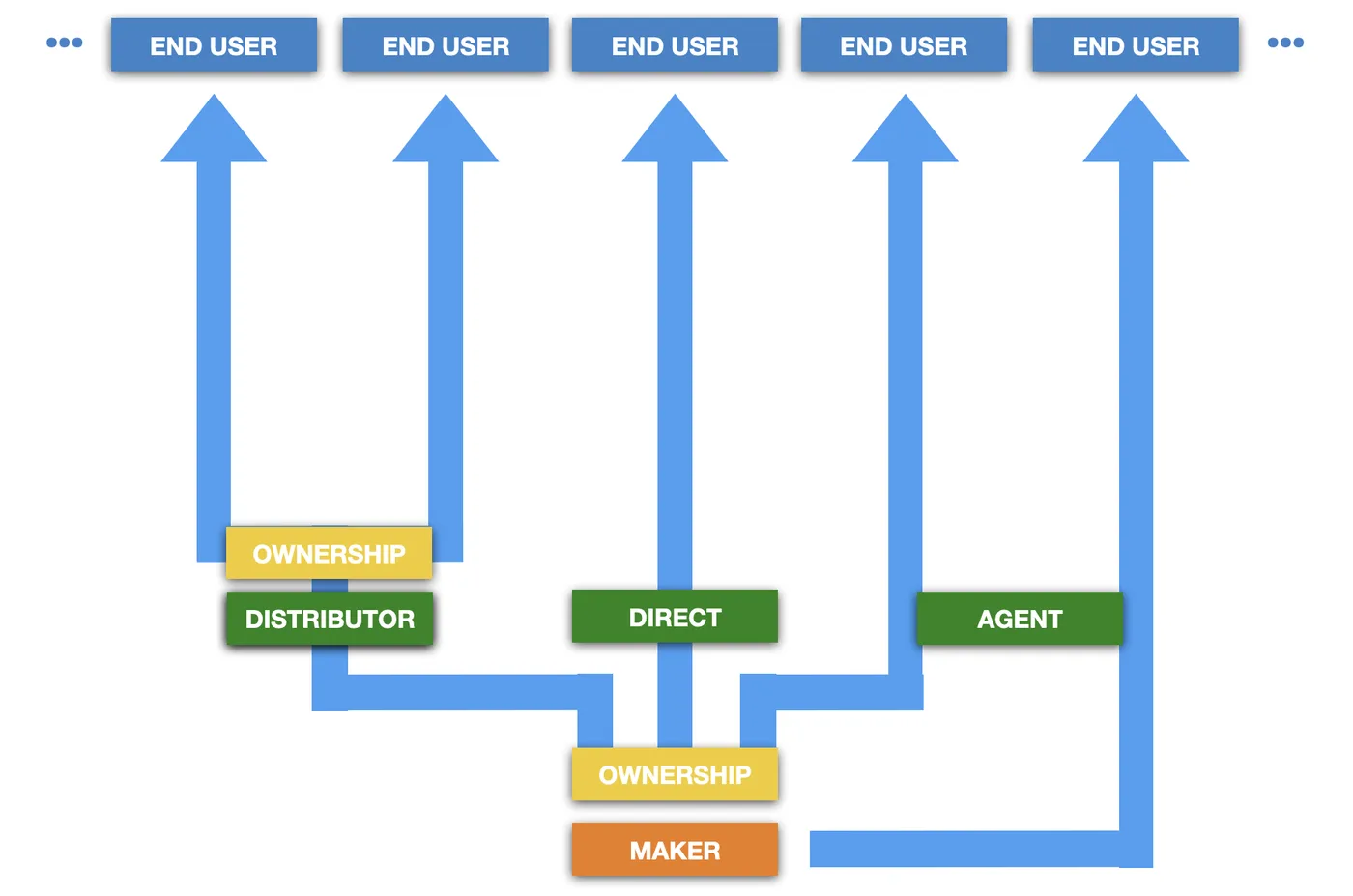
Now it's time to sell. How? The product costs KRW 200,000 (≈ US$150). The ideal channel would be selling directly to end users ourselves, right? Plenty of places need a mobile POS like this: ordinary shops, large discount marts, department stores, events, delivery companies, and more. You would have to segment them by industry and application and set priorities. Then you would build a factory, set up production lines, and create distribution centers in key regions for storing and shipping the goods. You would also need trucks and drivers to transport the products. You would have to open many direct stores in key regions and fully equip them. Then you hire people: production workers, a plant manager, production managers, warehouse managers, shipping & delivery staff, store managers, sales clerks, sales reps, headquarters staff, marketing, design, and online platform managers. Enormous costs would hit from day one: production, warehouse rental and management, store operations, marketing, and sales. It's scary just to think about. First-time founders often take it for granted that they should own the product and sell directly to end users, but this is a very high-risk approach. You carry the entire burden of production, distribution, sales, and retail yourself. This is B2B direct distribution. In B2B, only key accounts are usually managed this way. Key accounts that make up a large share of a supplier's revenue get a dedicated sales rep and a range of customer support, which builds their loyalty and keeps other vendors out.
By now you have probably realized how hard it is to manage every customer ourselves. So we sell directly to key accounts that will buy our mobile POS terminals in volume, such as large restaurants and discount marts, and secure them as reference customers. At the same time, we run online ads to recruit distributors and build a dedicated website and landing page. If we exhibit at POS trade shows in Korea and abroad and the product is good, distributor candidates will naturally show up, drawn by the money. What matters is screening and vetting the good ones before signing contracts. In Korea, we also advertise in regional industry trade magazines to promote the product and find distributors, then develop the most professional of them into core regional distributors. We would also need to visit large retailers and distributors in person to win them over, wouldn’t we? Once you have found distributor candidates, how will you persuade them? The best way is to help them make a lot of money. If a distributor buys a typical KRW 100,000 (≈ US$75) mobile POS terminal from another supplier at KRW 90,000 (≈ US$67) and resells it, only about 3%, or KRW 3,000, (≈ US$2) is left after sales, storage, and distribution costs. Our KRW 200,000 (≈ US$150) product stands out in the market with a differentiated feature: it even supports Apple Pay. Its distributor price is KRW 100,000 (≈ US$75). Even with the heavy marketing, logistics, inventory, and overhead costs of launching a new product, the margin per unit is about KRW 60,000, (≈ US$45) 20 times that of existing products. Distributors can’t afford to pass that up. Add volume discounts and incentives for contracted distributors, plus continued marketing from headquarters, and the synergy will be strong. This is the B2B indirect distribution model that uses distributors.
Shall we look at another approach? The purchasing executive at a large retailer you have cultivated for years is retiring. That would be a real letdown. You might think of the Korean saying 'like a dog staring at the roof after chasing a chicken' — left empty-handed. Should you build a relationship with the new purchasing executive, the decision maker, and start selling again? Of course! But you should also find a way to put the retiring executive to use. If they spent decades in that organization as a rigid person with no sense of ownership, you can simply forget about them. But if they have good relationships with the company's leadership and business owners, and real insight into the business, you could do business together. Suppose we say to them, "Let's do business together! If you sign a distributor agreement with us, we will support you fully." The former executive is likely to answer, "I'd have to find an office, get a warehouse, hold initial inventory, and hire management staff and sales reps. Wouldn't that cost at least KRW several hundred million? No thanks. I'll just go fishing and travel. Why bother..." Whether it's sincere or not, I think that reaction is quite likely. Then...

"Don't worry about those costs at all. We'll give you a room in our office. We'll handle everything at headquarters: inventory, distribution, and sales administration. All you need to do is register a business, sell, and win the orders. We guarantee you a 5% commission on sales."
Now put yourself in the shoes of the former executive. You are a 60-year-old man with over 30 years in the industry. You know the entire value chain, upstream and downstream, inside out, and you have a strong network and business sense. But you have hesitated to take on risk with your own money. If this proposal came along, you would be tempted. If I were this former executive, I would ask for a 10% commission and settle around 7%. Then selling 500 units, KRW 100 million (≈ US$74,800) worth, earns KRW 7 million (≈ US$5,240). Not bad. This kind of distribution is B2B indirect distribution using brokers and agents. Unlike a distributor, a broker is an intermediary who does not take ownership of the goods and does not bear the risk of managing inventory or handling sales administration.
To be continued