What if business customers or consumers bought directly from the manufacturer? Could they easily get the products they want, in the form, quantity and price they want? They would have to spend more time, travel farther, and put in more effort before they finally had the products in hand. In that situation, a professional distributor that helps with our purchasing would be a real blessing for both sides. (The condition: if they do it well...)
[ Functions for the End Customer ]
1) Fewer purchasing touchpoints (convenience): Imagine I am a purchasing manager at TSMC, the semiconductor foundry. Managing every supplier would be hard, inconvenient, and demanding: major equipment makers like ASML, AMAT, and KLA; silicon, chemical, and gas manufacturers and suppliers like Shin-Etsu, Sumco, Cabot, Rohm and Haas, and Praxair; plus suppliers of all kinds of parts, tools, and services. To strengthen its competitiveness, a company manages its key suppliers directly. If it bundles the smaller, less influential suppliers and gives a few professional, communication-savvy firms the role of distributor, it reduces its purchasing touchpoints and removes a lot of hassle. That also leads to cost savings, right? Deciding which suppliers to manage directly and which to manage indirectly through distributors is important management know-how for any company. It has a major effect on both quality and cost.
2) Always available nearby (convenience): Do you use convenience stores often? Since passing my mid-forties, instant noodles, kimbap and sandwiches upset my stomach, so I try to eat at regular restaurants that serve rice, soup and side dishes. Korea already has more than 40,000 thriving convenience stores. Look around your home or office and you will spot one right away. They never close, either: they are open 24 hours a day. In this way, the convenience store gives teenage and young consumers the convenience of buying easily, anytime, close to where they are. Unless you are a full-time homemaker who buys ingredients in bulk, cooks at home and cuts costs dramatically, it may be better to buy small amounts of ready-to-eat food only when you need it. The same is true for a B2B distributor. It buys goods in bulk from manufacturers and stores them in warehouses near its B2B customers, so customers can buy easily whenever they need.
3) Access to a wide range of smaller-quantity products (cost savings, convenience): Walk into a big-box discount store like Costco and the first thing you notice is the low prices. But you have to buy in bulk packs, not the small units you would find at a convenience store. Per unit, it is clearly cheaper. But what if all that bulky merchandise has to be stored in the consumer’s own space? Then the storage cost Costco would otherwise carry shifts to the consumer. And because you buy a large amount at once, you spend more money up front than if you bought a little at a time. The interest and the opportunity cost of that money fall on the consumer too. I have also noticed that when I buy fresh items at Costco, such as fruit, vegetables and milk, some always goes bad before I can finish it. Thinking about this, I wonder whether bulk buying at a big-box store is really the right call. There is another drawback: you have to buy a lot of a limited range of products. A retailer like a convenience store, by contrast, lets you buy a relatively wide variety of smaller-quantity products a little at a time. The same is true of B2B distributors. Through a distributor, buyers can conveniently source the exact mix of products they need, and with less inventory to carry, their inventory management costs go down as well.
4) A variety of payment methods (convenience, cost savings): Today, apart from a few small shops and traditional markets, almost no one refuses credit cards. Just over ten years ago, though, many places did. I have since quit smoking, but back then I smoked, so I often bought cigarettes at convenience stores and small shops. One day I walked into a tiny shop near a bus terminal in the countryside, picked up a pack, and held out my card. The owner, a man in his seventies, flew into a rage and snapped, "You’re going to pay by card for one pack of cigarettes?" I was angry and startled at the same time. I had no cash, so I just left, and my irritation did not fade quickly. A short walk later I went into a convenience store, and whether I was buying a pack of gum or a pack of cigarettes, the part-time staff showed no sign of annoyance. Card fees are not their concern anyway. If anything, credit cards make their job easier, so they are happy to take them. In Korea today, not only credit cards but also prepaid cards, Samsung Pay, Apple Pay, Naver Pay, Kakao Pay, and many other payment methods are spreading. The same goes for B2B. If a relatively small buyer purchased equipment parts directly from a large foreign manufacturer instead of going through a distributor, it would have to open a letter of credit at a bank or wire funds straight to the manufacturer’s account. If it buys through a domestic B2B distributor, it can check whether options such as promissory notes, with payment due after a set period depending on its cash position, are available, along with other ways to pay.
5) Customer service on the buyer’s behalf (building customer loyalty): The distributor handles purchasing from suppliers for the customer. Along the way, it checks safety stock, manages shipping cost and lead time, keeps improving the supply process for each product, controls quality, and drives fixes when quality problems arise. For a B2B customer, the ideal is a steady supply with no disruption to their own production line. But when a problem does occur, a distributor that quickly finds the root cause and works with the manufacturer to fix it earns loyalty, and with it a solid barrier to entry. By delivering, more carefully than the manufacturer could, a service the manufacturer would otherwise have to staff and build systems for itself, the distributor shows its 'reason for existence': why it deserves a share of the profit in the middle of the channel. If a distributor fails to perform these basic customer service tasks, it will quickly be replaced by another distributor, or the manufacturer will come under pressure to manage the customer directly. Fast delivery, maintenance, warranty, installation and after-sales service are examples of these basic tasks.
6) Professional consulting services (a barrier to entry) : I first experienced the professional consulting of a B2B distributor 17 years ago. In my early thirties, despite having a liberal arts background, I was sent to Taiwan as the sales rep for TSMC, then Taiwan’s giant semiconductor foundry. The head of a small distributor, which worked between TSMC and my company, traveled everywhere with me. He was a semiconductor expert in his early fifties, and my mentor in every respect: knowledge, experience, network, strategy, and negotiating skill. When the customer had a quality problem, he did not hesitate to give my company systematic, point-by-point technical improvement proposals, and we responded together. When other issues came up, such as delivery dates, usage, or installation, he moved in person and quickly turned things around. It was the best distributor I know, offering consulting services specialized in the semiconductor industry. Time has passed, and I am now about the age my Taiwanese mentor was then. When people newly assigned to a company’s HR and training team contact me, I share current industry trends and cases, quickly build a solution, and work with them. When a corporate training agency’s sales rep in their twenties asks for help, I join the sales effort, and sometimes we win the order. Isn’t that the kind of professional consulting service that is unique to a distributor?
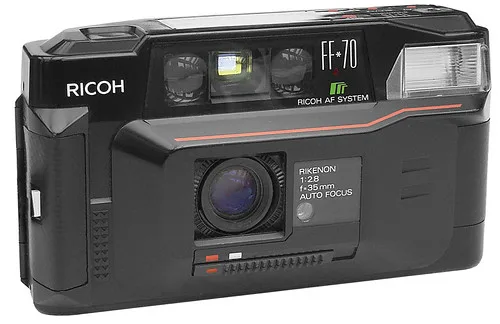
7) Joint marketing, sales and promotion (convenience, efficiency): In the 1980s, when I was in elementary school and my family had only just moved from a one-room home to a two-bedroom public apartment, my parents still drove my younger sibling and me all over the country on trips and took lots of photos. I still remember the camera brands, and they were not Canon or Nikon. One was a Yashica and the other a Ricoh. Do you know the company 'Shindoricoh,' famous for its large multifunction printers? In 1960, a trading company called 'Shindo' imported Japan's 'Ricoh' copiers and co-founded 'Shindoricoh' with a 51% stake; today it holds 90%. It is a case where a distributor that began as a business partner ended up as the owner. Like 'Shindoricoh,' partners can market and sell products jointly, share a booth at trade shows to cut costs, and make use of each other’s people. Training can also raise the quality of both sides’ staff. Today, beyond offline channels, you can run online marketing and promotions together as well, through the web, social media, webinars and content sharing, and coordinate promotions such as volume discounts by region and season to run them efficiently.
To be continued