I have two sons, 40 and 47 years younger than I am. My oldest, now in third grade, has a negotiation tactic he uses all the time, so let me introduce it first. Parents of elementary school kids will all agree: smartphones, games, and study time lead to conflicts, arguments, and negotiations with our kids, big and small. Here is a conversation between a mother and her oldest son.
Older son: "Mom, can I play a game now?"
Mom: "You haven't done your homework. If you finish it, I'll let you play for a little while!" (Conditional offer)
Older son: "30 minutes is too short. Please let me play longer." (Counteroffer)
Mom: "Last time you said 30 minutes and played for an hour. (Past reference) I don't even want to give you 30 minutes, but if you do your homework well, I'll allow that much."
Older son: "Then if I finish my school homework and my academy homework, can I play for an hour?" (Counteroffer)
Mom: "No! Just 30 minutes!"
Older son: "Then can I play for 50 minutes?"
Mom: "No! Just 30 minutes!"
Older son: "Then can I play for 40 minutes?"
Mom: "No! Just 30 minutes!"
Older son: "Then can I play for 35 minutes?"
Mom: "Okay, set the timer, and it's exactly 35 minutes."
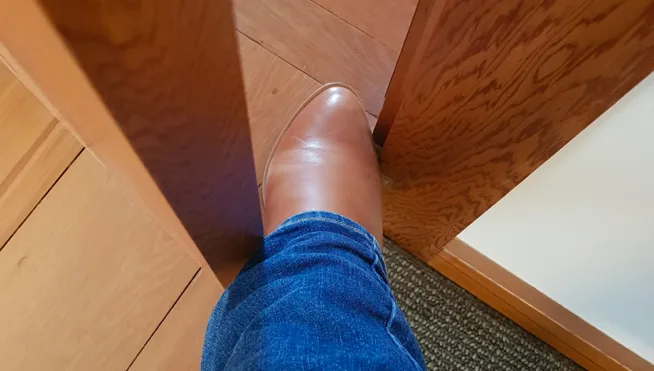
This is the 'Foot in the door' technique. In the 1980s, when I was a kid, door-to-door salespeople were everywhere, selling cosmetics, children’s books, study workbooks, tableware, health supplements, and more. I once watched a cosmetics saleswoman get the door opened, wedge her foot in, and talk for a long while, then sit on the entryway floor, sweating, showing samples. Feeling sorry for her, my mother would bring her cold barley tea. Before long she was on the living room sofa sharing sweet coffee, then my mother called over her neighborhood friends to try the samples too, and they all ended up buying a fairly expensive cosmetics set. 'Foot in the door' is a strategy of getting a foot in first. You start with a small, easy request and gradually ask for more, a basic negotiation method. Once someone agrees to something small, like a survey or trying a sample, they are more likely to keep cooperating or accept further requests. It works well in the Approach stage of a negotiation.
On to the next technique. Say you are a single man in your 30s, interested in an attractive woman you met through work. You have seen each other on business for about a month, exchanged light greetings, and both instinctively sense a mutual spark. This weekend you want to have coffee with her, then dinner, maybe a drink. When you run into her on Wednesday afternoon, will you say, "Would you like to have coffee this weekend?" Or will you say, "Would you like to go see the East Sea this weekend?"
[ Case 1 ]
Man: What are you doing this weekend?
Woman: Hmm... Nothing special planned yet^^
Man: Would you like to have coffee?
Woman: ...
I can’t promise this approach always works. A coffee or meal for just the two of you may feel like too much, and she might turn you down with some other excuse. So is there a way to raise the odds?
[ Case 2 ]
Man: What are you doing this weekend?
Woman: Hmm... Nothing special planned yet^^
Man: Then how about going to Gangneung to see the sea?
Woman: The beach? That’s a bit much...
Man: Right? Then how about a quick cup of coffee?
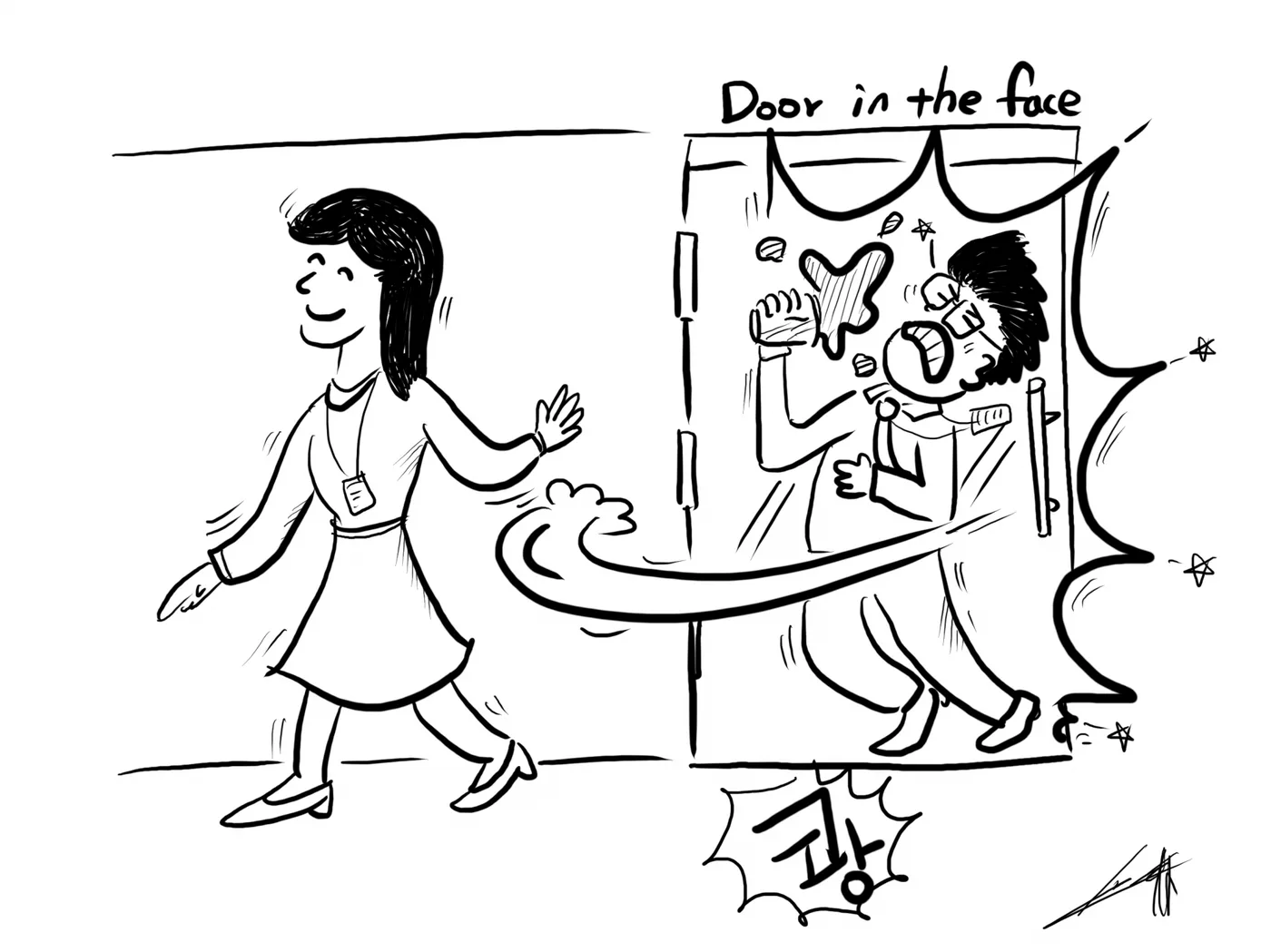
This raises the odds of spending time together over coffee compared with Case 1. It is the 'Door in the face' technique. Haven't you ever walked through a door with a group, failed to notice the person behind you, and let it close on them? If that person got hit by the door, you would feel terrible. The 'Door in the face' technique taps into exactly that feeling.
Feeling Guilty
Start by making a demand so big that the other party is very likely to refuse. Most people feel a little guilty when they say no, whatever the size of the request. It also helps to let your expression, attitude, and gestures show that you are slightly taken aback by the refusal, since that can deepen their guilt. Then comes your real ask: something smaller, easier, and more reasonable, the option you planned from the start. The other party will likely agree readily. In sales, try offering a prospect a premium product beyond their budget. When they decline, present a reasonably priced product that most people buy, and mention that only a few are left. You can steer the negotiation in your favor.
My younger son, who is 47 years younger than I am, uses this negotiation technique all the time. When I don’t immediately give him what he wants (watching TV, extra snacks, a walk outside), he deliberately plays on my guilt: flopping onto the living room floor and looking up at me with teary eyes, or suddenly coughing for effect. Then I say, "Are you okay, little guy?", scoop him up, and give him what he wanted. Works every time, doesn’t it? ^^
To be continued