Information about ChatGPT is pouring out these days. New information keeps arriving before I can digest what has already been released, so every day is a breathless race to keep up. While preparing lecture materials one day, I remembered the HBO series 'Rome', which I watched 18 years ago on a PMP (Portable Multimedia Player) called 'IceStation' while traveling overseas on sales trips. I still watch it now and then while commuting or over a cup of tea. And then a thought suddenly struck me! I became fascinated by the slaves who came from the many regions Rome conquered as it expanded. From an ordinary citizen's point of view, wouldn't slaves be the equivalent of AI & robots? The thought slowly crept into my head.

First, let's convert the price of a Roman slave into today's terms. A legionary earned 220 denarii a year, so multiplying by 100,000 gives an annual salary of KRW 22 million (≈ US$16,500).
[ Roman Slave Price List ]
- Young boy: KRW 30 million (≈ US$22,400)
- Ordinary adult man or woman: KRW 60 million (≈ US$44,900)
- Skilled craftsman: KRW 200 million (≈ US$149,600)
- Boy who speaks Greek: KRW 200 million (≈ US$149,600)
- Woman skilled in song and dance: KRW 400 million (≈ US$299,300)
- Celebrity-level woman: KRW 600 million (≈ US$448,900)
- Senior secretary to an aristocrat: KRW 2.5 billion (≈ US$1,870,400)
Pretty expensive, isn't it? And buying one is only the start: food, clothing, and housing make for a hefty upkeep. Suppose you are an ordinary Roman farmer. The young men of your family, who should be working beside you, have left home to serve in Rome's expeditionary armies, so the only farm labor left is women, the elderly, and children. Capitalists buy up poorly tended farmland cheaply and expand it on an enormous scale. One capitalist bought 8 adult couples and 4 young boys and girls as slaves at a discounted KRW 900 million. Content with fairly comfortable food, clothing, and housing, they worked hard without causing trouble. Produce grown by ordinary citizens can't compete with produce grown on cheaply bought land using slave labor. It must have been common in those days for ruined farmers to volunteer as slaves on a latifundium (a powerful man's estate) or to join the legions and march off on campaign. When ordinary people start losing work to slavery and struggle to make a living, society becomes unstable. That is when 'basic income' appears. Panem et Circenses, 'bread and circuses', was the ancient Roman Empire's free welfare policy. Each month, a month's worth of bread was handed out for free, along with free tickets to the gladiator games at the Colosseum, which stirred the senses with the height of cruelty. Full and entertained, people would be happy, right? They surely were?
What about the professionals of Roman times? Doctors, lawyers, architects, teachers, artisans, and merchants had to compete with high-end slaves worth KRW 2 billion (≈ US$1,496,300) or more who began pouring in as the empire expanded: Indian mathematicians, Chinese potters, Persian architects, Greek scientists. This is my own speculation, but small-scale professionals without special skills probably lost their jobs or saw their incomes plummet. Not every profession would have been affected by the influx of professional slaves, but Roman professionals who lacked a competitive edge were probably replaced easily. Wouldn't they, too, have headed to the Colosseum with their free monthly bread? It reminds me of the 3S policy (Sports, Sex, Screen) of Korea's Fifth Republic, a government that came to power through a coup and lacked legitimacy.
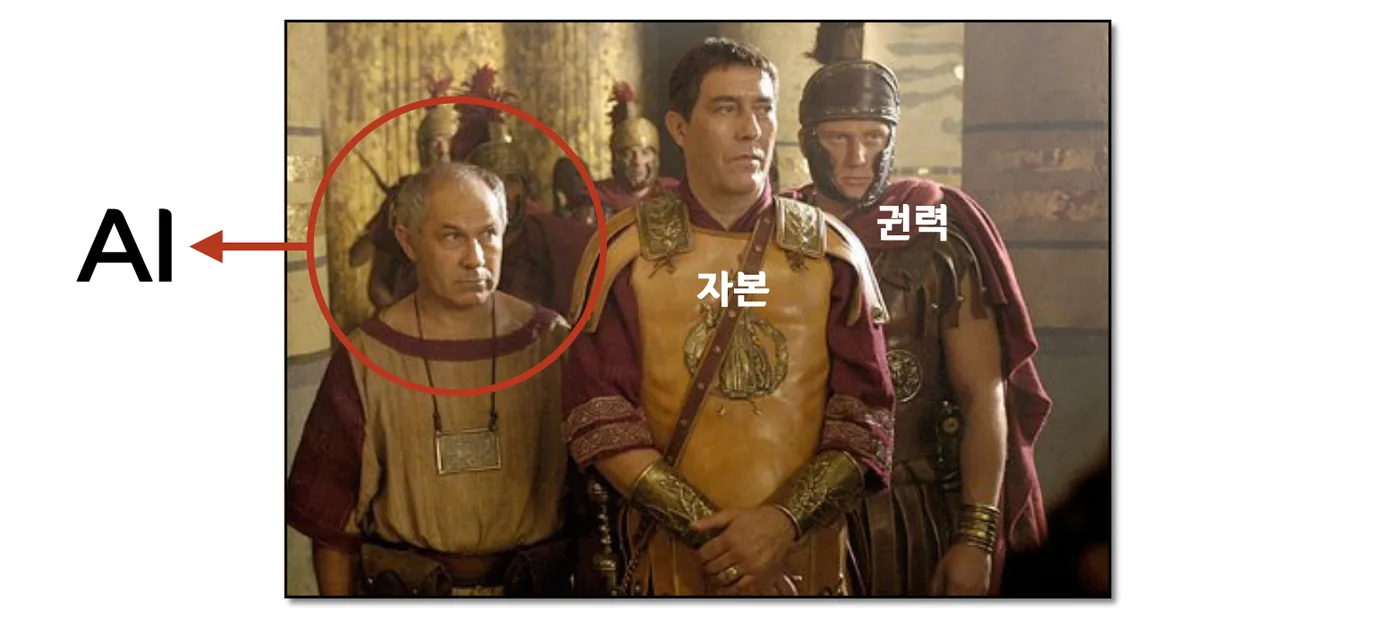
Now let's come back to reality. What will happen to us if AI and robots advance rapidly within the next few years? There is no reason something like ancient Rome couldn't happen again. What if corporate powers like Microsoft, Google, Amazon, Apple, Tesla, Samsung, Meta, TikTok, Naver, Kakao, Baidu, Alibaba, and Tencent pour in enormous capital and monopolize AI and robot resources, just as powerful Roman families monopolized slaves, then cut employment while flooding the market with goods? A slave cost thousands or hundreds of millions of won up front, but over time was faster, more efficient, and cheaper than hiring ordinary citizens. AI and robots will be the same. Professionals who took comfort in the idea that AI and robots would only replace simple, repetitive jobs (accountants, tax advisors, lawyers, judges and prosecutors, programmers, journalists, doctors) could be replaced quickly too. Couldn't the world become a dystopia made up of a 0.1% aristocracy and a 99.9% underclass?
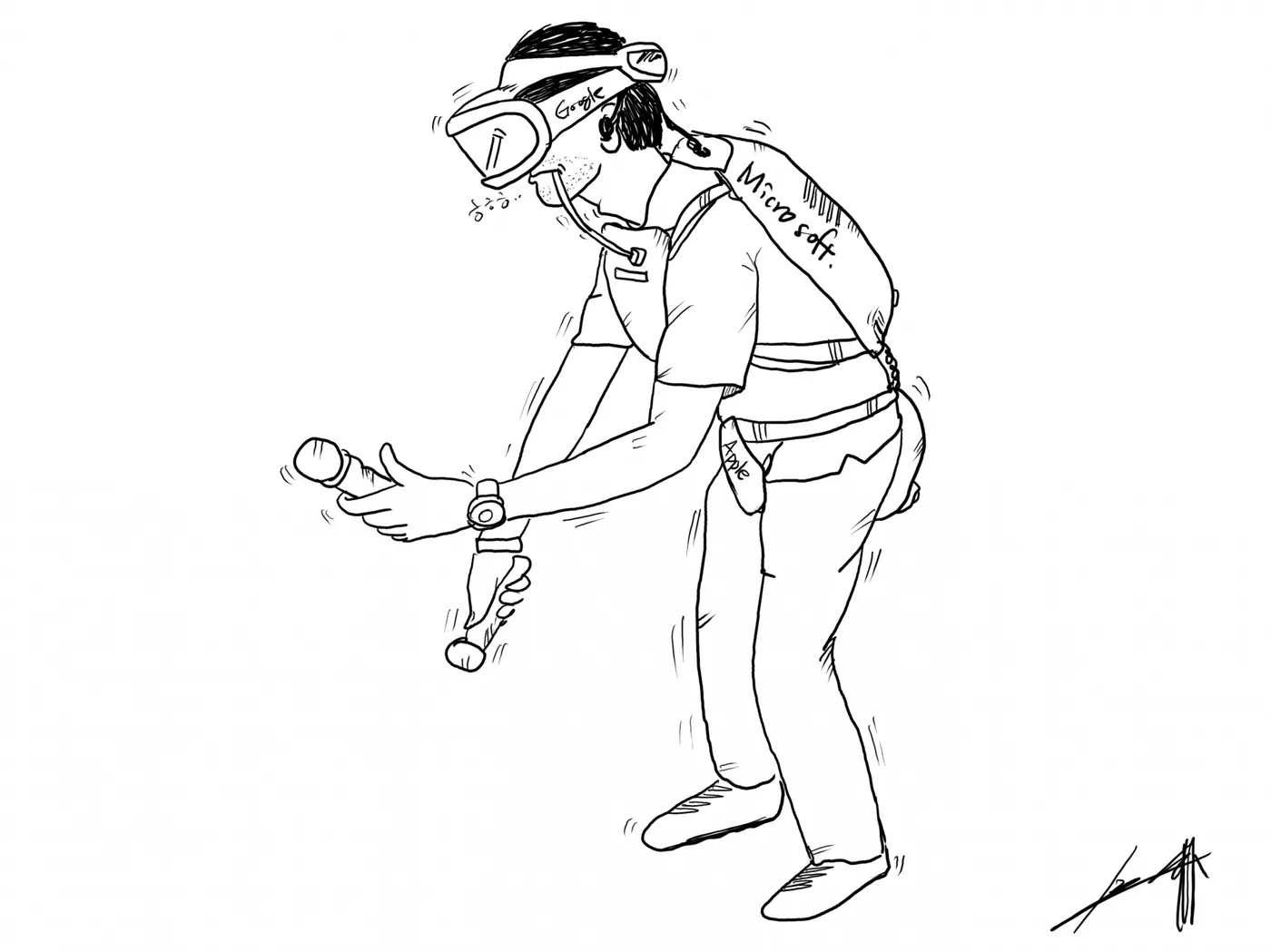
In that case, 'bread and circuses' would have to make a comeback. 'Basic income' would become essential, wouldn't it? If a basic income (the bread) of about KRW 1.5 million (≈ US$1,120) per adult and KRW 1 million (≈ US$750) per minor were paid out, we would need the 'circus' too, right? Wouldn't we be offered an array of extremely stimulating entertainment (sex, gladiators, violence, gambling, and more) combining AI, the metaverse, and robots? Citizens wearing VR headsets around the clock in an extremely cramped, dreary environment... Am I being too pessimistic?
To be continued