Do B2B industrial goods like materials, machinery, equipment, and parts need brands too? They rarely advertise to the general public, so is a brand really necessary? If so, why? Say “TSMC” and you think of the leader in foundry chip manufacturing; say “ASML” and you think of the leader in EUV semiconductor equipment, but those are company names, not brands, right? I think the first reason B2B companies build brands is the swagger and prestige of showing they are the top tier (the highest grade) in their field: the reputation, the history, the high trust that countless companies place in them, that feeling of being a little intimidated just hearing the name. Second, it pays off when using that material or equipment is visible to the end consumer and lets the company sell at a higher price. Third, there is the pride of employees (a name that family, relatives, and friends all recognize), plus defending the stock price and easier fundraising. Let’s look at the examples one by one.
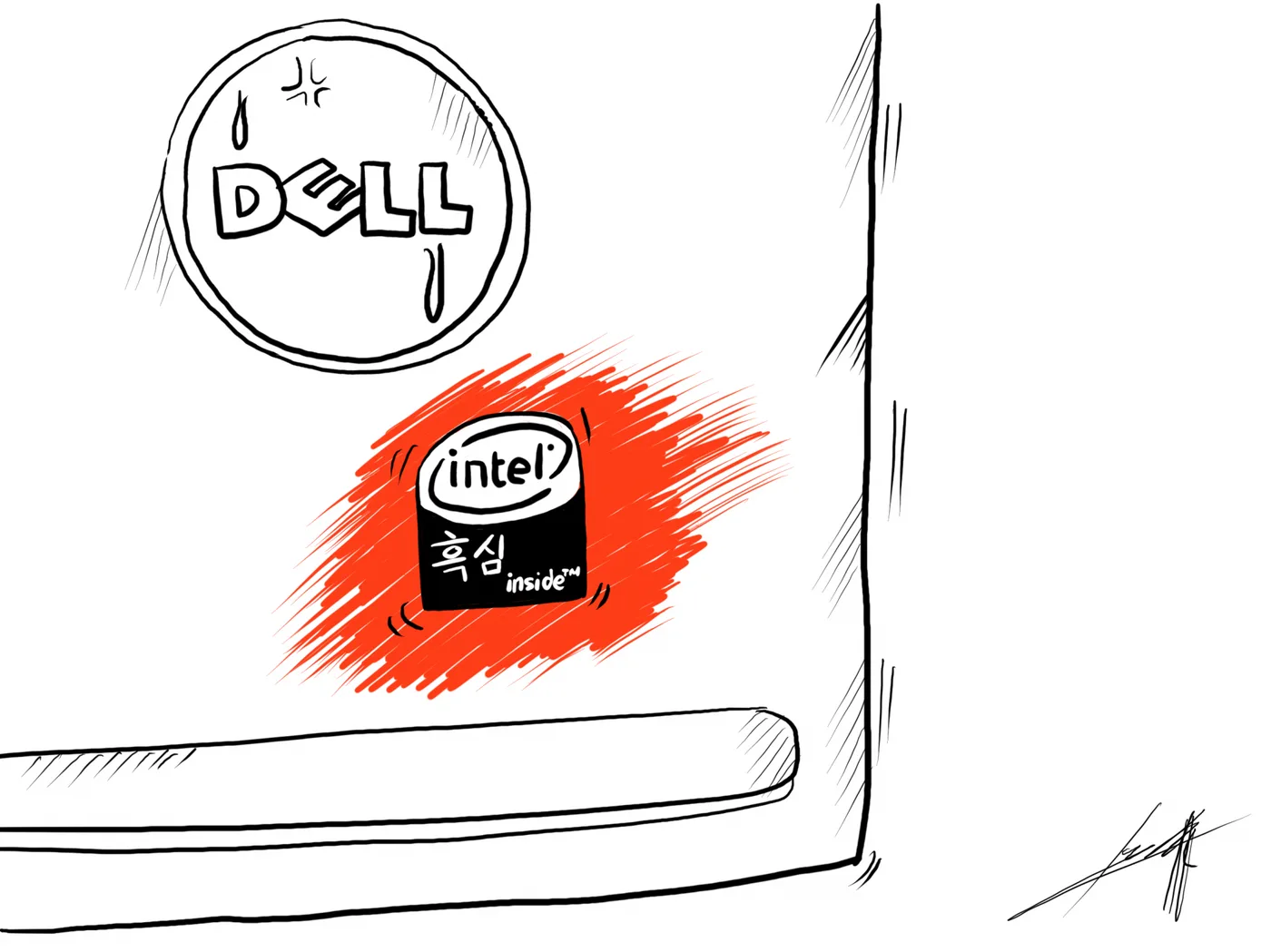
㉠ Intel Inside: In July 1968, Robert Noyce and Gordon Moore, formerly of the semiconductor company Fairchild, founded a chipmaker called Intel. It did well with memory chips through the 1970s, but aggressive low-price competition from Japanese makers in the 1980s forced it to turn to microprocessors. Readers who built their own computers in the 1990s will remember Intel’s CPU brands such as 386, 486, Celeron, and Pentium. But because these brands were PC components, they were unfamiliar names to ordinary consumers, apart from those who knew computers well. In 1991, Intel tried something new. It made an offer that computer makers around the world, including Samsung, LG, Dell, IBM, Toshiba, Sony, and Hitachi, could not ignore.
"If a computer maker buys Intel CPUs, we will put 1% of the cost into a Market Development Fund (MDF). If you put an Intel Inside sticker on the computer case, Intel will pay the full cost of the print advertising."
That was the offer. Intel spent USD 500 million on the program in the first three years and more than USD 4 billion over ten. Over time, PC makers around the world, apart from Apple, fell into Intel's tightening grip. The Market Development Fund could be spent on various kinds of advertising, but only within one year, and every ad needed Intel's approval. The short Intel ad with its ding-ding jingle and the Intel Inside sticker on the case kept reaching end consumers over a long period, slowly winning them over. Even a homemaker in her 50s buying a student computer would ask for an 'Intel' computer rather than a Samsung or LG laptop. Other CPUs, even with similar performance, were so unfamiliar to consumers that they made people wonder whether it was even a CPU. Computer makers must regret accepting Intel's offer in 1991 to this day, because they simply handed the computer industry's hegemony (leadership) to Intel. Ask which brand comes to mind for the CPU, the key component of a computer, and the answer is 'Intel'.

㉡ Samsung Wise View: This looks like a case where Samsung all but copied the Intel Inside campaign. In 2001, ten years after Intel Inside began in 1991, Samsung Electronics announced it would build its LCD brand 'Wise View' into one of the three major IT brands, alongside Intel’s 'Intel Inside' and Microsoft’s 'Windows.' The approach was similar to Intel Inside, but less refined. Samsung paid LCD monitor, LCD TV and laptop makers a set amount to put a 'Wise View' sticker on the exterior.
In my view, the biggest problem with this campaign is the difference between a CPU and an LCD. Apart from Intel and AMD, there is no substitute for a CPU. LCDs, by contrast, turned into a red ocean in the early 2000s when Taiwanese and Chinese makers entered a market Korean companies had dominated. There was no need to make end consumers aware of a brand like 'Samsung Wiseview', since makers of LCD monitors, LCD TVs and laptops could freely choose LCD parts on quality and price. The people in charge at those makers probably scoffed: 'Is Samsung trying to pull Intel Inside's trick again?'
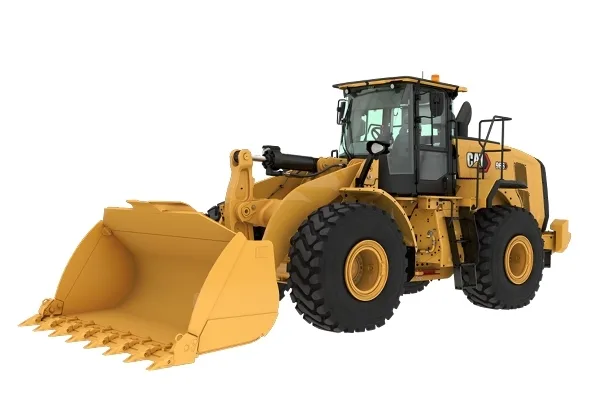
Image source: Caterpillar website
㉢ Caterpillar: 'Caterpillar' literally means both a larva and a continuous track. The company ranks first in the global construction equipment market, with a 13% share as of 2021. What gave Caterpillar its worldwide sales and service network was World War II. War, after all, brings huge technological progress to the nations fighting it, not only in weapons, equipment and combat systems but also in logistics, food, storage, medicine and construction. The US military poured enormous resources into two fronts, against Germany and Japan. Caterpillar's construction machines were used to build military bases, airfields and other civil works against the Axis powers around the world: in the frozen ground of the Soviet Union, on small Pacific islands, in English fields. Did the US military ship all that equipment back home when the fighting stopped? No. After the war ended in 1945, many of the Caterpillar machines the US military had used stayed where they were, and locals used them to rebuild from the war damage. All equipment inevitably breaks down with use, and it keeps needing consumables and parts. Without intending to, Caterpillar had run a promotional campaign that scattered free samples around the world at no cost to itself. This led to representative offices, factories and service centers in the Soviet Union, the UK, Japan and elsewhere. Today it is a mammoth company with more than 100,000 employees worldwide, annual sales of about KRW 50 trillion (≈ US$37,408,349,500) and operating profit of about KRW 15 trillion (≈ US$11,222,504,900).
In 2014, SM Entertainment’s girl group f(x) used the word 'caterpillar' in the lyrics of their new song 'Red Light.' The lyrics went, "Open your eyes wide. Stop the runaway just before the crash (stop). Become a witness to change, the rough 'Caterpillar' that kept pushing. When everyone sinks before it..." At the time, f(x) failed KBS’s broadcast review because of this word. KBS ruled the song unfit for broadcast, saying 'Caterpillar' is a brand name of a specific product from a heavy equipment company. In other words, it is not a common noun for 'caterpillar' or 'continuous track,' but a specific brand name. This is the opposite of the case where Orion registered the 'Choco Pie' trademark in 1976, but after Lotte registered the 'Lotte Choco Pie' trademark in 1979, Orion took no action for 20 years and then lost its lawsuit because the name had become a generic term. Caterpillar, which owns such a powerful B2B brand, uses the brand name itself to convey the core values of 'reliability,' 'durability,' and 'quality assurance.'
㉣ Poclain (Korea's word for excavator): A classic case of a trademark becoming a generic term. There are many such cases. Well-known examples include Burberry, Scotch Tape, Hodgkiss, Bacchus, Band-Aid (Daeil Band), Choco Pie, Crayola (Korea's "Crepas"), Bongo, Walkman, Notebook and Miwon. I will cover those separately. 'Poclain' is the same kind of case.
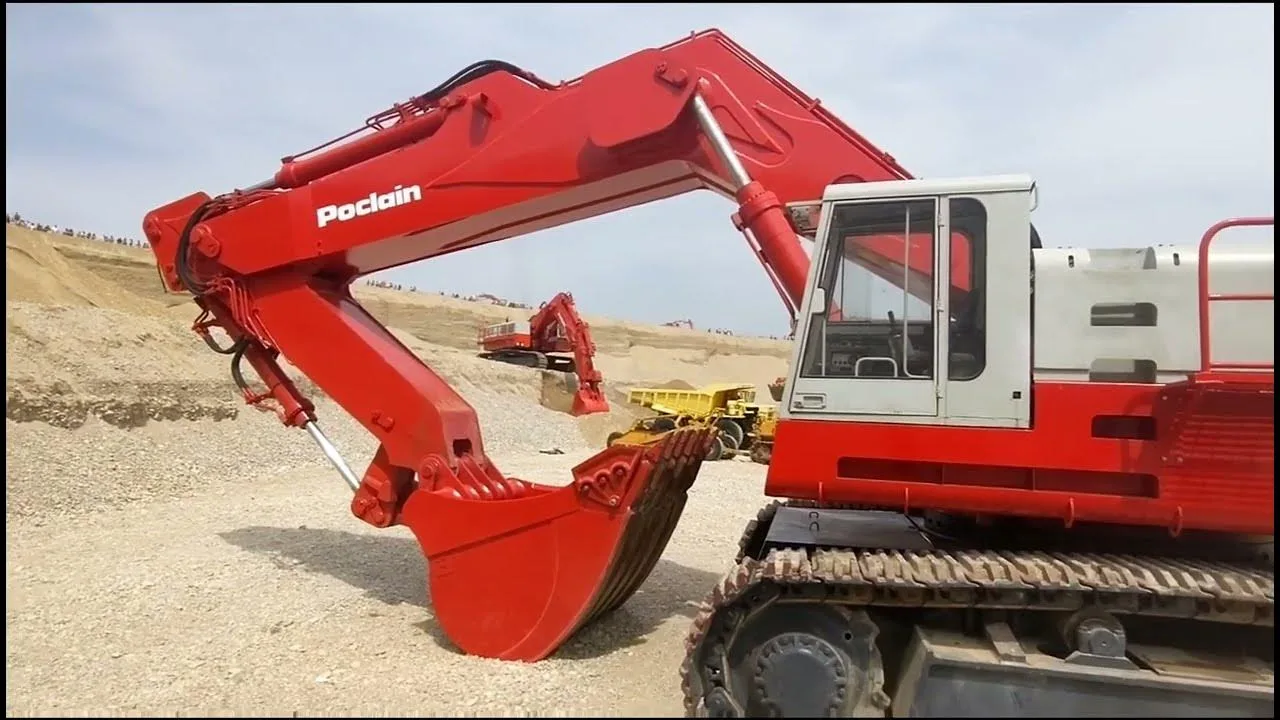
Image source: YouTube
In 1979 and 1980, when I, born in 1974, was five or six, my hometown of Daegu had construction and civil engineering projects all over the place. I used to spend an hour or two watching all kinds of heavy equipment moving around the sites. The hydraulic excavator arms and the continuous tracks of tanks, known as 'caterpillars,' felt just like 'Mazinger Z' and 'Robot Taekwon V' from TV and the Citizens’ Hall. Poclain is the brand of a French excavator maker founded in 1926 by Georges Bataille, which developed the first hydraulic excavator in 1950. When these French excavators came to Korea, the name came to be used as a synonym for excavators. After the company was acquired by a US firm in 1974, Japanese equipment such as KOMATSU and domestic equipment such as Doosan and Hyundai spread across Korean construction sites, and the real 'Poclain' almost disappeared, yet the name 'Poclain' stayed. It became a case of a 'B2B trademark turning into a common noun.'
㉤ Klaxon (Korea's word for car horn): When I traveled in India in the late 1990s and early 2000s, two things on the roads surprised me. The first was that almost all cars had no side mirrors. Jaywalking is a way of life (police beat jaywalkers with sticks without mercy), and dogs, cows, motorcycles, rickshaws, auto-rickshaws and cars all share the road, so side mirrors could injure people or get smashed. Some also say it comes from a superstition that glancing back sideways is bad luck.
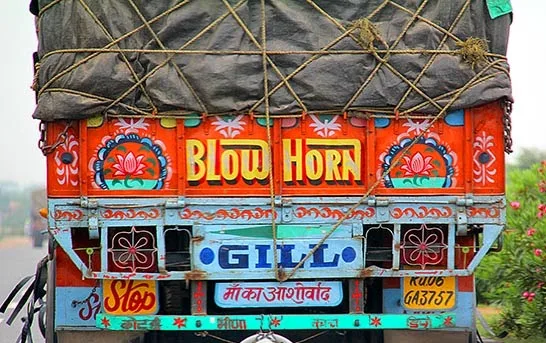
Because trucks in India have no side mirrors, the backs of them carry big messages like 'Blow Horn,' 'Horn Please,' 'Horn Blow,' and 'Horn OK.' They mean: honk as much as you like. Drivers announce their presence with the horn without a second thought. For me, someone who reads honking as a sign of extreme anger, that was a headache. The car horn evolved from the simple design of the late 19th century, when the car was invented, which sounded a trumpet by squeezing a rubber bulb, into an electric-motor-driven design in the early 20th century. It was invented by Miller Reese Hutchison, Edison’s chief engineer, and Lovell-McConnell bought the patent and supplied it to GM, creating the B2B brand 'Klaxon.' The brand was reportedly coined by Lovell-McConnell’s founder, Franklyn Hallett Lovell Jr., who took inspiration from the ancient Greek word 'klazō,' meaning 'to shriek.' The American 'Klaxon' became 'kurakushon' in Japan, which reached Korea as 'keurakshyong,' and like 'Poclain,' this word also became a case of a 'B2B trademark turning into a common noun.'
㉥ Styrofoam: Chicle, a natural rubber that Indigenous children in Central America used to chew, is the original chewing gum. Rubber is indispensable in daily life, found in rubber gloves, rubber bands, tires, cables, and belts. But until the early 19th century it had a serious flaw: in the cold it turned hard and cracked, and in the heat it turned soft, smelled foul, and fell apart. American inventor Charles Goodyear solved this problem by pure accident. In 1839, while experimenting with steaming rubber mixed with sulfur in oil extracted from pine resin, he dropped a lump of sulfur-laced rubber onto a stove with burning logs and saw that it did not melt at all. This is “vulcanization.”
When World War II broke out, Japan seized Malaya and other major natural-rubber-producing regions and cut off the supply of natural rubber. It was a critical blow to American industry, especially to war production, comparable to the way the US has recently cut off China's semiconductor supply chain, covering chips, chip technology, materials and equipment. Germany had already developed and was using several kinds of synthetic rubber, having been cut off from resources by the Allies' superior navy in World War I. The US, by contrast, had to collect even household rubber goods. It did not do so by force, as Japan did when it stripped Korea of everything down to its brass bowls for war production.
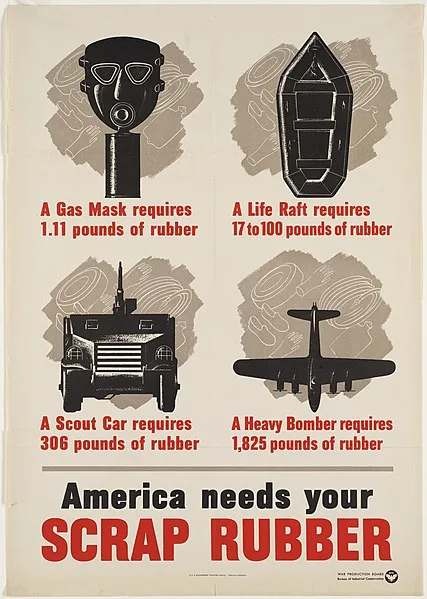
The image above is an American poster urging people to collect rubber (not gold, as in Korea’s gold-collecting drive). It stresses that a gas mask needs 500 g of rubber, a life raft 8 kg to 45 kg, a scout armored car 139 kg, and a heavy bomber 828 kg, and asks people to donate rubber. At the time, the U.S. government put everything into developing synthetic rubber, together with university labs such as Harvard and MIT, petrochemical companies, and rubber factories. Sharing countless patents, the U.S. succeeded in just eight months or so in synthesizing styrene and butadiene to produce a heat-resistant, durable synthetic rubber.
Another material that blocks heat and electricity effectively emerged from this synthetic rubber development: “Styrofoam.” You may also know it as “Styropor.” Styrofoam is a trademark of Dow Chemical in the U.S., while Styropor is a trademark of BASF in Germany. Hermann Staudinger, the German scientist associated with BASF’s founding, extracted a tasteless, odorless, lightweight thermoplastic called polystyrene (PS), but it was brittle and broke easily. Over 100 years ago, Ray McIntire, a chemical researcher, injected hydrocarbon gases such as butane into the material extracted in Germany, and it puffed up with a huge number of bubbles. This is expanded polystyrene, lightweight, waterproof, soundproof, cushioning, and insulating, which most of us know as “Styrofoam.” Like “Klaxon,” this word looks like another case of a B2B trademark becoming a generic term, but Styrofoam is an officially registered trademark of The Dow Chemical Company, the U.S. multinational chemical company, so be careful when using it formally. Oh, and “latex” refers to the unrefined, natural white liquid that comes from rubber trees.
㉦ Nylon: My father worked for many years at Kolon's Daegu plant. Kolon began as the exclusive supplier of nylon in Korea in 1953, right after the Korean War. In 1957 it founded a company called Korea Nylon in Daegu to make nylon, and it took its own name from that (Korea + Nylon = KOLON). Nylon was created in the early 1930s at DuPont's research lab. The researchers there played a game: dip a glass rod into synthetic-fiber material, wave it through the air, and see who could pull out the longest thread. Wallace Carothers, who had been a lecturer at Harvard before DuPont recruited him, dipped the rod into liquid polyamide and swung it through the air, and a light, thin, strong thread came out as if by magic. That was nylon.
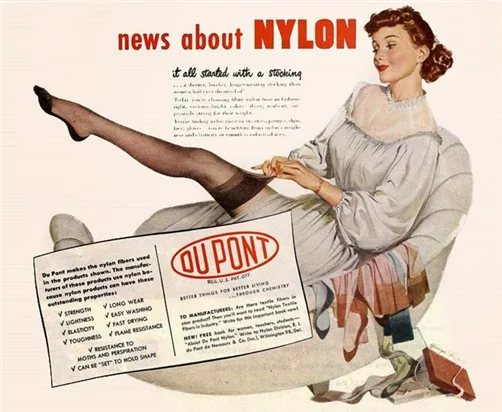
DuPont nylon stocking ad (Source: DuPont website)
After DuPont's first nylon plant opened in Delaware in 1938, the first products were B2C socks and stockings. Three years later, a golden opportunity arrived for DuPont. As noted above, war brings enormous technological progress and money. Parachutes and insulation gear needed vast amounts of silk, and Japan and China, the main sources of silk, were cut off by Japan when World War II broke out, just as with rubber. What did the US do? Unlike with rubber, it did not need a collection drive or a search for substitutes. Why? Because a substitute already existed. That was nylon.
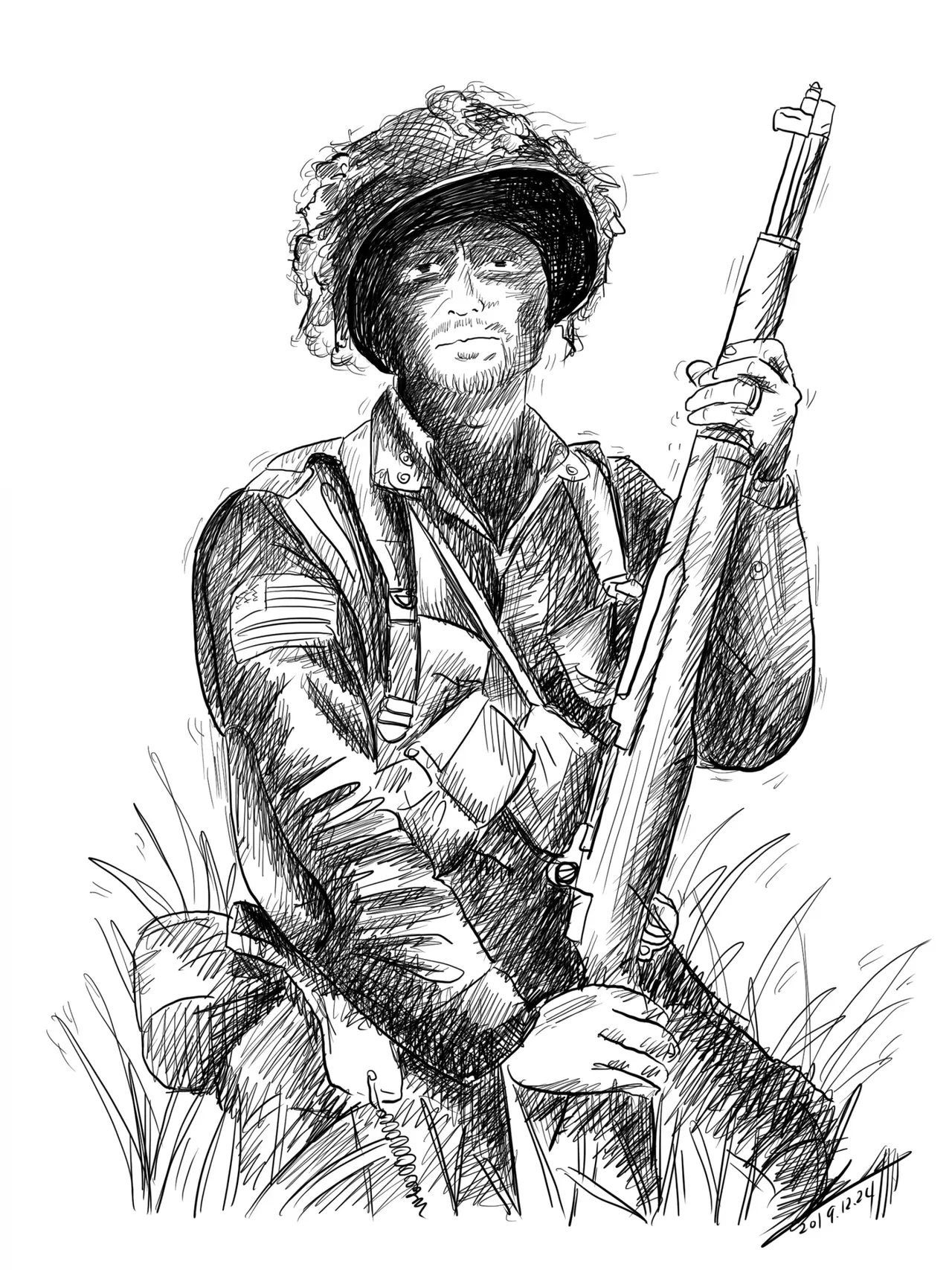
Hand-drawn illustration
DuPont’s nylon was used widely in nearly every field: combat uniforms, socks, weapon materials, the outer shell of helmets, rifle slings, parachutes, tire reinforcement, ropes, and more. Of course, young, high-spirited US soldiers also handed out nylon stockings to women all over the world. Thanks to that, nylon spread worldwide after World War II. As for why 'nairong,' the Japanese-style pronunciation of nylon in Korea, came to mean something fake, as in 'nairong patient' (a fake patient), here is my guess. From Japan’s perspective, the US had caused pain by cutting off oil supplies before World War II, and when Japan cut off rubber and silk supplies, the US churned out products made from 'fake' materials rather than real natural ones, 'synthetic rubber' and 'nylon,' overwhelmed Japan, and won the war. So seeing 'nylon' probably did not feel good, and Korea, which adopted nylon via Japan, seems to have absorbed that attitude without realizing it. This word, too, is a case of an industrial material 'B2B trademark turning into a common noun.'
㉧ Gore-Tex: In April 1982, Argentina’s military junta launched a war by landing 4,000 troops on the nearby British-held Falkland Islands and overpowering about 100 Royal Marines. This was the Falklands War. Britain pulled together every resource it had and struck back across the globe. Like Hannibal of Carthage marching over the Alps into Italy, Britain’s special forces, the SAS, crossed snow-covered high mountains in May, the southern hemisphere’s winter, without a single casualty. They successfully observed and ambushed the Argentine forces. The SAS is famously said to have worn combat jackets and boots made of “Gore-Tex.”
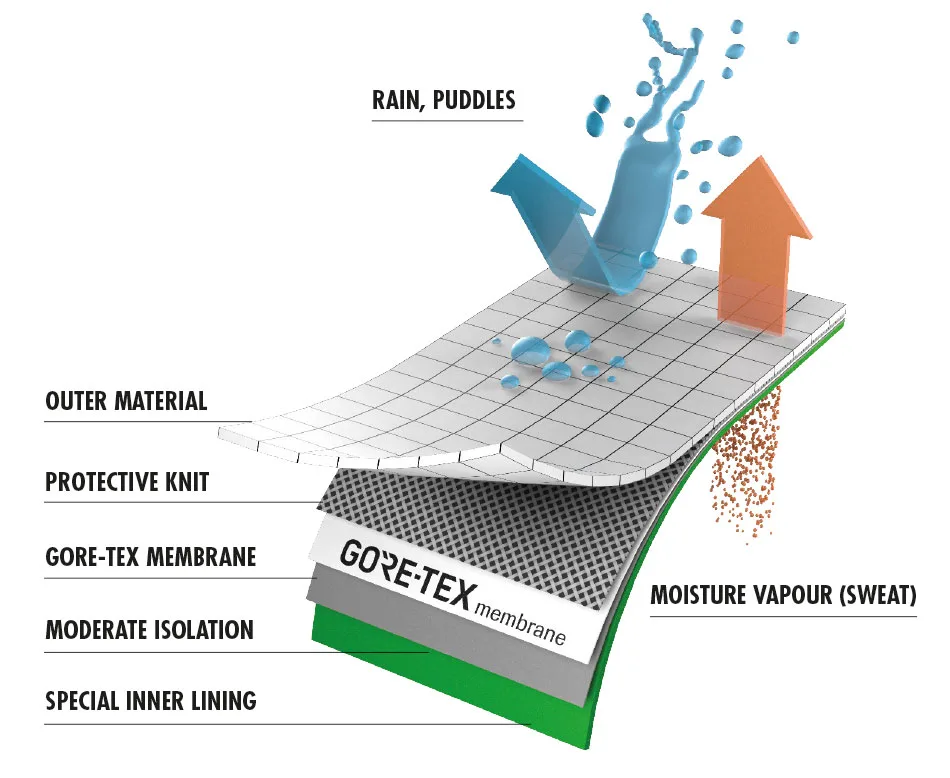
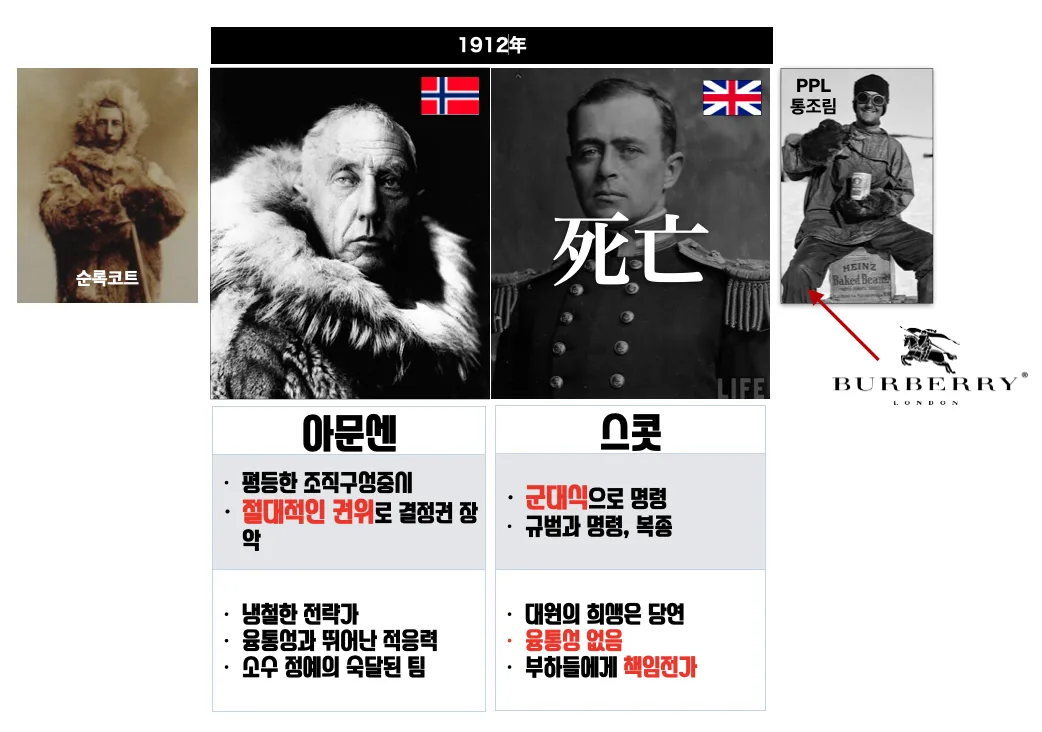
In 1969, Bill Gore, a former engineer at the American multinational chemical company DuPont, discovered that heating and stretching Teflon creates pores of exactly the right size. Gore-Tex's pores let water vapor pass through freely but block liquid water. The fabric keeps rain out while letting sweat escape as vapor, so the body does not lose heat. Before this remarkable material was invented, the only clothing that was waterproof on the outside and let sweat out from the inside was fur. In the winter of 1912, when Norway's Amundsen and Britain's Scott raced to reach the South Pole, Amundsen wore reindeer-fur parkas of the kind Eskimos wore, while Scott wore a parka made of gabardine, the cloth Burberry had developed for trench coats. Because it could not release sweat, the moisture froze inside the garment, with tragic results.
To be continued