This is a case from ten years ago, when I took MBA classes at Korea University. It was a grueling program with classes every evening after work. One day, a classmate who worked as a researcher at S Electronics brought an interesting topic.
"A refrigerator with a transparent display on the front"
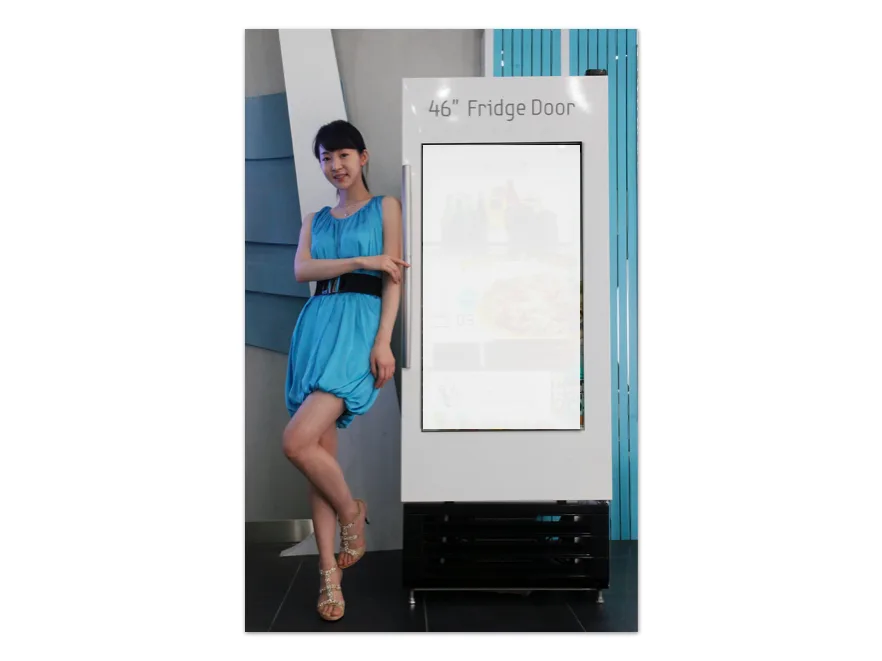
It was the era when the Galaxy S3, with its stunning dandelion-seed wallpaper, had just launched, and campus was buzzing with new IT devices, social media, and other emerging technologies. The topic a classmate, then a researcher at S Electronics, brought in — “a refrigerator with a transparent display on the front” — thrilled everyone in our study group: a sales director, an HR director, a marketing team lead, and a corporate instructor from different companies, all of them men. What ideas did they come up with?
1. Use augmented reality (AR: Augmented Reality) and sensors to detect the condition and temperature of food, so that older items glow red and fresh ones glow green, visible at a glance.
2. Identify the food inside the fridge and automatically show recommended recipes on the transparent display.
3. If a food item (e.g., eggs) is running low in its spot, the fridge automatically places an order at an online store.
4. Use the AOD (Always On Display) feature to keep key information such as weather, news, and stocks showing on the display even when the screen is off.
5. Send photos and videos from a smartphone to the refrigerator so they appear on the display right away, like a picture frame.
6. Let users watch video content such as TV, sports, and movies by running Tizen or Android apps, or by mirroring the smartphone screen.
As they talked excitedly about these ideas, the men in their 30s were marveling at their own creativity and getting a little carried away. Just then, a female classmate in her early 40s walked by and asked, “What’s got you so excited?” “Oh! We’re coming up with ideas for using a refrigerator with a transparent display.^^” Her face scrunched up slightly, and she said flatly:
"A transparent refrigerator? Are you crazy? Who would want that?"

The excited men in their 30s suddenly froze. Something had clicked. The main user of a refrigerator isn’t a man — it’s the homemaker. Most refrigerator users are probably women in their 40s and 50s. Yet a group of men in their 30s was building a product those users barely needed. So we asked our female classmate again: “Then what kind of refrigerator do you want?” “One you can’t see into, of course! A refrigerator that’s see-through? Think about it! The hassle of cleaning it every single day! A transparent refrigerator makes no sense!” Exactly. The homemaker, the refrigerator’s main user, doesn’t want to show a messy fridge interior, and if it were visible, having to clean it every day would be a real burden.
[ Note: Japanese Electronics in the 1990s ]
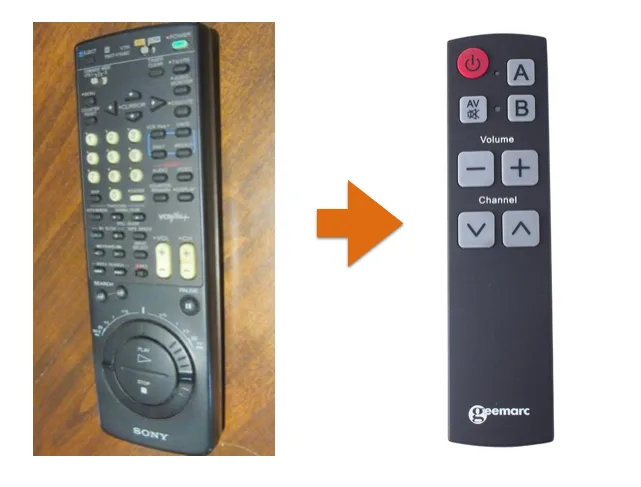
The late 1990s were the last great moment for Japanese electronics! What Japanese products come to mind? Sony for TVs! Sony and Aiwa for Walkmans! Canon and Nikon for cameras! Toshiba for laptops! Panasonic, Hitachi and more. These were truly cutting-edge products that everyone wanted. In the late 90s, Japanese companies put the manufacturer ahead of the customer, and inside the manufacturer, engineers and decision-makers ahead of everyone else, while engineers from the University of Tokyo and Kyoto University endlessly refined advanced analog technology. Remember those remote controls with more than 50 buttons plus a jog shuttle, and a flip cover hiding another 20 or so? Then, in the early 2000s, as Korean electronics companies took over the display market with LCDs, Japanese makers resisted change, insisting that CRTs had the best picture quality. From the late 2000s, when smartphones arrived, they fell seriously behind.
Let’s return to the transparent display refrigerator. After we brought our female classmates onto the team and asked them for solutions, they said the default should be “opaque.” Since 2012, I have shared this case with female participants in my marketing training sessions and asked for their ideas countless times. What ideas did they come up with?
1. The default should be “opaque.”
2. Add design elements. Let users download theme designs from an app store. (Example: “ocean” in summer, “maple leaves” in fall, “snowscape” in winter)
3. Let users turn the door into a family album with their photos and videos.
4. Let an image sensor detect the surrounding colors and change color like a chameleon, so the refrigerator blends naturally into the interior.
Ever since, in every training session, I had discussed a "color-changing refrigerator" with the people who use fridges most: women in their 40s and 50s. So I was truly amazed when one actually launched in 2022. It suggests refrigerator makers have started to focus on user experience, don't you think?
Then what if a transparent display were applied to refrigerators for large retailers such as E-Mart, Homeplus, or Costco? For retail staff, seeing information like “temperature control” and “inventory management” at a glance in settings mode would make work easier and faster. For retail decision-makers, higher efficiency would cut costs and raise profits. And for customers, being able to see new information such as promotions and ads “tailored” to them would be a plus.
If employees care only about pleasing their bosses instead of serving the needs and interests of “customers” or “shareholders,” and stay passive and ignore change, the company will fail. Today, change and innovation arrive moment by moment, unlike in the 19th or 20th century, so the collapse will come faster than anyone can sense.
To be continued