Sales and marketing roles involve a lot of tasks, and 'planning skills' are among the most important. Every year in late autumn, you start work on next year's business plan. Each person in each department discusses this year's results and next year's key goals, settles on the numbers, and then starts building the business plan. What comes first? Isn't it 'macro-environment analysis'? "Macro" means seeing the big picture, as if through a giant's eyes.

The Colossal Titan / Source: Official Attack on Titan Twitter
The most commonly used tool for macro-environment analysis is PEST. P stands for Political, E for Economic, S for Social, and T for Technological. It helps you sort key environmental changes into 'Opportunities' and 'Threats', which, combined with your company's Strengths and Weaknesses, can feed into a SWOT analysis.
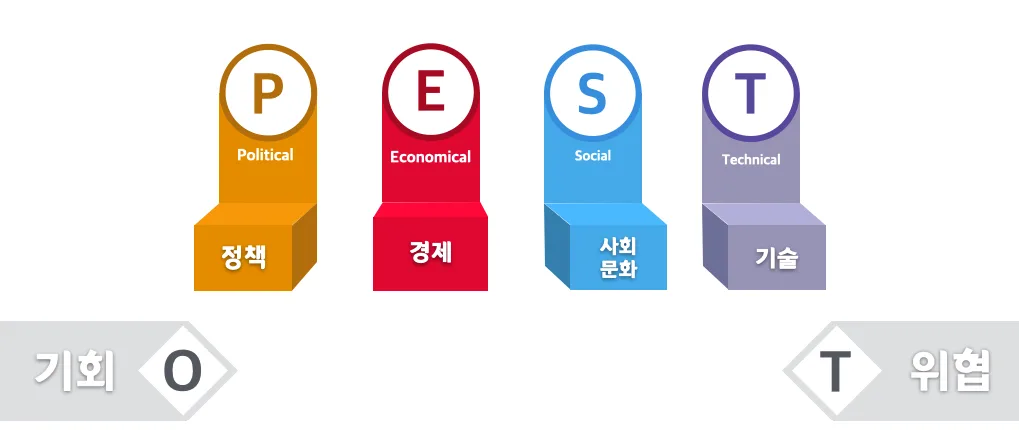
P, Political: the political environment of the target country, including its government, administration, policies, laws, support and regulatory measures, tariffs, investment, and patent policies. E, Economic: the economic environment of the target country, including the business cycle, growth rate, exchange rates, interest rates, stock prices, inflation, and consumption levels. S, Social: the social environment of the target country, starting with demographic change and extending to history, society, culture, lifestyles, generational shifts, and consumer culture. Finally, T, Technological: the technological environment, including the Fourth Industrial Revolution, digital transformation, AI and robotics, and smart factories.
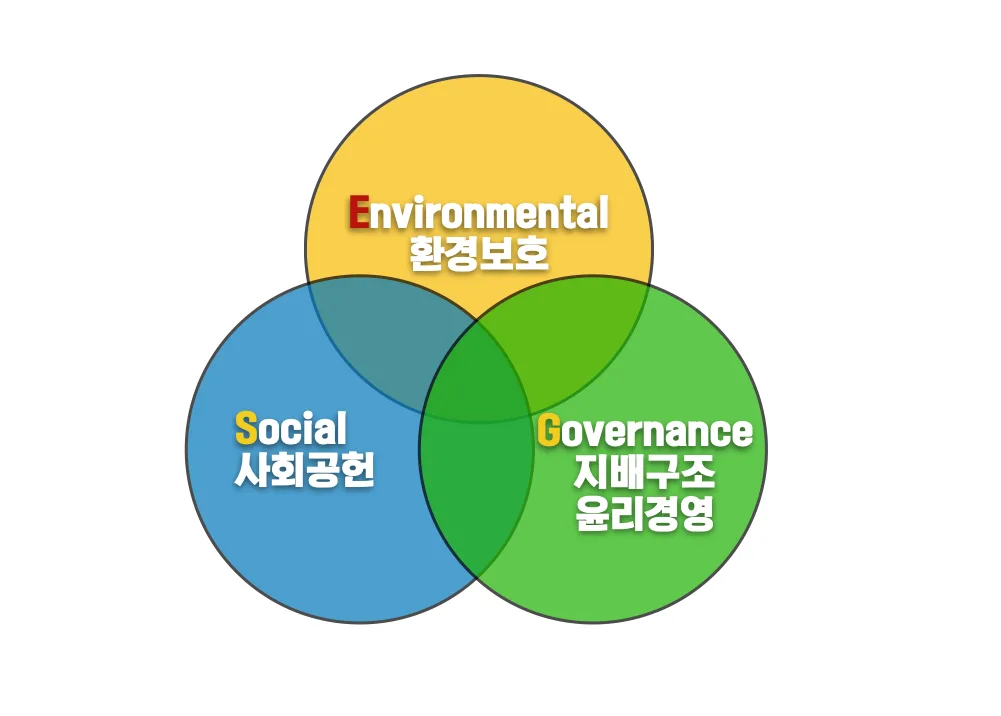
ESG
The concept of ESG (Environmental, Social, Governance) took shape in 2005. The 2015 Paris Agreement then produced a climate accord with greenhouse gas reduction obligations, and interest surged after COVID-19 spread in late 2019. As ESG management has grown, ESG factors have been added to macro-environment analysis, and the tool built for this is the PESTEL analysis. For reference, the Environmental factor in ESG centers on climate change and includes pollution, growing waste, desertification, deforestation, the greenhouse effect, and the depletion of natural resources. The Social factor includes employee health and safety, better working conditions, more jobs for vulnerable groups such as seniors, women, and refugees, diversity, and community development. The last ESG factor, Governance, includes executive ethics, corruption, the role of the board, executive pay systems, and honest tax payment.
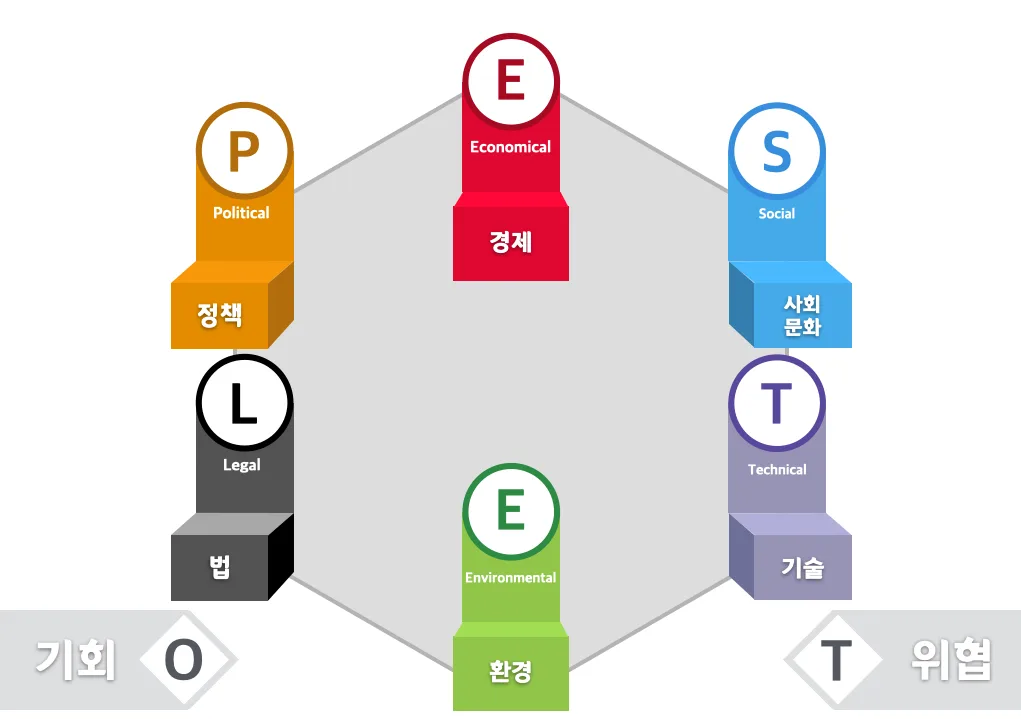
PESTEL adds environmental (ESG) factors to the PEST macro-environment analysis tool: Political, Economic, Social, Technological, Environmental, and Legal. So let’s run a PESTEL macro-environment analysis from the standpoint of a paper manufacturer that makes a wide range of paper products: wallpaper, specialty paper, packaging paper, printing paper, and label paper. (There are already plenty of analyses of major industries like automobiles and semiconductors ^^)

[ Political ]
* If restrictions on single-use cups inside cafés such as Starbucks and Angel-in-us are made law, sales of paper products for paper cups will plunge. (T, Threat)
* Instant noodles, made by the ramen manufacturers who are our paper maker’s main clients, are seen as an everyday food for ordinary people, so price increases are limited. As a result, sales for a paper manufacturer that makes ramen containers are not significantly hurt. (O, Opportunity)
* When war, natural disasters, or epidemics strike, instant noodles are the most commonly used relief supply. That makes it an opportunity for paper manufacturers that make instant noodle containers. (O, Opportunity)
* Legislation banning residence in basement and semi-basement units is expected to reduce demand for “wallpaper and wall coverings.” (T, Threat)
* If the use of digital textbooks, electronic voting, and electronic receipts becomes mandated by law, sales of related paper products will decline. (T, Threat)
[ Economic ]
* The exchange rate, about KRW 1,050 (≈ US$1) per US dollar in 2018, has jumped more than 30% to the KRW 1,400 (≈ US$1) range. If you source materials domestically or imported large volumes of raw materials in advance, and most of your sales are exports, this is an opportunity. But if you source most materials overseas, your inventory is about to run out, material costs rise by more than 30%, and most of your sales are domestic, it is a genuine crisis. (T, Threat)
* Because of the Ukraine–Russia war, the price of pulp (SBHK), paper’s main raw material, rose 16%, from US$885 per ton in August 2021 to US$1,030 per ton in August 2022. Paper manufacturers have no choice but to raise their supply prices. Margins may rise briefly in the short term, but over the long run the result is weaker demand and lower consumption from the economic slowdown, which is a threat to paper manufacturers. (T, Threat)
* Rising prices for food ingredients and for eating out are expected to increase demand for cup noodles. This is an opportunity for paper manufacturers that make instant noodle containers. (O, Opportunity)
* During the COVID surge, demand for interior makeovers lifted wallpaper sales, but travel demand has since spiked on revenge-spending sentiment, which reduces interior demand. (T, Threat)
* As sharply rising interest rates push down real estate prices, demand for moving and interior renovation is falling, and paper manufacturers' wallpaper sales are expected to decline as well. (T, Threat)
[ Social ]
* In 2019, the book publishing market was nearly 7% smaller than in 2015, yet the e-book market grew by 1,100%. This is a highly threatening environment for the paper industry. (T, Threat)
* Demand for cup noodles fell as travel dropped during COVID-19, but the surge in travel in the second half of 2022 is expected to lift demand for cup noodles and their containers. (O, Opportunity)
* If health concerns such as excessive sodium, overconsumption of food additives, and endocrine disruptors gradually reduce demand for cup noodles, that is a threat to paper manufacturers that make cup noodle containers. (T, Threat)
* If changes to COVID quarantine guidelines let students return to school and academies as normal and cup ramen demand rises, it is an opportunity for paper manufacturers that make cup ramen containers. (O, Opportunity)
* With more single-person households and a frozen real estate market, demand for low-cost interior makeovers is expected to continue. (O, Opportunity)
* The spread of paperless culture, which replaces paper documents with electronic ones, will reduce sales of related paper products. (T, Threat)
[ Technological ]
* With development of packaging that needs no plastic coating complete, a manufacturer can offer the right solution to clients who are considering ESG management. (O, Opportunity)
* If demand grows for products that are somewhat healthier than conventional cup ramen, such as rice noodles and cup noodles, it is an opportunity for paper manufacturers that make cup noodle containers. (O, Opportunity)
* Completing development of high-grade wallpaper that is easy to install yourself will help boost sales of related wallpaper products. (O, Opportunity)
* Silk wallpaper, which accounts for a large share of sales, is difficult to install and raises environmental concerns. (T, Threat)
* Rising use of smartphones, tablets, and e-readers is sharply cutting paper consumption, and sales of related paper products are expected to fall. (T, Threat)
[ Environmental ]
* Under the influence of ESG and RE100, client companies and end consumers will look for eco-friendly, energy-efficient paper materials. This is an opportunity for paper manufacturers with the relevant technology. (O, Opportunity)
* Cup noodle containers contaminated with leftover grease cannot be recycled, which is a threat to paper manufacturers that make instant noodle containers. (T, Threat)
* A new substitute is expected to cut wallpaper sales: an eco-friendly water-based paint with larger particles than ordinary paint, which leaves a cleaner finish. (T, Threat)
* Campaigns encouraging eco-friendly products and the spread of ESG management are expected to reduce the use of paper products. (T, Threat)
[ Legal ]
* The rules taking effect in November 2022 that restrict single-use items such as paper cups and plastic straws inside stores are an opportunity for paper manufacturers with eco-friendly manufacturing technology. (O, Opportunity)
* A manufacturer that adjusts production ahead of competitors to prepare for legally mandated braille labeling on packaging can gain market share. (O, Opportunity)
* A law requiring flame-retardant wallpaper as interior finishing in performance venues and lodging facilities could boost sales of related products. (O, Opportunity)
* A higher mandatory purchase ratio of eco-friendly products by public institutions is an opportunity for paper manufacturers that have finished developing eco-friendly paper products. (O, Opportunity)
To be continued