Have you heard of the PlayPump? It is a classic example cited for Empathy in Design Thinking. It went from being hailed as a groundbreaking, successful idea to being judged a failure that never understood its users.
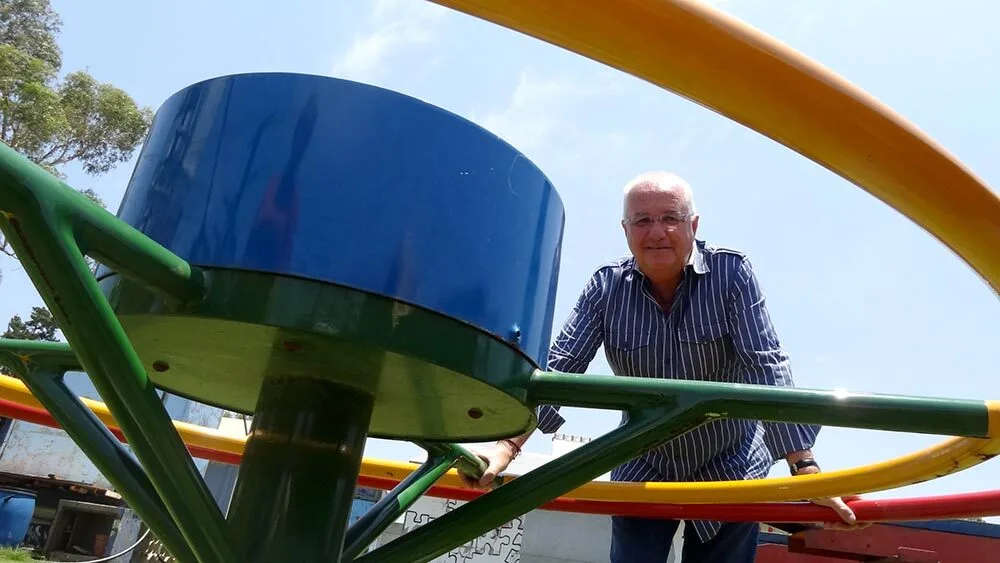
Trevor Field, an advertising, PR, and sales professional from Birmingham, England, was working between the UK and South Africa when, at a 1989 agricultural fair in Pretoria, he came across a remarkable invention: the roundabout pump. He saw it as an item that could transform rural Africa, which relied on hand-operated pumps and windmills. So he bought the patent and spent five years refining the design and developing the business idea.
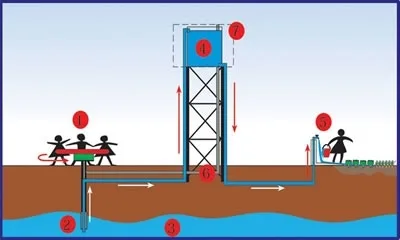
The idea was to build a cross-flow pump into a merry-go-round and provide it free as a children’s play device. As the merry-go-round spins, the pump connected beneath the ground draws up groundwater, which is stored in a water tank. The tank carries advertising, and the ad revenue covers pump maintenance. (Ads in a remote African village? -.-;) Truly groundbreaking, isn’t it? A project that makes everyone happy. Adults would no longer have to walk long distances to fetch water or labor over the lever of a hand pump. Children just play happily on the merry-go-round, and the organization running the fundraising marketing could take in enormous sums (profit?).
Note: We tend to think a charity that spends heavily on payroll and publicity is a bad one skimming profit in the middle, while one with a low ratio and more money going to actual donations is a good one. But if overhead is cut too far, moral hazard such as embezzlement by local organizations can arise, which makes this a genuinely hard problem.
In 1989, Trevor Field bought the patent for a cross-flow pump, named it the PlayPump, and refined its design. He then created the charity PlayPumps International, installed the first PlayPump in 1995, and began fundraising marketing in earnest. After former U.S. President Bill Clinton endorsed it in Time in 2016, it drew enormous donations from the world’s media and prominent figures, and a total of 1,800 PlayPumps were installed in South Africa, Mozambique, Swaziland, Zambia, and elsewhere. It was a landmark project that raised $25.2 million (about KRW 27 billion (≈ US$20,200,500)).
But serious problems began to appear. The most important users, the children, were not playing on the PlayPump. It was far from the village, it was very stiff and hard to turn, and there were safety problems, with many cases of broken arms and legs and vomiting. When I was an elementary school student in the mid-1980s, small amusement parks had plenty of dangerous rides that would keep spinning for as long as you wanted after you paid once. We rode until our faces turned pale and we threw up. Many kids were hurt and bleeding all the time. Children were sometimes given a little money to turn the PlayPump, and in some cases adult men and women in the village turned it like oxen. Another problem was performance. The $14,000 PlayPump delivered only 1/4 of the output of a $3,500 hand pump, which works out to about 1/16 of the cost-effectiveness. Actual users on the ground complained that the PlayPump was truly useless, and made sure to add that the old hand pumps took much less effort and pumped better.

After more than 10 years of teaching startup marketing and doing consulting and mentoring, I have seen quite a few startups that never ask why they are starting up, who their customers are, or what those customers truly want. Their thinking is 'everyone is starting a company, so I should too.' They dress up a business plan, win startup funding with pitching skills, collect various grants and payroll subsidies, and scrape by. Many never realize that their product or service is full of features customers don't want, even ones they dislike, and grow hooked on the empty title of "startup CEO" and its impressive-sounding social value. You need to truly understand your reason for existing, the core of your business, and the needs of your users and buyers. Then make a clear value proposition and turn a real profit.
To be continued