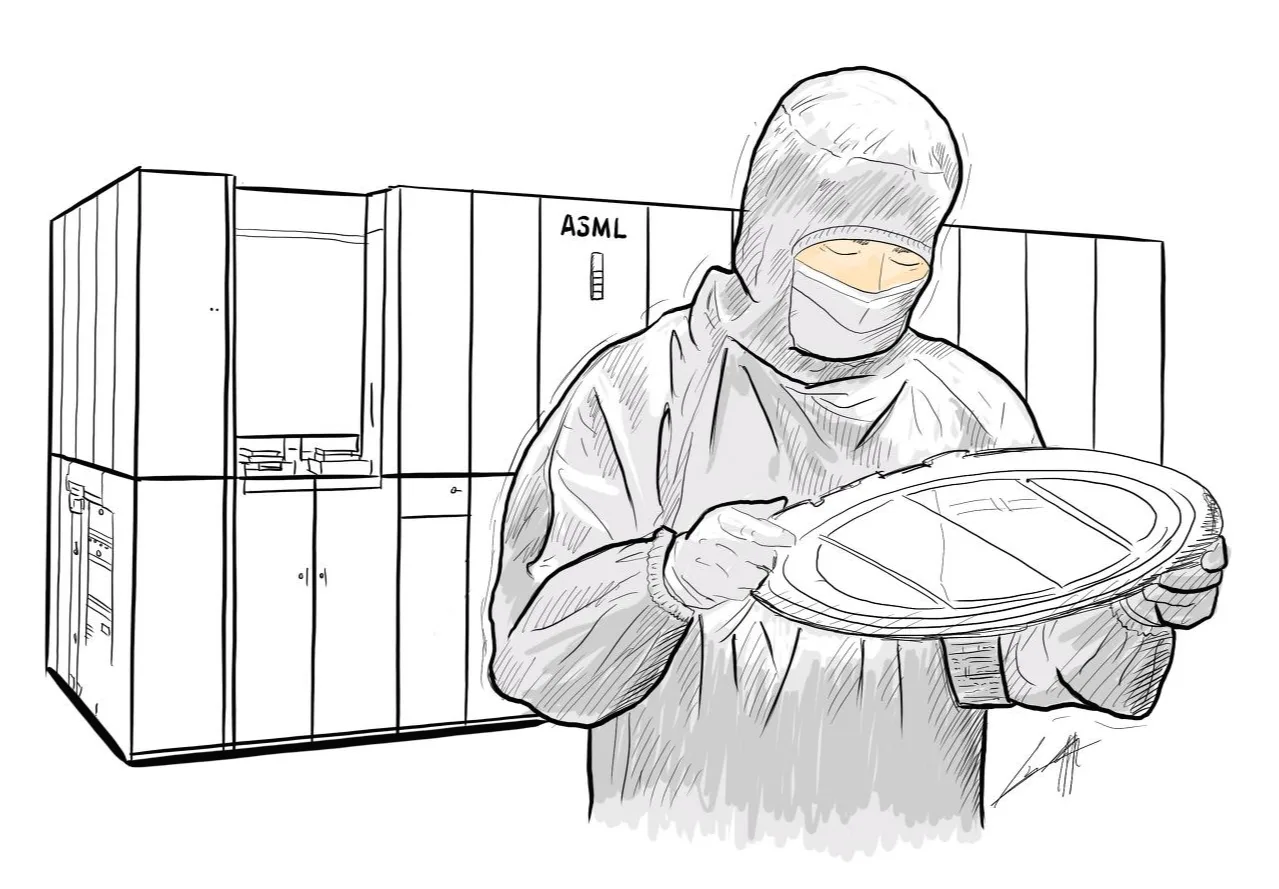
Hand-drawn illustration / Semiconductor equipment
What is the heart of B2C marketing? Isn’t it stirring consumers’ desire and, even for things they don’t need right away, creating and using trends and keywords (must-have items, feel-good value, flexing, etc.) to keep them buying? The magic of making people buy, subscribe to, and experience things they don’t need: that is B2C marketing, right?
Still, consultants including me once got together to work out how best to explain the essence of B2B marketing to the general public. As a result, we identified a key factor.

Pain
It was ‘pain.’ Remember this keyword: pain. It may not click right now, but don’t worry — I’m not about to offer empty platitudes like ‘life is an endless series of suffering.’
One key element of marketing is Empathy. It means finding your angle of attack by empathizing with the consumer, and empathizing with someone is enormously hard. It is never easy for a man to empathize with a woman, a child with an elderly person, or a student with a homemaker. In B2B marketing, you need to practice this kind of empathy actively and strategically.
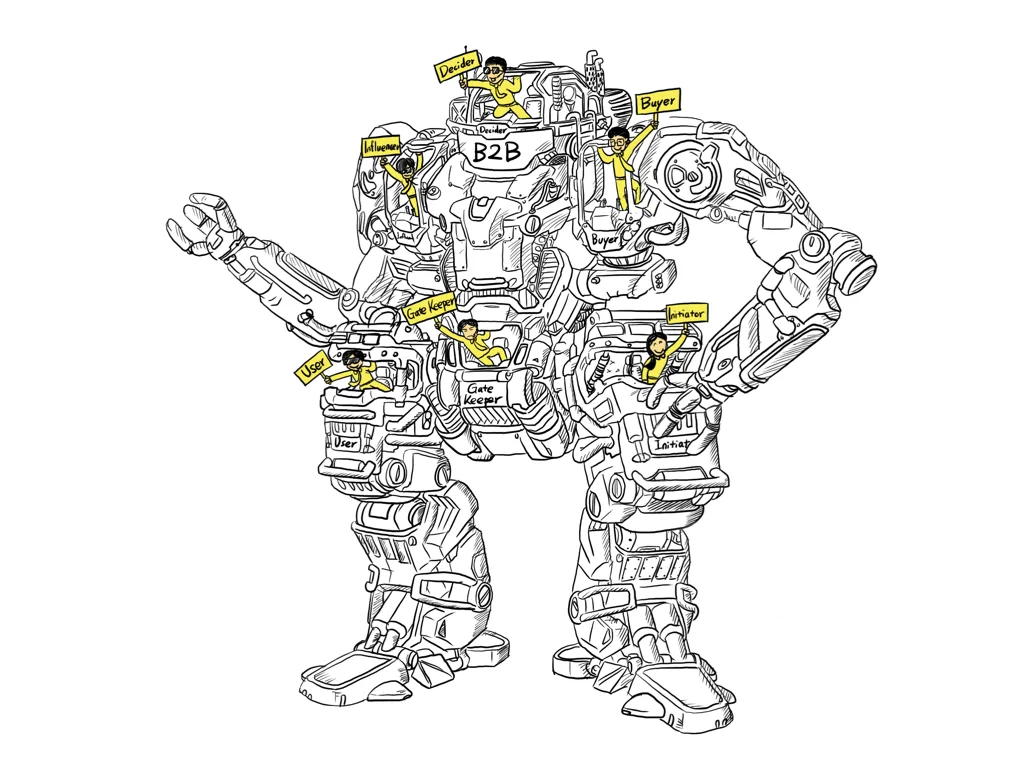
The Buying Center, usually divided into six roles
① Buying center and pain points
Take SK Hynix as an example. A buying center usually splits into six roles, but to keep it accessible I have split it into four: ‘Production team (User), Purchasing team (Buyer), Quality team (Influencer), Owner (Decider).’ Now imagine you work in each of those departments.
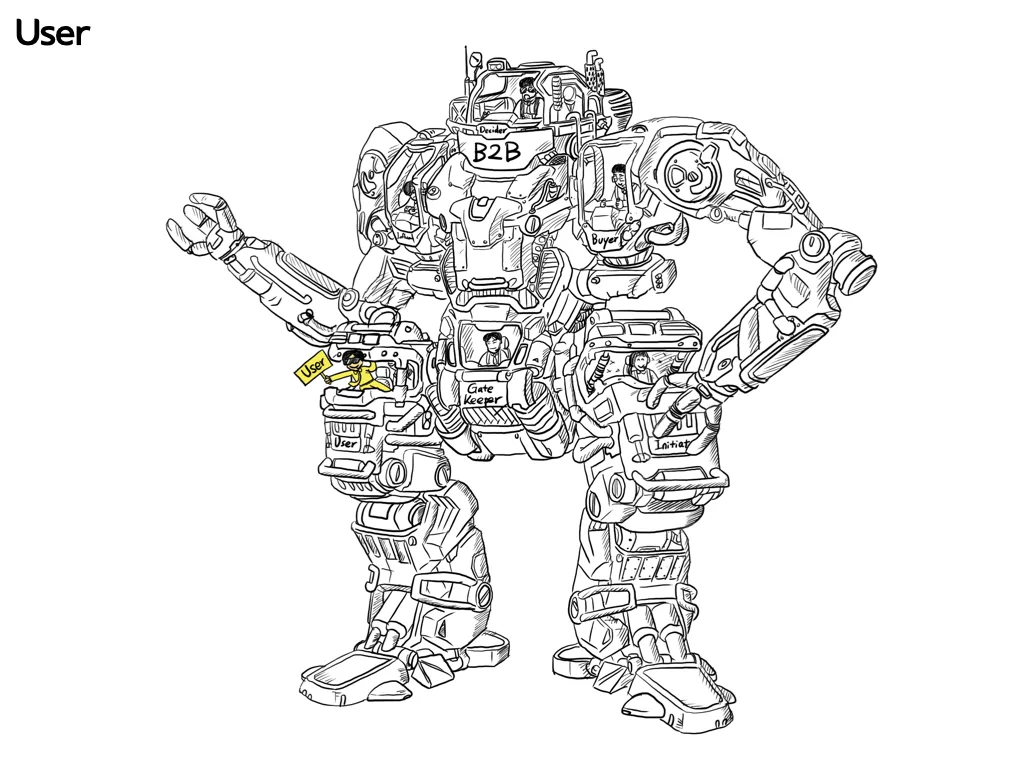
[ Production Team Member / User ]
I am a salesperson selling semiconductor equipment, and you are a mid-level member of the production team. To persuade you, I need to find the ‘pain point’ you feel with the equipment you normally use.
Price? Defects? Those are the pain of the purchasing and quality teams, not of a production team member, right? Usually they will talk about ‘inconvenience’ in their work. Once I know this pain point, I just stress the solution: convenience. I should pitch it like this: ‘The new equipment will make your job easier by fixing the tedious setup and hassle you have with your current equipment.’ Too simple? Exactly. Offering a solution to the pain is where it starts.

The same holds if we move from the semiconductor industry to a café. Suppose I have to sell a newly released coffee machine to a café where there is no owner, only a part-timer. All I need to do is find the ‘pain point’ she feels with the coffee machine she uses now. Let’s practice together. Is it the machine’s price? The low cost of the beans bundled with it? Bean quality? The taste of the coffee? Perhaps extraction ‘speed’ and ‘reliability’ matter most. For a part-timer, the best coffee machine is one that lets her finish quickly and take a break.
Back to SK hynix: what if you learned that the production team has an incentive program for hitting production targets? You could pitch it this way: ‘New equipment will boost your productivity right away and bring you incentives.’ An offer that makes their work easier and earns them more money is the solution that persuades a production team member. But what if you told a production team member that the new equipment helps build production automation? (Could you sell a ‘robot barista’ to a café part-timer, or a ‘Hi-Pass system’ to a highway toll collector?) That would be a complete waste of effort. We will come back to this shortly.
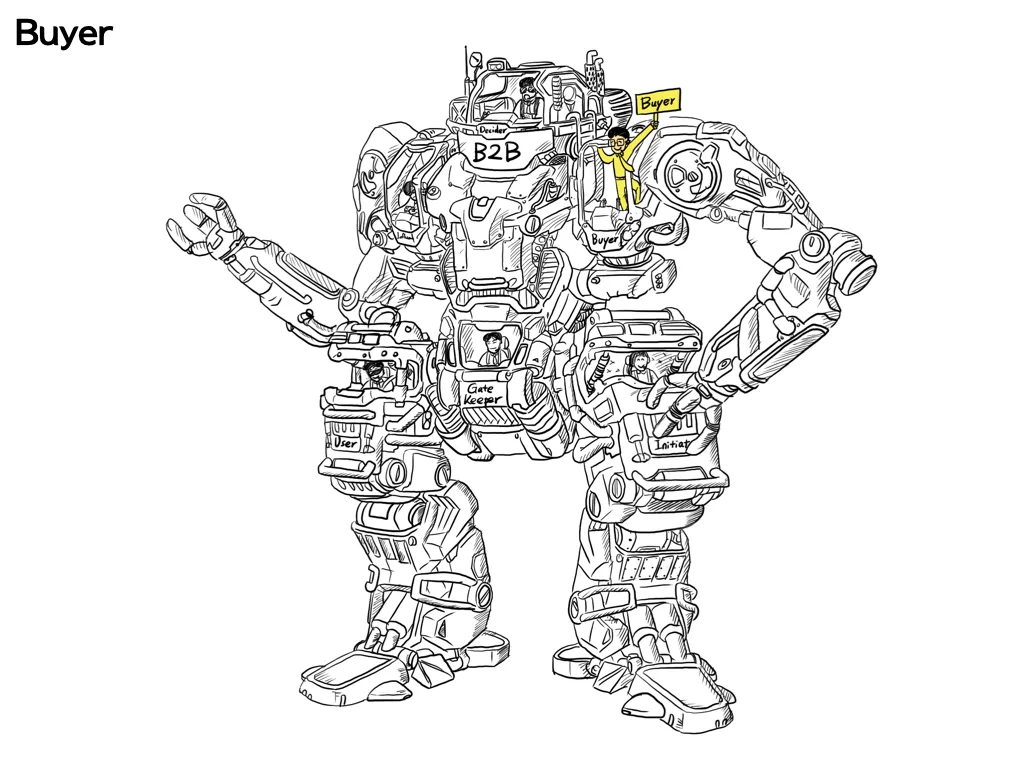
[ Purchasing Team Member / Buyer ]
What is the purchasing team’s pain? In a word, ‘money.’ Money above the surface and money hidden below it. The money above the surface is the equipment’s price (Unit Price); the money hidden below is the upkeep cost (Management Cost), right?
Say your customer already runs Chinese-made equipment that cost KRW 80 (≈ US$1) million, and the equipment you want to sell is Korean-made at KRW 100 million (≈ US$74,800). Can you still make the sale? Yes. Suppose the Chinese equipment costs KRW 50 million (≈ US$37,400) a year to maintain, while the Korean equipment costs KRW 20 million (≈ US$15,000). The longer the equipment runs, the more the advantage shifts to your product on ‘maintenance cost.’ What matters to the purchasing team is the purchase price and, just as much, lower maintenance cost. A B2B brand also brings trust and quality, so you can make the case that your product wins on total cost savings.
Note> The MOL Comfort Incident
At noon on June 17, 2013, the Japanese container ship MOL Comfort, sailing from Singapore to Jeddah in Saudi Arabia, broke in two in the Indian Ocean. There were several causes, but it appears that a host of problems that had piled up in Japan at the time erupted all at once.
I believe a mix of problems all played a part: material issues like 'Kobe Steel’s quality falsification scandal,' hull manufacturing defects, and overloading. Shipbuilding is a large-scale B2B industry, so when problems like these arise, would anyone place an order? I think this is when Japan’s shipbuilding industry began its real decline. It is a classic 'trust' problem.

<Figure 9. Japan’s MOL Comfort, which broke in two in the Indian Ocean in 2013>
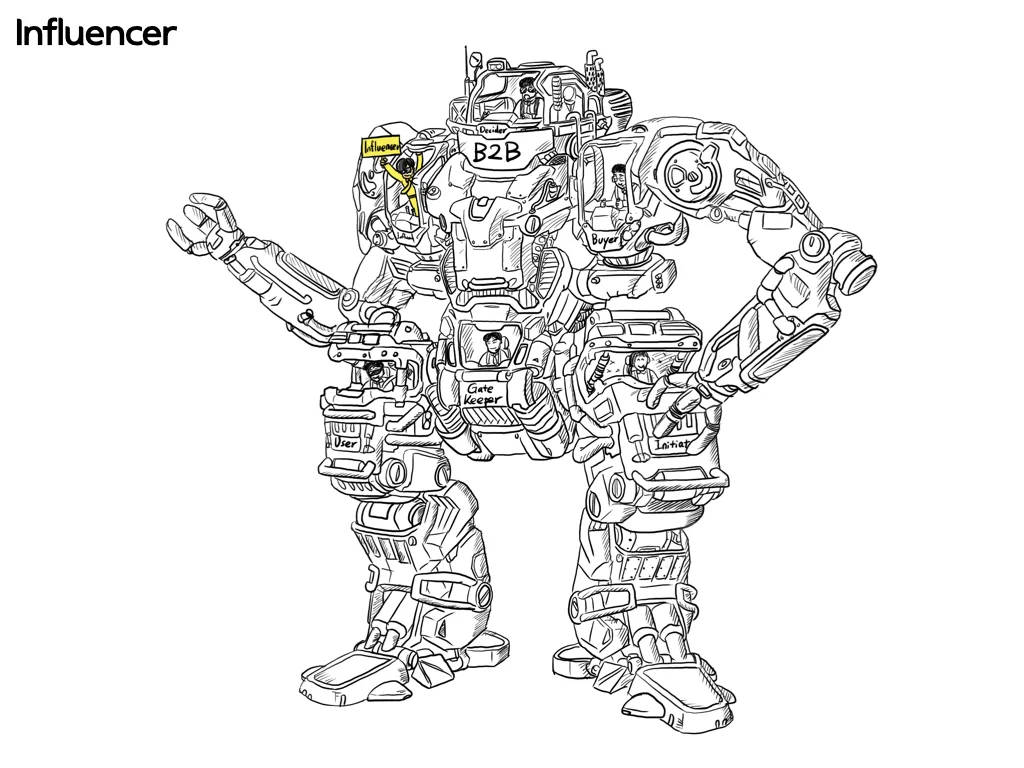
[ Quality Team Member / Influencer ]
Now, take the pain of SK Hynix’s quality team. It comes down to one word: ‘defects.’ That word carries far more weight than it does in B2C. If a watch or smartphone breaks, you just fix it; it is only a slight inconvenience while it is repaired. But if equipment breaks in a B2B industry? If the line stops? Depending on company size, the costs run from tens of billions to hundreds of billions of KRW, a staggering sum.
In 2019, a transmission cable at the Hwaseong substation burst, causing a massive blackout across the Dongtan area. Power also failed to reach the nearby Samsung Electronics memory chip fab, and the production line stopped for one minute. In semiconductor processing, where hundreds of steps run continuously, a blackout ruins every product in process. No machine defect is needed: a single minute of outage can cause damage of billions to hundreds of billions of KRW, so reluctance to adopt new equipment or materials is only natural. Then in the summer of 2019, Japan banned exports of semiconductor materials. As you know, Japan shot itself in the foot. The supplier had thrown its weight around with its customers, but that gave the customers room to switch suppliers.
That is why a solution with a low defect rate, backed by references, is so compelling to them. You can also appeal to ‘safety.’ A death or injury at a factory is an enormous risk, so quality teams are always on edge about it. They worry about defect rates in finished products as well as in the manufacturing process. If the company makes tools such as chainsaws, a defect can even cause a worker injury.
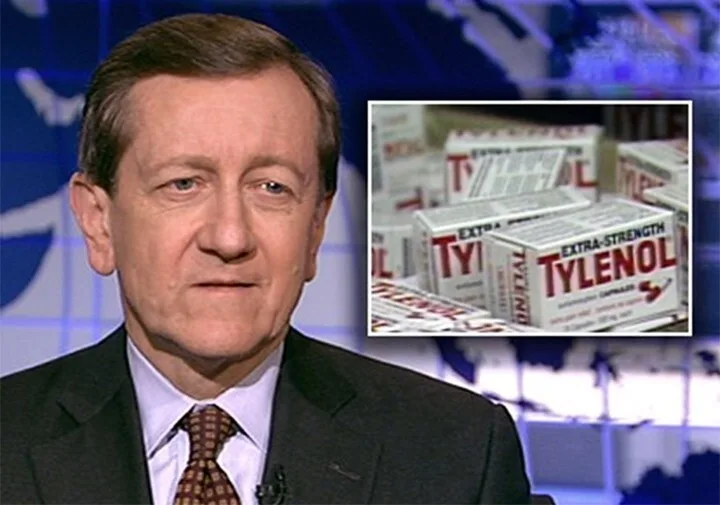
In pharmaceuticals, the need for safety is even greater than in semiconductors. After people died in Chicago in 1982 when Tylenol capsules were laced with poison, the manufacturer redesigned the packaging for its entire Tylenol line so the same incident could not happen again.
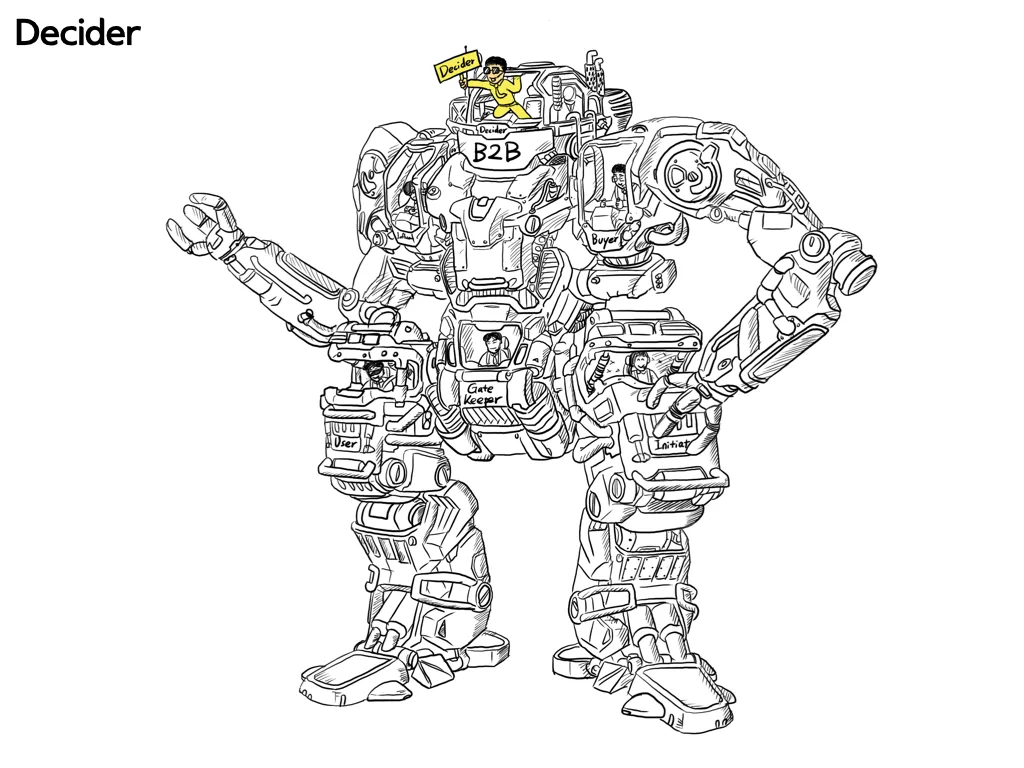
[ Owner / Decider ]
Here, the owner means the Decider, the decision-maker. In a small organization or company that would be the owner or CEO; in a large one, it might be a department head or team lead. What pain does the owner, the Decider, feel?
Before you try to persuade the owner, know this: these people usually have almost no time for salespeople. Even if they agree to meet, you get one to two minutes at most, so you have to deliver your message and get a result within that window. I would usually wait in the lobby or reception area, and when the decider appeared, I would hurry over and walk alongside, or ride the elevator together and make my pitch. It is a well-known sales technique called the ‘elevator pitch.’
My video explaining the elevator pitch
It is the skill of explaining and selling your business in the short time an elevator takes to go from the first floor to the third: short, simple, and impactful. Moving someone in just over a minute is hard, but you need that skill to persuade the decider.
An elevator pitch must meet the following requirements.
▷ Interesting Opening : You need a powerful opening that grabs attention instantly.
▷ Passion : A passionate attitude is required (eyes burning bright).
▷ Short: It must be done within one minute.
▷ Caution : Don’t spend much time on the problem.
The elements of an elevator pitch are as follows.
▷ Hook : Something that grabs attention.
▷ Information : A short description of the product and service.
▷ Target market : A brief description of the target market.
▷ Different : How you differ from competitors. Explain mainly with quantitative, numeric data.
▷ How to : Briefly explain why it helps them.
▷ Needs: Explain what the investor wants.
▷ Profit : Explain the return the investor will receive.
▷ Impact : Close with a strong finish
You have to deliver a briefing that meets all of these conditions within one minute. Without thorough preparation and steady practice, you may end up red-faced and stammering, not even sure what you are saying, and waste a precious minute you will never get back.
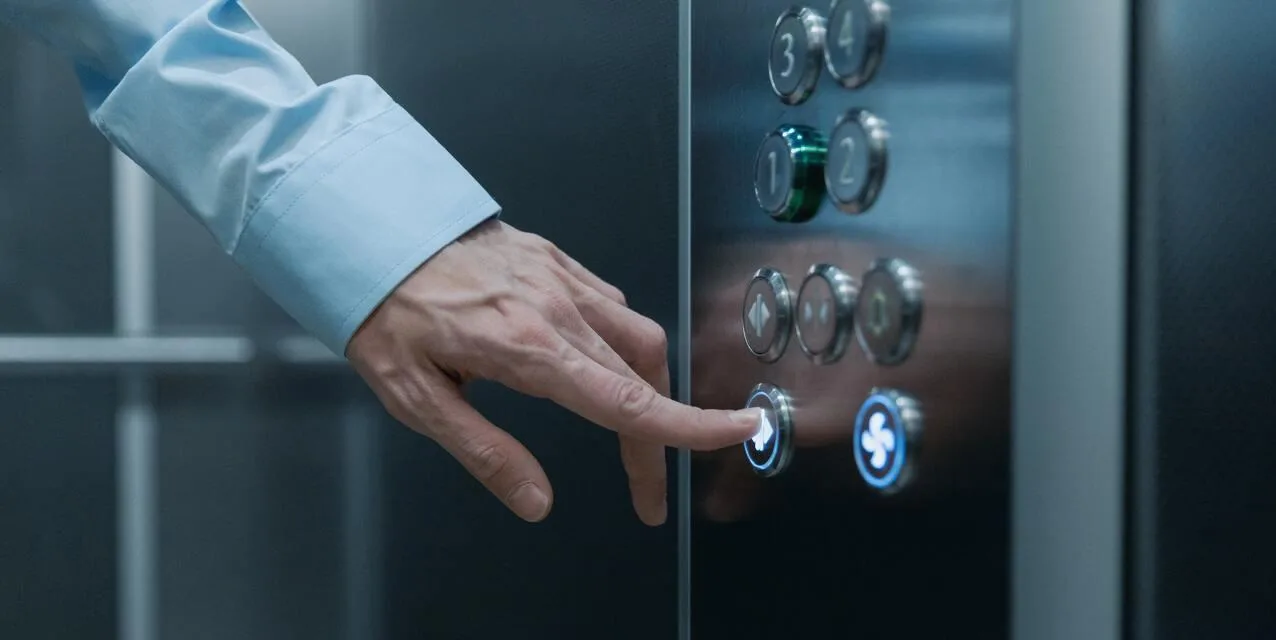
So what message should you deliver in that one minute? There is usually a ‘hook’ suited to the company and the season. In today’s climate, something like ‘Has COVID-19 made things tough for you?’ could be the hook. If the answer is yes (and most will say yes), you continue the conversation: how many workers are tied to a single machine, whether the minimum wage increase has had an impact, how heavy the labor cost burden is. Once the decider agrees, you present a powerful solution: ‘We can cut your labor costs in half.’ Which business owner wouldn’t be tempted by that?
Decider-level executives usually have subordinates trailing along, and the decider gives them orders: ‘Check that proposal and report back to me.’ That is where the decider’s role ends. Since the order was given verbally, the person who received it will have to meet with me, and from there we simply move through the process: a proper briefing, sample delivery, test scheduling, and so on.
What matters is that the result we want comes out of the pain the owner feels. What happens if you pitch the solution the wrong way? You told the owner, the decider, ‘We can cut your labor costs in half.’ What happens if you make that same pitch to the production team? Imagine you are a production team leader or a floor worker. A salesperson comes in and says, ‘We have a great solution. Labor costs must be a struggle these days. We can cut them for you by automating your processes with AI and robots.’ How would you feel? You would be appalled. You might even call that pitch a ‘blunder.’

To be continued