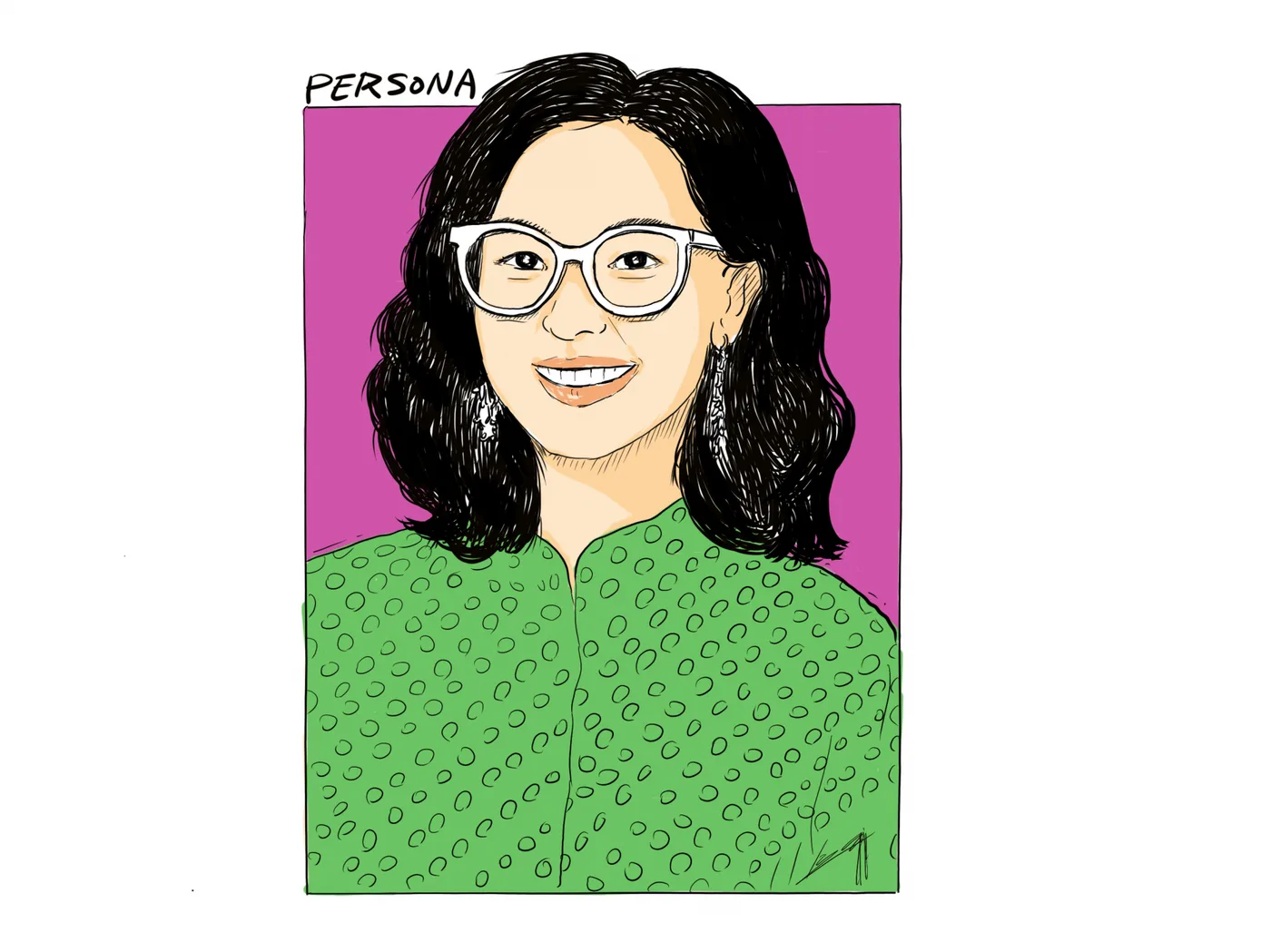
Hand-drawn illustration / Persona
ⓐ Hoshino Resorts case

<Figure 5. Hoshino Resorts>
To help you understand personas, let’s look at a case study of a resort in Japan. In 1991, Hoshino Onsen was a historic Japanese ryokan run by the family for four generations, so luxurious that one night per person cost upwards of KRW 1 million (≈ US$750). After pressure from the extended family, the father who had run it for many years stepped down, and his son, President Yoshiharu Hoshino, who held a master’s degree in hotel management from Cornell University in the US, took over. Troubled by the fact that the ryokan’s revenue showed no sign of growing, President Hoshino began analyzing the situation exactly as the management textbooks prescribe. Analyzing the ryokan’s regular guests, he found that they were large family groups, including grandparents. Within these large families, who was the purchase decision-maker (the one who decides on events)?
It was the grandmother. The moment he concluded that the persona deciding on a stay at Hoshino Ryokan was a woman in her 70s or 80s, he overhauled the ryokan’s interior, facilities, food, and service around that persona, and ran targeted ads on the daytime radio programs she listened to. As a result, the ryokan’s occupancy rate reportedly rose 10% right away. He also launched a program called 'Magotabi (孫旅),' in which grandparents and grandchildren travel together, giving grandchildren an experience (CX, Customer Experience) with their grandparents. While neighboring resorts and ryokans collapsed after the burst of Japan’s bubble economy, President Hoshino made a spectacular debut as a 'master of ryokan revival,' snapping up failing lodgings and becoming the head of a comprehensive resort group. (It reminds me of Li Ka-shing (李嘉誠), who became a tycoon by snapping up cheap real estate dumped by Hong Kongers fleeing overseas after the 1997 handover.) Isn’t it fascinating, even thrilling, that such a dramatic outcome started with deriving a 'persona'?
ⓑ The Old Spice case
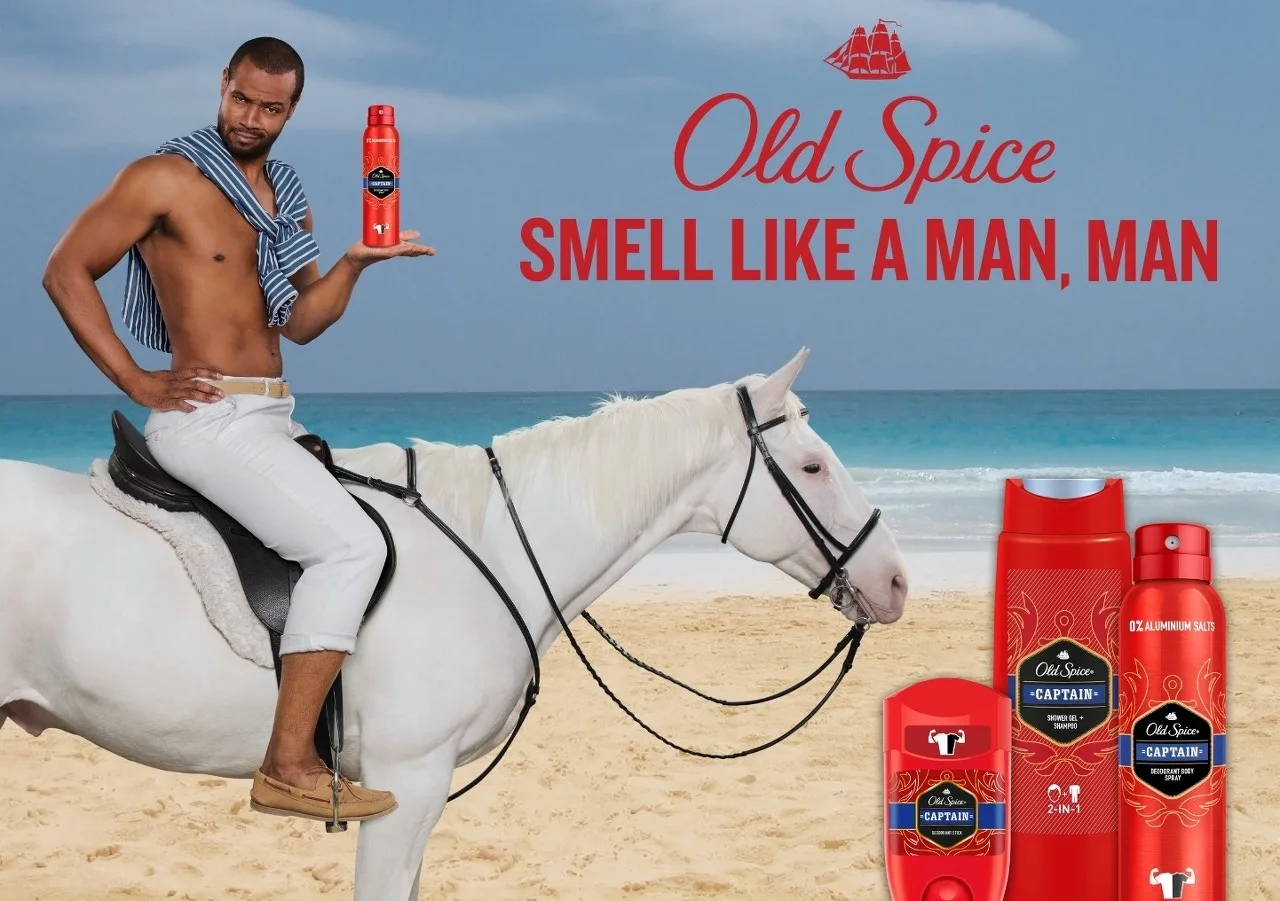
<Figure 6. Old Spice>
The photo is an ad for Old Spice, a men’s body wash that has sold in the US for decades. Who makes the purchase decision for this product? Since men use it, surely a man? Surprisingly, more than 50% of body wash buyers were women. The decision-maker was a ‘woman.’ After learning that women more often buy it as a gift for a boyfriend or husband, the company built its ad around an attractive, muscular male model. In a calm voice, he says, ‘If you use this lotion, your boyfriend will smell just like me.’ The ad speaks directly to women’s desire to buy. Old Spice’s target customers responded just as the strategy intended, and sales grew.
This case proves that what we take for granted may not be true at all. Dental implants are mostly used by older people, so do older people buy more of them? Not necessarily. Many adult children research and buy them on behalf of their parents. A marketing planner would do well to rethink assumptions that feel this obvious.
ⓒ Diapers and beer
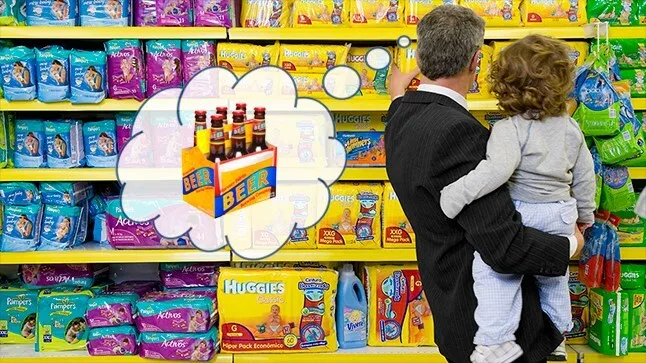
<Figure 7. Diapers and Beer>
Who makes the purchase decision for baby diapers? Many men stop by a supermarket or convenience store on the way home from work, or late at night, to buy diapers on their wife’s errand, and pick up a beer placed next to the diapers while they are at it. The first to notice this persona was surely a beer company. Marketing that moved beer to a different shelf position to fit this persona contributed greatly to higher sales. This got me thinking: now that marketing based on this kind of data analysis is popular, why not come at it from the diaper side? When someone buys diapers, give them a light snack as a freebie. Wouldn’t these personas look at the diapers displayed next to the beer, pick a beer, and, given the choice, go for the diapers that come with a free snack? Finding and using personas can be hard, but it can also be a lot of fun.
ⓓ How I use personas
However, all the cases above were B2C. You might assume they have nothing to do with B2B marketing, but a marketing strategy is ultimately a strategy for ‘persuading’ a particular ‘someone,’ so it applies to B2B too. Let me give a brief example from my own experience.

In more than 10 years as a corporate instructor and consultant, I have worked with training managers at many institutions and companies. Who are the people who contact a corporate instructor like me, decide on training, and schedule it? Most work in HR, talent development, or training teams, and women in their late twenties to early thirties make up a large share. What would such young women need and want from a corporate instructor like me? I concluded that I should help them do their work easily and quickly and, most importantly, deliver training that participants find fun and actually benefit from. I have to anticipate those needs and position myself as the person who meets them.
Our persona, a training manager in her 20s or 30s, prefers 'YouTube,' where she can see an instructor’s teaching skills for herself, over 'Naver' when searching for instructors or training companies. She is busy, so she dislikes slow replies, and she likes it when proposals and required documents arrive before she asks, sparing her the hassle. She would be delighted if you took work off her plate, wouldn’t she? She also prefers a quick back-and-forth on KakaoTalk to slower phone, text, or email. The instructor fee may not be a big issue at all. It isn’t coming out of her own pocket, right? It’s 'company money'! The training budget is fixed anyway. (Every year-end, local governments all start replacing sidewalk paving blocks at once. Why? Because unspent budgets get cut. Isn’t it the same thing?) If you convey these points strategically during the contact process, and your teaching is strong enough to earn high satisfaction scores from participants, you are likely to be selected as the instructor and to win the contract. You can also build high entry barriers afterward that effectively keep competitors out, because you and the client are already on the same team. Finding, vetting, and contracting a new vendor, supplier, or service provider is a real chore. Employees in any organization, whatever their department, place a high value on 'convenience.' Remember that.
As you can see, developing a persona is a good way to pinpoint exactly who you need to persuade and prepare what it takes to persuade them. It is also extremely useful in B2B digital marketing, which I will cover next.
Reference> Where do products sell best in a big-box store?
Countless companies are churning out countless products at this very moment. Like people, these products have a lifespan, known as the Product Life Cycle (PLC). Companies need to build strategies that optimize marketing, manufacturing, and sales accordingly.
Whenever I went grocery shopping at a big-box discount store with my family, I wondered which shelf position sells best. I finally got the answer from an acquaintance who worked in retail.
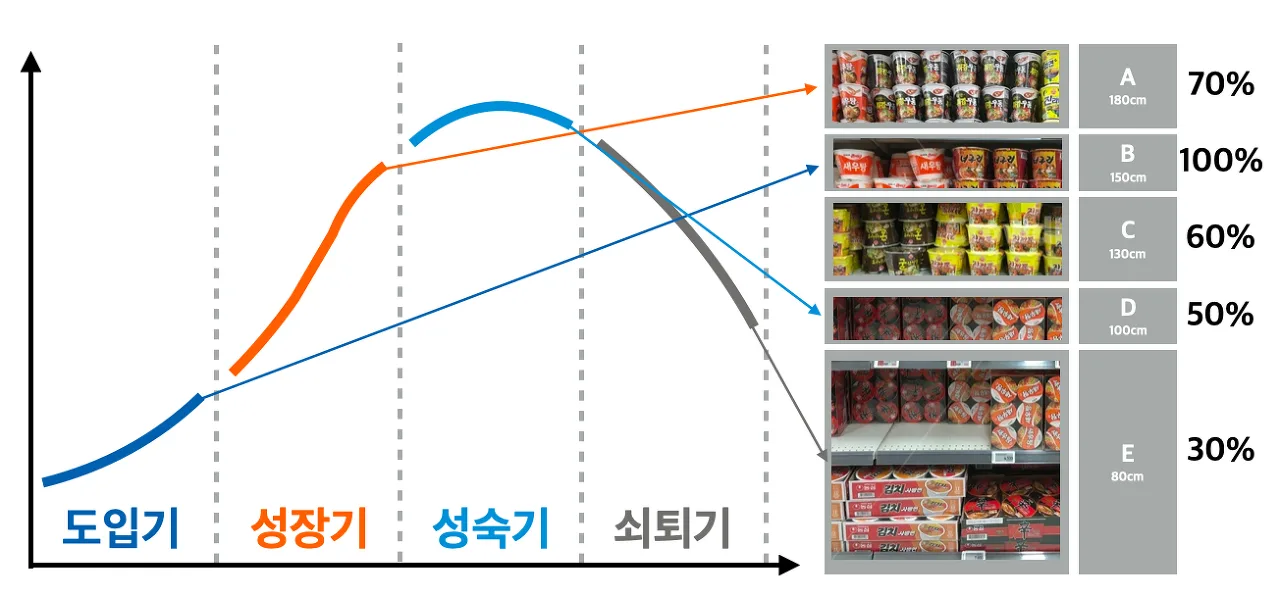
Products sell best at position B, 150 cm, the consumer’s eye level. At position A, 180 cm (head height), sales are 70% of that; at C, 130 cm (chest height), 60%; at D, 100 cm (waist height), 50%; and below 80 cm (leg height), 30%.
If you were the store manager, where on the shelf would you place products at each stage of the product life cycle? Introduction-stage products that you need to sell a lot of go at B, products at their peak go at A, and the lower you go below the waist, the closer products are to maturity and decline.
To be continued