Today I would like to talk about the rapidly changing global situation and what it means for the business environment. Since last October, Russia had massed more than 130,000 troops on the Ukrainian border, and it invaded Ukraine in the early hours of February 22. Judging by the war so far, Russian offensives in the south seem to be proceeding as expected. Amid the horrific situation in which not only soldiers but also civilians are being killed, Russian forces have the upper hand in Mariupol, following Kherson. If Russia had quickly captured the corridor linking the Crimean Peninsula, annexed in 2014, with the Donbas region, where fighting had already been under way, that would have been the best-case scenario for Russia.
If it had gone that way, the West, including the US and Europe, would have had no choice but to accept it. But Putin seems to have overreached. He tried to seize even Kyiv, Ukraine’s capital, quickly. In the process, young Russian men around age 20 were reportedly forced to sign contracts, told it was training, and thrown in en masse with poor equipment. As you know, Javelin anti-tank missiles and Stinger anti-aircraft missiles, which also proved their worth in the Afghanistan war, have bogged the war down, and there are rumors that more than 10,000 Russian troops have been killed.
As of March 12, 2022, half of the residents of Ukraine’s capital Kyiv have fled, and those who remain are reportedly fortifying the city and preparing for a decisive battle. Captain Lee Keun, a former member of the Korean Navy’s special warfare flotilla, is also said to be fighting in the defense of Kyiv with the International Legion. Today’s content is not a report on the battlefield situation in Ukraine but a look at global affairs and changes in the business environment, so I will walk through it country by country and person by person.
[ Ukraine ]
< President Zelensky >
President Zelensky, born in 1978 and of Jewish descent, earned a bachelor’s degree in economics and a master’s in law from Kyiv National Economic University before becoming a comedian. In 2015 he played a history teacher who becomes president in the sitcom “Servant of the People,” which he produced himself. In March 2018 he founded a political party of the same name, and in 2019 he won the presidency with 73% of the vote. Truly remarkable. His term has included several controversies and crises, among them the phone-call scandal with President Trump over Ukraine, his appointment of entertainment-world acquaintances to the cabinet, and the escalating Donbas conflict. His approval rating had fallen to 23%, but he has shown unexpected strength in wartime, and it has surged to 91% as he stands firm in his resolve to fight. What happens next with NATO membership, which helped trigger the war, is unclear. On EU membership, there has been some progress, such as the European Parliament passing a resolution. The Ukrainian people are suffering enormous damage, but Zelensky seems to be growing into a major political figure.
Narrative. It feels like the making of a hero’s origin story, doesn’t it?
[ Russia ]
< President Putin >
Born in 1952 and 71 by Korean age, Putin is an autocrat who has ruled Russia for more than 20 years. Rumor has it he was a KGB special agent, but the accepted view is that he was an office-based officer. Overconfident in Russia’s military, weapons and organization, he seems to have aimed in this invasion to seize Kyiv, quickly install a pro-Russian government and pull out. Things have gotten badly tangled. Russia failed to win the air superiority it took for granted, and with supply problems, weather and fast Western arms deliveries, Putin has lost face. It is not hard to guess what he is thinking now. He will likely use the nuclear threat to deter direct Western involvement while concentrating firepower on Kyiv. Today and tomorrow may be a major turning point in this war.
But there is one thing we should check here: oil prices. Until March 9, oil was around $60 a barrel. It surged 100% to about $120. Just as people were wondering whether it might climb all the way to $200, it plunged more than 12%. Prices are swinging wildly. And a barrel is a drum, right? Roughly 160 liters… Why use such a unit at all? If the news said, “Oil jumped from 38 cents a liter to 75 cents a liter,” people might ask, “Then why am I paying about 2,000 won a liter for gasoline at the pump?” I suspect that is why the news uses the ‘barrel,’ a unit ordinary people can’t really relate to.
Anyway… the defining feature of Russia’s industrial structure is its focus on oil and gas: about 50% of exports, 30% of government revenue, and 10% of GDP. It lives off oil and gas. When oil prices rose during past Middle East wars, its economy boomed and its global influence grew, didn’t it? And when US pressure pushed prices down, as in the collapse of the Soviet Union, oil prices hit Russia enormously hard. From Putin’s point of view, if war pushes oil prices up and he keeps supplying major energy buyers like Germany, China, Korea, and Japan, he might even benefit indirectly. It’s truly sad to think this way. It feels like tallying the numbers on a calculator with the blood of countless 18- and 20-year-olds. Yet watching the ruble collapse under pressure like Russia’s removal from SWIFT and the US and UK bans on Russian oil imports, national default seems to be right around the corner. I honestly can’t see why this war was started. It looks like the biggest risk of a dictatorship.
It shows what happens when all power is concentrated in one person. It is truly frightening.
[ China ]
< President Xi Jinping >
Next, China. China is Russia’s closest ally. After the invasion of Crimea, when the West imposed sweeping economic sanctions, China quietly gave Russia rear-guard support by importing hundreds of trillions of won worth of Russian oil and gas, at half the price Europe paid. The scenario I feared most from the invasion of Ukraine was one that splits US military power between Europe and Asia. Quite a few people are angry and ask why the US isn’t helping Ukraine. But Ukraine is neither a NATO member nor an EU member, so US forces can’t step in. What about Taiwan? And what about South Korea and Japan? The US has mutual defense treaties with South Korea, Japan, and NATO. Taiwan signed one in 1955, but it was scrapped in 1979 when the US established diplomatic relations with Beijing after “ping-pong diplomacy.” Didn’t President Biden say last October that the US would defend Taiwan if China attacked it?
China probably dreamed of using the invasion of Ukraine as an opportunity: seize a small island on the border with Taiwan, take control of the South China Sea, expand into the western Pacific and stand up to the United States. But it was probably shocked to see Russian fighters and tanks easily destroyed by Western portable missiles, the war stall, and Europe quickly unite into a joint front against Russia. The swift removal of Russian banks from SWIFT, asset freezes and import bans must be frightening for China, which is tightly woven into international supply chains. Rising prices for oil and raw materials will push up inflation, and when the economy struggles, a regime can be overturned in an instant.
The Taiwan Strait is 180 km wide, a bit longer than the distance from Seoul to Daejeon. Invading across it is a far harder task than Russia’s land invasion of Ukraine. China had cultivated Ukraine as its European gateway for the Belt and Road Initiative, and Russia’s invasion has upended that calculation. If parts of Ukraine hold referendums, declare independence, and are annexed by Russia, and China openly backs the invader, what does that mean for China’s own Xinjiang, Tibet, and Taiwan? And what if Taiwan held a referendum, declared itself the Republic of Taiwan, and signed mutual defense treaties with the US and Japan? That would be a real headache for Beijing.
China, too, has been thrown ‘badly’ off course by this war.
[ Germany ]
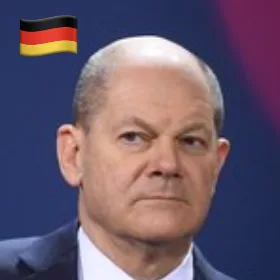
< Chancellor Scholz >
Now let’s look at Germany’s position. When I worked in the solar industry, at my last job before becoming an instructor, Germany was a renewable energy powerhouse. It probably still is. When its plan to cut nuclear power and shift to renewables ran into trouble, Germany began importing huge volumes of natural gas from Russia by pipeline: a full 55% of total demand. It’s a murky situation. Emotionally, Germans are outraged by the invasion, but thinking coldly, it’s a headache. If Russian gas drops out, where will all that gas come from? They need to line up alternatives fast. It also explains why former Chancellor Merkel took such a pro-Russia stance.
On February 27, German Chancellor Scholz announced that defense spending would rise to more than 2% of GDP. The US spends 3.5%, Korea 2.6%, Israel 5.2%, China 2% (though that figure is doubtful), Russia 3.1%, and Saudi Arabia 11.3%. Ironically, the 2%-of-GDP defense budget Trump made such a fuss about was delivered by Russia. Europe, which had been living comfortably off US support, and above all its central power Germany, is changing. Working with German clients, I was often frustrated by their thoroughness, but just as often I admired it. Given the precision of their equipment and machinery, their obsession with quality, the size of their economy, and their history, Germany could become a military power almost overnight.
If conscription returns, Germany’s young people will probably be crushed.
[ France ]
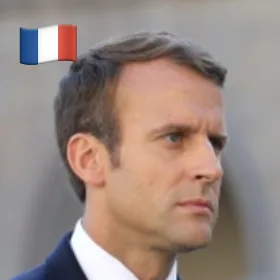
< President Macron >
Now, France! France faces a presidential election this coming April. President Macron’s approval rating currently stands at 26%. Then Russia invaded Ukraine. What was he thinking? Surely, “This is my chance!” Historically, when approval ratings sag or trouble brews at home, leaders have often turned attention abroad and positioned themselves to their own advantage. Macron’s political rivals have limited room to act abroad. He bet on the role of ‘mediator,’ shuttling between the US, the UK, Ukraine, and Russia, and if it fails, so what? He already has the French public’s attention. Appeals for support against the Russian threat are working, too, and couldn’t he also ride the coattails of Zelensky, who is being made a hero by his unexpectedly strong showing?
[ United Kingdom ]
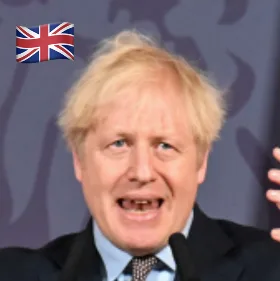
< Prime Minister Johnson >
Next, the United Kingdom. This January, Prime Minister Johnson held a party with around 100 guests, breaking the very COVID-19 rules he had set. Quite an unbelievable figure, isn’t he? Calls for his resignation were growing from both the ruling party and the opposition, and a successor was already being discussed. Then Russia invaded Ukraine. What was he thinking? Surely, “This is my chance!” He could magnify the Russian threat, paint an external enemy as the villain, and push for ‘large-scale troop deployments’ and ‘large-scale aid.’ British-made NLAW anti-tank missiles in particular have been delivered quickly alongside US-made Javelins, dramatically boosting Ukraine’s firepower. He probably has Prime Minister ‘Thatcher’ in mind, who led Britain to victory in the 1982 Falklands War against Argentina. His line, “We won’t stop citizens who want to fight,” even allows British citizens to leave for Ukraine. For Johnson, this is a gift from heaven. And if Ukraine holds out a bit longer and Zelensky sets up a government in exile in London, like de Gaulle of France in World War II, wouldn’t that be a jackpot? Better to court that outcome. And Britain, a financial powerhouse, has surely already built investment strategies around agricultural products, raw materials, and oil prices?
Will the blood of the Ukrainian people turn into profit for London’s financial district?
[ Switzerland, Sweden, Finland and the Baltic States ]
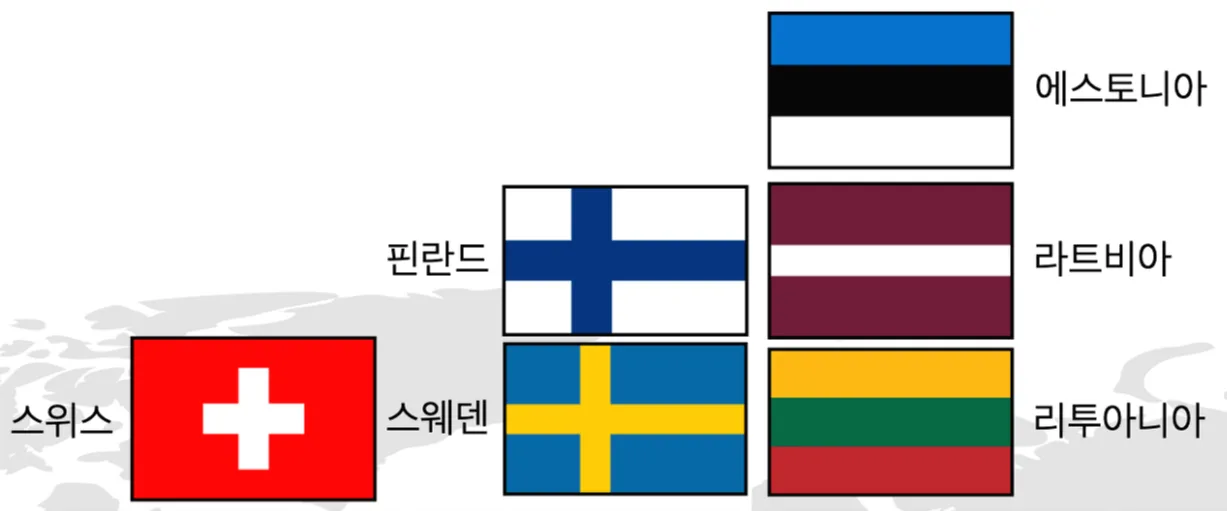
Switzerland, a neutral country for more than 200 years since 1815, grew enormously rich during World War II on money from Jews and the German Nazi regime, because the owners could never reclaim it from their secret accounts. This time, surprisingly, Switzerland is supporting Ukraine. Sweden and Finland, which have kept a neutral stance between Western Europe and Russia, have also begun sending Ukraine anti-tank weapons and field rations. Both are EU members but have stayed out of NATO. Finland, invaded by the Soviet Union early in World War II, probably feels the Ukraine crisis is anything but someone else’s problem. It now takes part in emergency NATO member summits and is hinting at joining NATO. The three Baltic states, Lithuania, Latvia and Estonia, must be extremely tense right now, because they are next after Ukraine. On a map shown at a Belarusian presidential security meeting, Russia’s next target after Ukraine was accidentally revealed. It was labeled ‘Moldova’, wasn’t it? After that, presumably, the Baltic states. Many countries have suddenly started asking to join NATO, and the United States should seize this chance to market itself. Oh, and U.S. Secretary of State Tony Blinken visited on the 7th and told them not to worry.
[ United States ]
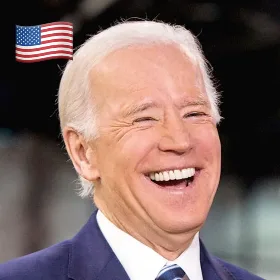
< President Biden >
The United States, the world’s superpower! President Biden, just over a year into his term, has seen his approval rating fall by more than 10 points in a single year. That is a crisis. U.S. midterm elections come this November, with races for the House, Senate, governors and secretaries of state. Both the Democratic and Republican parties will go all out. But things were not going well. Then Russia invaded Ukraine. What did they think? Didn’t President Biden also think, “This is an opportunity!”? If the war pushes oil prices up, the stalled U.S. shale gas industry will revive, won’t it? But there is no reason to celebrate outright: a sharp rise in oil prices could send already rising prices and inflation soaring. Bringing oil prices down would hit Russia while reducing the damage to the global economy.
And once war breaks out, investors turn to safe-haven assets. Gold? The dollar, which is treated much like gold, will strengthen again, won’t it? Investment will also shift from Europe, the danger zone, to the safer United States, right? The US could also use up weapons that would otherwise have to be scrapped or repaired, and promote its own arms, such as the Javelin and Stinger, on a grand scale without losing any of its own troops. The military buildup Western European countries have long been urged to make would also come about naturally, and the US could cut the huge NATO contribution it has shouldered alone. If NATO serves as a breakwater against Russia, the US could concentrate more strength on countering China. For the United States, and President Biden in particular, this is a jackpot. Perhaps that is why it keeps provoking Russia with large-scale military exercises in the North Sea.
It almost looks as if they want the war to widen.
[ Taiwan ]
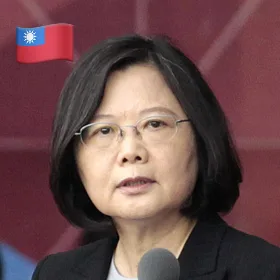
< President Tsai Ing-wen >
Taiwan’s President Tsai Ing-wen of the DPP seems to live in a hostile coexistence with China. The greater the Chinese threat, the higher her approval rating climbs, and that tends to translate into election wins. Had Ukraine fallen quickly and Western European countries bowed to growing Russian power, it would have been a major threat to Taiwan, and especially to President Tsai. But Ukraine has held out surprisingly well, and it has become clear that Russian weapons and systems are far shoddier than imagined. She is now stressing unity and getting her house in order. US and Japanese support will likely grow, and Taiwan’s geographic importance will remain unrivaled. Even so, the US probably sees more benefit in “strategic ambiguity” than in prompting a Taiwanese declaration of independence and signing a mutual defense treaty. The message, in effect: “Taiwan, you’re not part of China and you seem independent. If you’re invaded, we’ll help. Right?”
[ North Korea ]
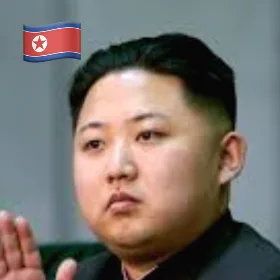
< Chairman Kim Jong-un >
Now, North Korea. Let’s think from Kim Jong-un’s point of view. Early in the Moon Jae-in administration, he reached an end-of-war declaration with Trump and came close to settling a nuclear deal. After Russia’s invasion of Ukraine, he will probably never give up his nuclear weapons. For the US, Japan, and South Korea, keeping hostile tension in place is convenient, and China next door may feel like North Korea’s biggest threat. The real goal of China’s Northeast Project and its history and culture projects is probably North Korea. And if a small coup broke out inside North Korea, China would likely be the first to move in. Ukraine surely doesn’t feel like someone else’s problem to him. Some argue that Ukraine provoked Russia’s invasion by trying to join NATO. If North Korea declared an end to the war, became pro-American, and scrapped its nukes, couldn’t China attack it? Kim Jong-un has a headache. South Korea, with which he had exchanges and many joint projects, has swung back to a conservative government. He has a headache.
[ Japan ]
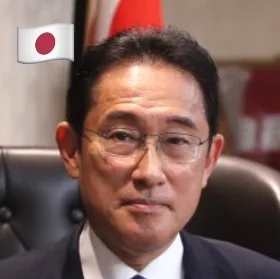
< Prime Minister Kishida >
Japan! This is the perfect opportunity! That is probably how the Japanese government sees it. Yesterday, Prime Minister Kishida declared that “the Kuril Islands are Japanese territory.” That is a bold statement. The thinking seems to be that Russia has turned out to be beatable. Until now, Japan could do nothing when Russian bombers circled the country, when Russia installed anti-aircraft and anti-ship missiles on the Kurils, or when Chinese and Russian warships circled Japan in shows of force. Now Russia looks less formidable. Even Germany, a leading Axis power in World War II, is rearming, so why shouldn’t Japan? Germany serves as a bulwark against Russian influence and Japan against China and Russia, which is similar, but there is a difference: unlike Germany, Japan does not have the support of its neighbor Korea. Economically, the weak yen and rising oil and raw material prices will push up domestic prices and shrink the economy sharply. Rising prices for imported necessities will hit lower-income households hardest. Japan could be heading into stagflation, with prices rising while the economy declines. It has less room to raise interest rates than other major economies, so the yen will likely weaken further. Exporters’ profits may edge up thanks to the weak yen, but if real wages fall and prices climb on higher oil and raw material costs, it looks like Winter is coming for ordinary Japanese. Japan has plenty of external threats nearby, including Russia, China, and North Korea, to justify scrapping its pacifist constitution and building up its military. Some of them may even be hoping for a second Korean War or a war between China and Taiwan. Otherwise there would be no way out.
I sincerely hope no South Korean forces are working in concert with these powers.
[ Australia ]
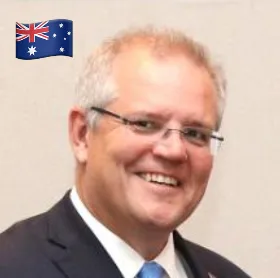
< Prime Minister Morrison >
Australia, a member of the Five Eyes and one of America’s closest allies, is in sharp conflict with China and Russia. It is again supplying about $50 million worth of weapons, including ammunition and anti-tank rockets. And economically? Crude oil and gas prices are soaring, raw material prices are rising, and supply shortages are setting in. COVID-19 had already pushed up prices and strained supply, and Russia’s invasion of Ukraine has made matters worse. Countries that used gas for thermal power generation will have to turn to Australian coal as a substitute. Higher food and raw material prices look like a huge windfall for Australia. Surely those profits will go into strengthening its defenses against China, with things like nuclear-powered submarines?
[ South Korea ]
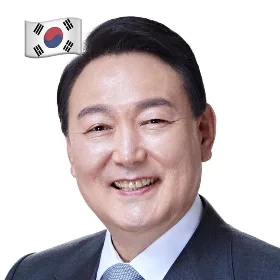
< President Yoon Suk-yeol >
On March 9, Yoon Suk-yeol was elected president in the 20th presidential election by a margin of just 0.7–0.8%. During the campaign he took a hard line on North Korea, even mentioning a “preemptive strike.” His main economic pledges are to scrap the nuclear phase-out and to boost corporate investment through regulatory reform. If Russia’s invasion of Ukraine pushes up oil, gas, food, and raw material prices, it will hit the Korean economy and feed directly into “inflation.” Prices look set to rise by at least 5% this year. Korea’s trade with Russia is surprisingly small, about 1.5% of exports and 2.8% of imports. Still, Hyundai Motor, LG Electronics, Orion (famous in Russia for its Choco Pie), and Paldo (famous for its Dosirak instant noodles) look likely to take a big hit. Korean shipbuilders’ share prices have jumped 7% to 21% since the invasion. If Europe stops importing Russian natural gas by pipeline, it will need ships to carry gas instead, which means LNG carriers. And when oil prices rise, demand for crude oil tankers rises too. The shipbuilding industry probably won’t need to worry about orders for years. Under the Yoon administration, the biggest change we will feel is likely to be in “real estate.” With the comprehensive real estate tax and capital gains tax eased and loan limits and other lending rules loosened, I suspect the stalled property market may start climbing again.
I hope the next five years bring a thriving economy and no security problems.
[ India ]
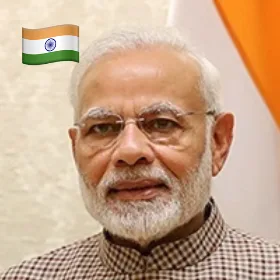
< Prime Minister Modi >
India’s position has become delicate. It did not condemn Russia’s invasion of Ukraine, and it abstained from the vote on the resolution criticizing Russia. India has traditionally worked with Russia to counter the China–Pakistan alliance, and Russian-made weapons account for more than 50% of its arsenal. Its long-standing commitment to non-alignment and a balanced foreign policy probably plays a part, too. More than 20,000 Indians live in Ukraine, which must weigh heavily as well. Cooperation with the US matters for countering China, but so does its relationship with Russia, which has been friendly until now. Like France’s President Macron, India may first do its best to play the mediator, and then show at least the appearance of cooperating with the US and the West.
[ UAE ]
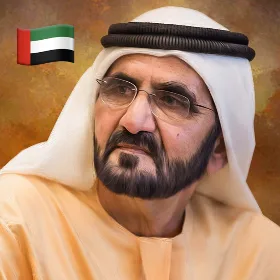
< Prime Minister Mohammed bin Rashid >
The United Arab Emirates. At the UN Security Council, the UAE abstained, along with India, on the resolution condemning Russia. I was genuinely curious why the UAE, a traditional US ally, abstained. Is it because shale gas has pushed US energy self-sufficiency above 90%, reducing US interest in and influence over the Middle East? The UAE has been strengthening its economic and military ties with Russia and joining it in developing Arctic shipping routes, which are growing in importance with climate change. I suspect this is meant to raise its own relative importance in the eyes of the US. The UAE also announced a “large-scale output increase” as crude prices were surging, which drove a plunge of more than 12%. Rather than an attack on Russia, isn’t that a check on the US shale industry, which is emerging as a strong competitor? Oil prices are shaped by many overlapping factors, so they are hard to calculate simply or to predict.
[ Saudi Arabia ]
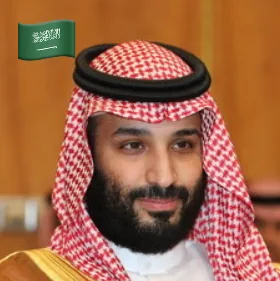
< Crown Prince bin Salman >
In October 2018, Jamal Khashoggi, a Saudi dissident journalist, was brutally murdered at the Saudi consulate general in Istanbul, Turkey. Relations with the US had cooled considerably since then, and in the meantime Crown Prince Mohammed bin Salman, effectively the ruler, had been strengthening military cooperation with Russia. Then the invasion of Ukraine began, and oil prices started to soar. At the same time, the US is pressing Saudi Arabia to raise output to bring prices down. Higher output lowers prices without changing profits much, and it would hurt US shale producers while meeting the US government’s demand. It could also deal Russia’s economy an irreparable blow, leading to “national bankruptcy” and repeating history like the “Soviet collapse.” If you were Crown Prince bin Salman, what would you do? Russia looks doomed anyway, so raising output would save face for the US government and hurt shale competitors. It would also repair the strained relationship with the US. And to hurt Iran, its biggest rival for regional dominance in the Middle East, wouldn’t it make sense to hit Russia, which backs Iran behind the scenes?
[ Venezuela ]
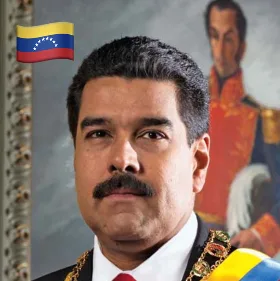
< President Maduro >
Spring is coming to Venezuela. If the United States and the United Kingdom ban Russian oil and gas imports and Europe follows, then even with increased Middle East output, a new stable supplier is needed. Where? A location in Central America, ideally placed to supply energy to Europe and the United States: ‘Venezuela’. In this invasion of Ukraine, Venezuela has backed Russia and criticized the United States, but it is ‘playing both sides’. By releasing Americans it had detained for more than five years, it is winking at the United States and asking for U.S. economic sanctions to be lifted. Talks are reportedly ‘polite and cordial’. In my view, sanctions relief will likely come soon. Without Venezuela, a strategy of pressuring Russia is hard to complete. It would reduce Russia’s influence in Latin America, supporting Venezuela as a rival supplier lets the United States pressure Saudi Arabia, the UAE and other Middle East producers to raise output, and investment in Venezuela could boost the U.S. economy. It all sounds good. The one worry is Texas shale gas companies. Is the thinking that a few can be sacrificed for the many?
To be continued