Do you know Nestlé's 'Gerber baby food,' launched in 1928 and one of the most famous in the world? Even if the name sounds unfamiliar, everyone says "Oh, that one!" when they see the baby's face that symbolizes Gerber.
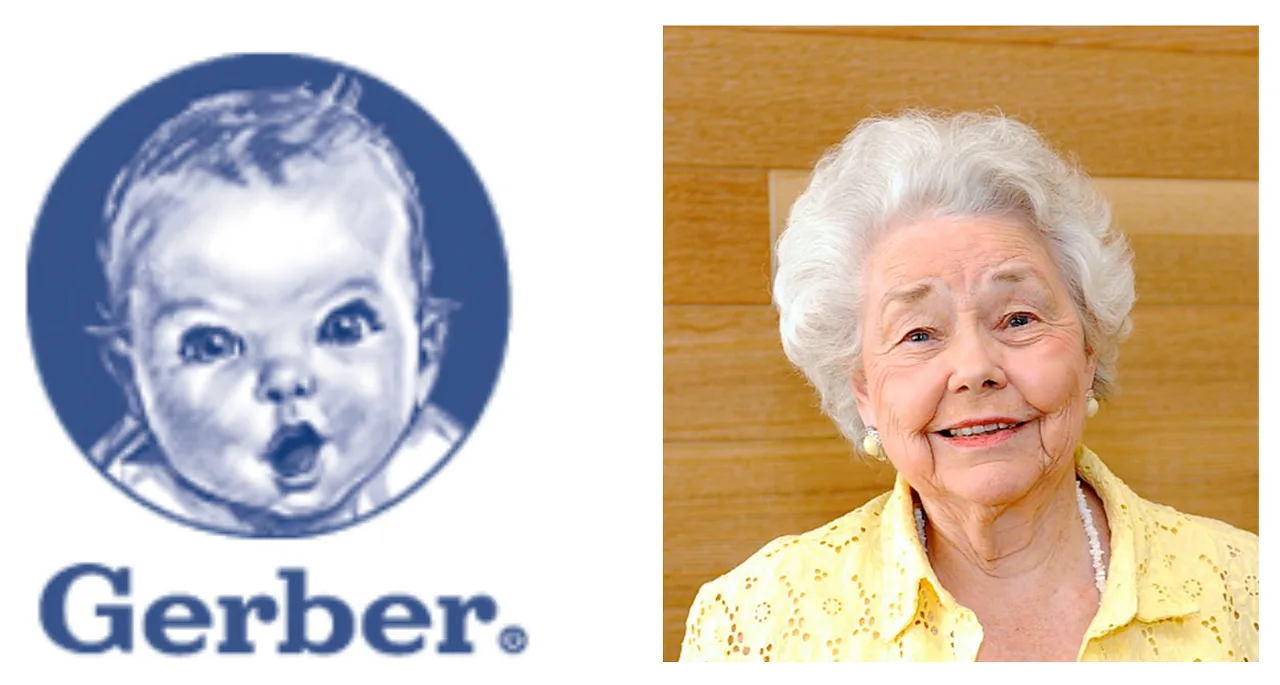
The baby model is 'Ann Turner Cook,' who was born in 1926 and passed away in June 2022 at the age of 95. In 1928 she entered the first Gerber Baby contest with a drawing by a neighbor, the artist 'Dorothy Hope Smith,' and won, becoming the face of Gerber baby food for more than 90 years. In 1974, Gerber's management was surprised by a sudden jump in sales and set out to find the cause. They discovered that many older people with bad teeth and gums were buying Gerber baby food.
Here is my question:
"If you were on Gerber's marketing team, would you launch baby food for seniors?"
Over more than ten years in corporate training, I have asked this question about 1,000 times. The reactions differed by age in interesting ways. People in their 20s, 30s and 40s said, "Of course you should launch it. Make a separate package for seniors." Older participants in their 50s, 60s and 70s said, "Hmm... baby food for old people... I'm not sure." In 1974, Gerber noticed that older people shied away from the word 'elderly,' so it launched its baby food for seniors under the product name 'Singles' rather than 'Elder.'
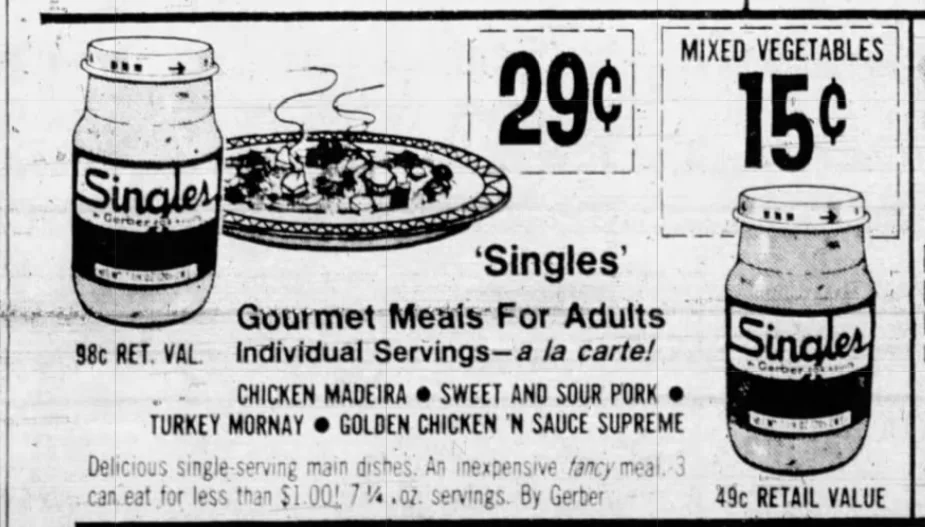
Still, it was a flop! Had they simply sold it as baby food with baby Ann Turner Cook’s face on the label, they would have saved a great deal of marketing and manufacturing cost. Instead, that money was wasted.
In early 2019, I was teaching an 'Adapting to a Changing Environment' course for soon-to-retire KT employees and shared the Gerber case above. A woman in her 60s told me about her own experience. She was riding the subway in Daegu when a couple in their mid-70s boarded together. As the doors opened, the husband threw himself into the priority seat to save a spot and urged his wife, "Hurry up. Come sit here," and the wife replied,
"There they go again. I am not going." (She said it in the Daegu dialect.)
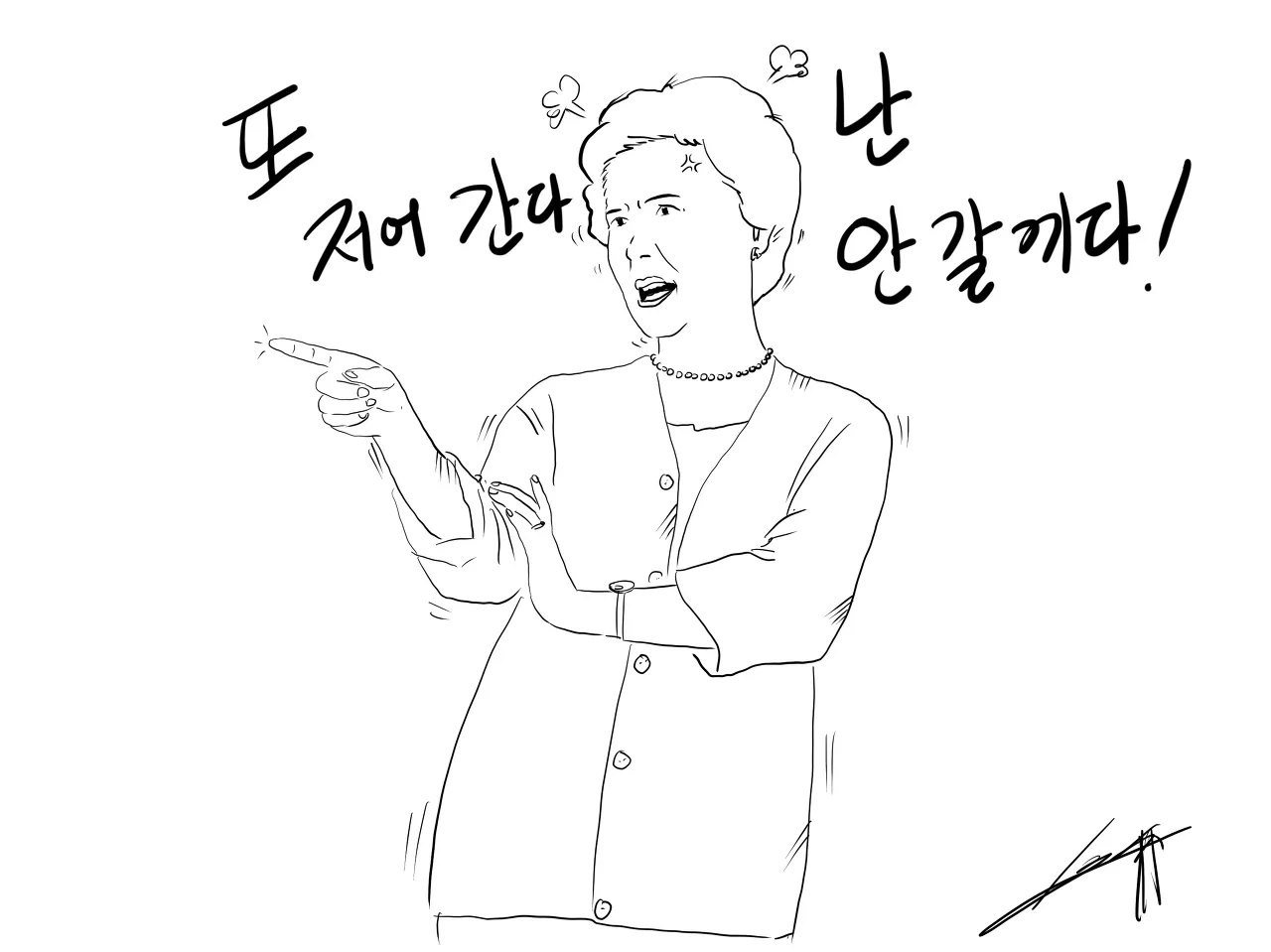
She told me this during the break, saying the scene was hilarious. "There they go again (to the priority seats). I am not going." What does that mean? This woman in her mid-70s did not see herself as elderly. For people in their 20s, 30s and 40s, empathizing with older people is truly hard. It is close to impossible. Over more than ten years of teaching, I have made this near-impossible thing possible. Let's do it together.
"Imagine it is decades from now and you are in your early 80s. You ride your self-driving car to a large shopping center you have not visited in a while, and a new 'Silver Corner' has opened, decked out entirely in silver. Inside are adjustable self-driving wheelchairs and assistant robots, along with all kinds of food and tools for seniors. Would you walk into that 'Silver Corner'?"
Not one of the young trainees said they would willingly walk in and buy something. Their faces tightened a little, and the reluctance was plain to see. So I went on to my next question.
"If you were elderly, you wouldn't want to buy senior products at a senior corner, would you? Why not? Because you don't want to admit you are old, right? Exactly. So why did you say you would launch baby food for seniors, even in its own separate package?"

Heinz food for seniors
Heinz, a food company founded in 1869 in Pittsburgh, Pennsylvania, is best known for ketchup, mayonnaise, and baby food. In 1955, it sold cheap, easy-to-eat food for seniors with weak teeth in a prominent senior section, and it didn’t sell at all. Why? Simple. Imagine you’re 80 years old. Could you proudly pick up senior food in the senior aisle? You’d sigh as you bought it: “Ah... I’m old enough to eat this kind of food.”
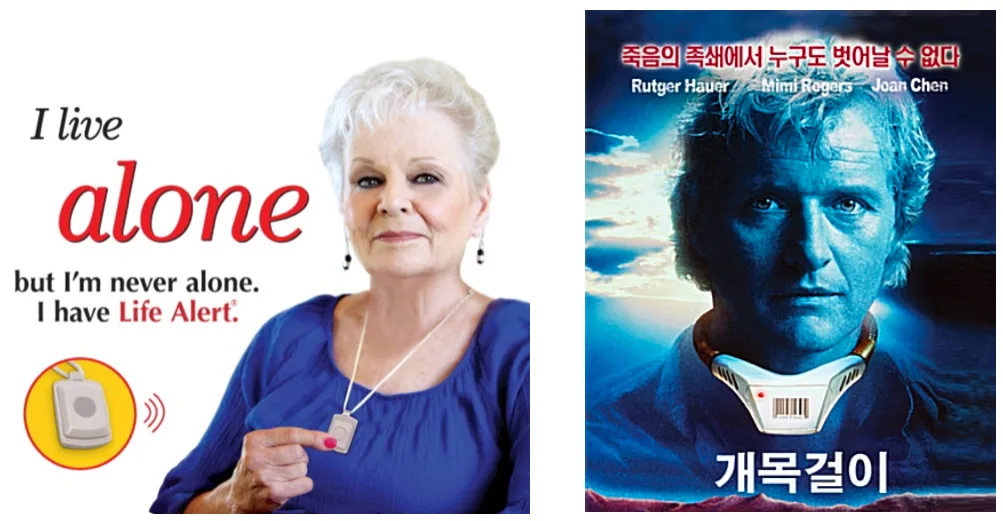
The “Life Alert” necklace and the poster for the film “Dog Collar”
Life Alert was far worse than Heinz. Launched in 1974, it was an emergency response system for the elderly. Today, IoT-powered watches, necklaces and rings with discreet sensors detect vital signs such as blood pressure, along with movement and location, and contact family and emergency services right away. The technology back then was nowhere near that, so the user had to press a button on a necklace themselves. Pressing it automatically contacted a hospital or emergency services such as 911. This product also failed miserably. Why? Simple. Imagine you’re 80 years old. Could you proudly wear a necklace with an emergency button around your neck? The moment you put it on, you’d despair: "Oh... I really have gotten old." It might even have felt like the anti-escape collar from the future prison in the 1991 movie 'The Dog Collar,' wouldn’t it?
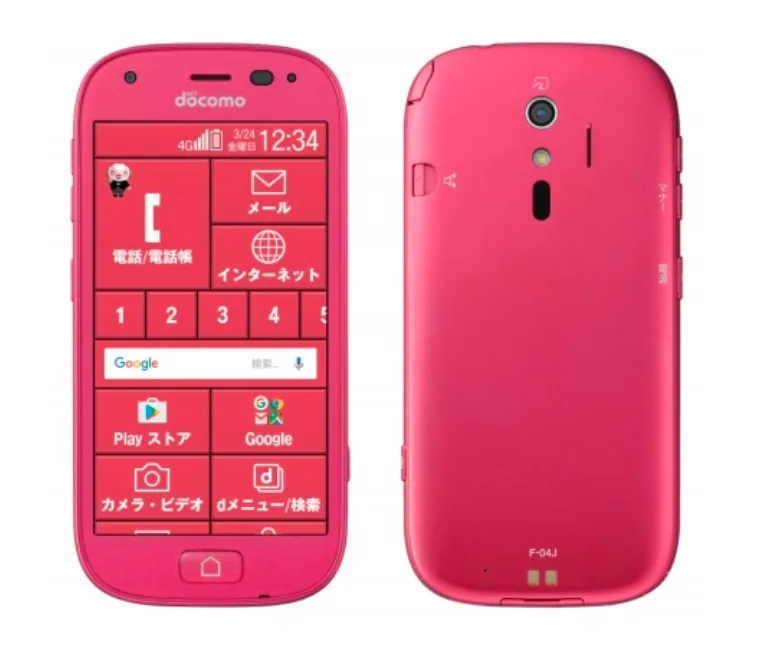
In 2012, Japan’s Fujitsu and telecom carrier NTT launched the Raku-Raku (らくらく) smartphone for seniors. Although it ran Android, it laid out apps in large, easy-to-read tiles, much like the Style UI tiles on Windows phones. It had a magnifier, was easy to type on, and could play the other person’s voice louder and slower. It targeted people over 50 moving from feature phones to smartphones, but is a 50-year-old really “elderly”? Even people in their 70s dislike being called elderly, so a “senior smartphone” aimed at 50-somethings was bound to fail, and it did. Why? Simple. Imagine you’re in your 60s. Instead of a sleek, latest-model foldable or flip phone, could you carry a “s.e.n.i.o.r. s.m.a.r.t.p.h.o.n.e.” and set it on the table at a restaurant or café? You’d be embarrassed. Fortunately, Fujitsu eventually figured this out and began a “detour strategy”: a smartphone not for “seniors” using a smartphone for the first time, but for “housewives” and “children” using one for the first time. Then people bought it without embarrassment, just like the older adults who buy Gerber baby food and claim, “It’s for my grandchild.”

"Why do these mistakes keep happening?"
Here is what I think. "Are there any 'elderly' people among those who plan and execute product, marketing and sales strategy? Pressure to leave the company mounts once people reach their mid-to-late 40s, they leave naturally after 50, and in a company you will not find anyone in their 60s. In such an organization, is there a 20-something staffer, a 30-something middle manager or a 40-something decision-maker who can truly empathize with elderly customers and create the products and services they want? I am doubtful." Everyone is bound to think from their own point of view and see the world through their own window. That is why marketing is full of mistakes. A refrigerator designed from a man's perspective has a 'transparent' door; a product for seniors designed by young people gets a silver 'Silver' label slapped on it; cigarettes for smokers taste 'disgusting'; a smartphone that people use for gaming has a game 'performance limit' setting. If young people want to earn a lot of money in the future, they need to study older people properly. There will be many of them, and they will have a lot of money.
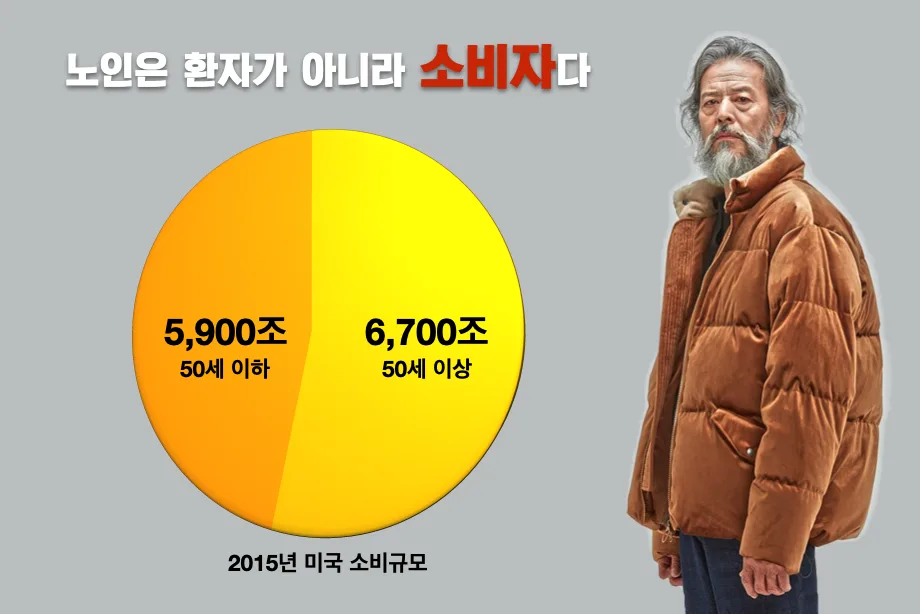
As of 2015, spending by Americans aged 50 and over was about 14% higher than spending by those under 50, and the gap will keep widening. MIT's AgeLab, founded in 1999, keeps creating opportunities and environments for young students to experience and think from the point of view of older people, so they can develop products and services for them. Children and young people who experience and learn this firsthand can break the chain of mistakes caused by a 'lack of understanding of the elderly.'
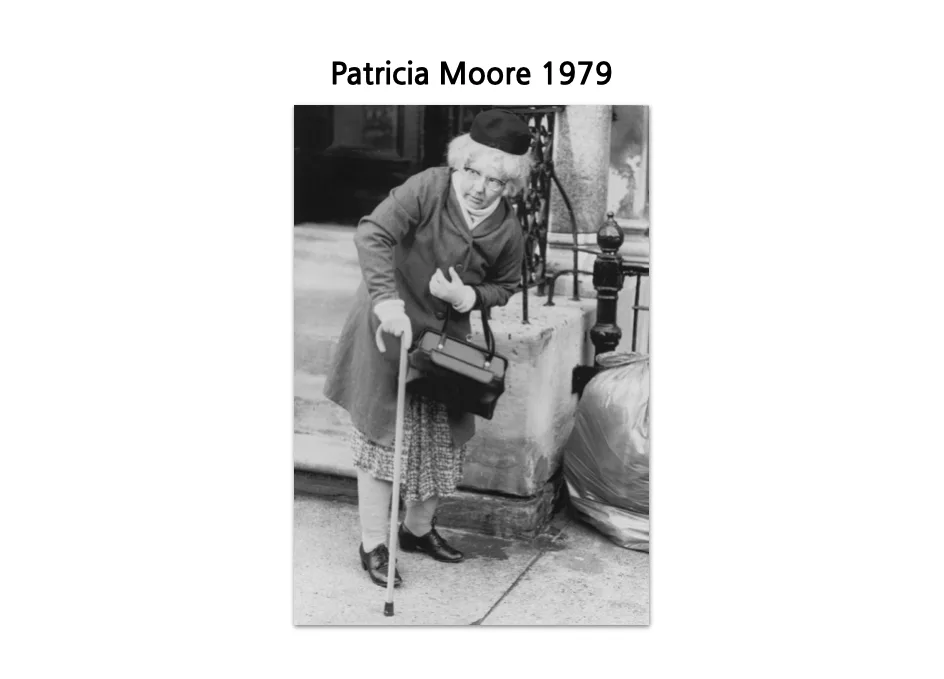
Quiz time! The photo above shows Patricia Moore, a world-renowned gerontologist and industrial designer. How old was she when this photo was taken in 1979?
She was 26 years old. Wearing glasses that blurred her vision, earplugs that dulled her hearing, gloves that numbed her sense of touch, shoes that threw off her balance and a metal brace that made her legs stiff, she traveled for three years through 116 towns and cities, large and small, across the United States and Canada. A 26-year-old could never have understood the world of the elderly, but this let her see it from their side and truly 'empathize.'
"Radical empathy for your customer is the foundation of marketing. Take another look at who your customers are, think it through from their point of view, and if that is not enough, ask them and try it yourself."
To be continued