I started in marketing and sales in China in 2002 and, until early 2012, worked mainly in B2B marketing and sales for overseas customers. Let me share the training experience that stands out most from my time in the field. Around 2007, I was busy selling to semiconductor manufacturers in China and Taiwan when I got a call from the head office in Korea, then a mid-sized company. "You need training, so come back to Korea!" I was busy, but I loved reading books on sales, marketing, economics, and management and knew my theory was thin, so I joined the training with high expectations. It was a full-day session, and the instructor seemed to have spent a long time in consumer-goods sales. He talked all day about customer satisfaction, a service mindset, and sales attitude, and I got worn out and irritated. I remember snapping at the HR manager that evening after the training ended.
"We came all the way to Korea for training at this critical time, and all we hear is 'customer satisfaction,' 'sales mindset,' 'we can do it!,' and 'ownership.' What a waste of time. Please find training that actually fits us in B2B sales. Stop looking for cosmetics or insurance sales training. What we sell is different. Do machinery, equipment, materials, and tools have the same customers and characteristics as consumer goods?"
Even after that session, I never received proper B2B marketing or sales training at that mid-sized company. A few years later, after I moved to a large corporation, I took a 'marketing course' on a weekend taught by an economics professor from a university. I had high hopes again, but the materials were English originals pasted straight into an old-style PPT template, with almost no case studies. It was just theory, theory, and more theory, delivered all day with a blank expression, in the same condescending style he used with undergraduate and graduate students back then, now aimed at a large company's sales and marketing staff. It was boring and absurd. And it made me wonder: why isn't there proper training in industrial goods, intermediate goods, and B2B sales & marketing? The answer came to me: because it takes both 'experience' and 'knowledge.' You need experience actually marketing and selling various industrial goods across different fields, and you also need 'knowledge' of B2B marketing and sales. In the early 2010s this area seemed especially weak, and I could see that corporate clients had a lot of unmet needs.
Now let's go through the 5 differences between B2B and B2C, one by one.
1. The source of demand

The buyer in B2B is an 'organization': a 'company,' a 'factory,' an 'office.' It is a 'lump,' not an individual. That is why, overseas, a B2B customer is usually called an Account rather than a Customer or Consumer. A B2B salesperson is an 'Account Manager,' and managing B2B customers is 'Account Management.' The rule that holds best in B2B is probably the 'Pareto principle': the top 20% account for 80% of the total. A handful of major clients likely generate a large share of your revenue and profit. That is a weak position from which to negotiate. You have no BATNA (Best Alternative To a Negotiated Agreement), meaning no options. This raises the issue of 'sales diversification,' that is, raising the share of other customers. But it is not easy. In B2B, you have to manage these top key customers well. New customers are scarce, and winning over customers where competitors hold strong influence is extremely costly. Managing these top customers is called 'KAM: Key Account Management.' To understand the company (會社, Company), the buyer in B2B, experience is essential. Students who have never worked at a company cannot easily grasp it. From the outside a company looks like a single block, but inside it is a battlefield where countless interests collide between departments and individual managers, and their needs and pain points differ. So the Value Proposition and Solution you show them must differ clearly as well. Once you have chosen a target client company, you need to map its org chart, choose target departments, set priorities among them, and assign your own people to work your way in. There is rarely the drama you see in movies or TV series. Quality, supply price, capacity, lead time, references and more are put on the negotiating table, and you test, verify and negotiate for a long time, while under the table the incumbent supplier and the new supplier fight fiercely. If you cannot hold out, you are OUT.
The driving force of B2C demand is the 'individual (Consumer).' To picture B2C customers, the consumers, think back to times you bought something you personally needed at a convenience store, discount mart, supermarket, department store, or online shopping mall. First of all, they are price-sensitive. I often sort by 'best-selling' or 'lowest price' when I shop on Auction or Naver Shopping. Many times I have bought cheap, popular items without much deliberation. Next is when the 'urge to splurge' strikes and you get 'hyped.' When you see clothes, bags, dress shoes, sneakers, or electronics at a department store or an offline specialty shop, you know full well that it is far cheaper online. But the cheapest overseas direct purchase takes two weeks, and because of the emotional element of seeing and feeling the item in person, you suddenly find yourself swiping your card. Well-designed CX (Customer eXperience) deserves some of the credit too. They are brand-sensitive and, recently, also care about manufacturers' ESG reputation. If your parents kept telling you growing up, "Goldstar is the best for electronics," then when you get married or move into a newly bought home, you may find yourself heading to LG Best Shop without even realizing it. Unlike B2B customers, who verify things organizationally and buy quantitatively, meticulously, and by plan, B2C customers are swayed by impulsive emotion from a deeply personal perspective, look closely at brands, are sensitive to value for money or emotional satisfaction, and have little patience. You need to analyze thoroughly and satisfy their needs and desires quickly and conveniently.
2. Number of customers per salesperson
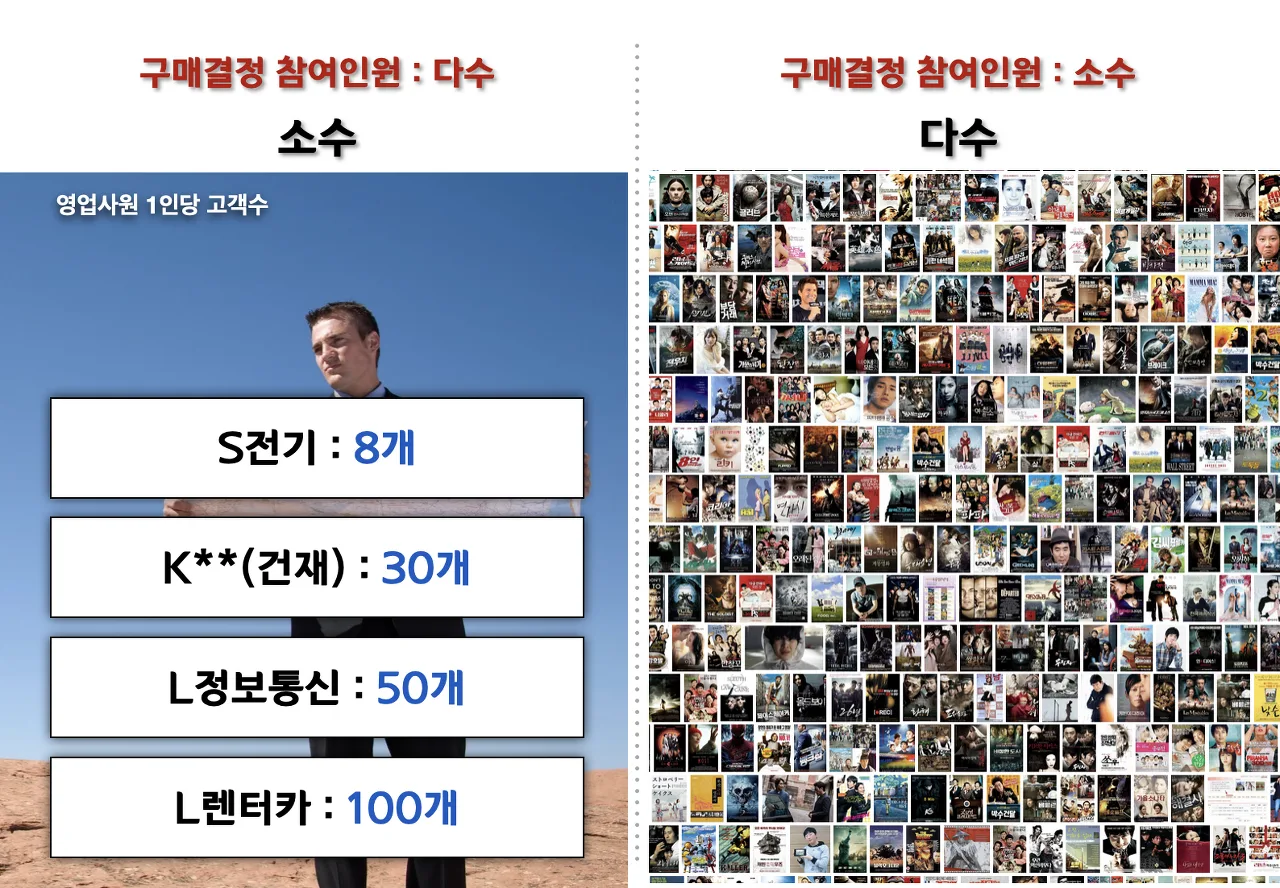
What products and services are typically traded in B2B? Manufacturing equipment and machinery used in factories, heavy equipment such as excavators on construction sites, forklifts and robots used in warehouses, components and materials such as semiconductors and PCBs used by manufacturers, raw materials, work uniforms, packaging boxes, food ingredients and supplies for employee cafeterias (or services that run the cafeteria for you), accounting services, legal services, enterprise software such as Oracle or SAP, and training, HR, and general affairs services. Do B2B salespeople handle many customers, or few? Whether it is many or few depends on what you compare it to. B2C consumers and retail stores are extremely numerous, so compared with B2C, B2B customers are a "small group." But many more people take part in each purchase. Think about buying new equipment for a factory. The purchasing manager does not simply sign and finish. Once the approval request goes up, it is copied to the factory, passes through the purchasing team lead and an executive director, is copied to the finance team, and goes on to the vice president and the president. Only after approval is complete does the purchase proceed to shipping and installation. Expect long timelines, extensive discussion, and negotiation. It is all work to clarify (or deliberately blur) who is responsible for any problems that arise, isn't it?
What about B2C? When you buy something from an online store or a discount mart, do you need anyone's approval? A few months ago I saw a post in a community by a man in his 40s who was furious after his wife scolded him at length for putting his favorite beer and snacks in the shopping cart. That is not the typical case, right? The B2C purchase decision process is simpler than B2B, with fewer people involved. Ordinary household goods are bought individually, with no family sign-off needed. Expensive items like large appliances, or choosing an interior contractor, are mostly discussed between spouses. Kids' furniture, laptops and books are discussed with the children. At most, that is two or three people.
From 2012 to 2023, I steadily surveyed participants in training sessions and workshops about how many customers each B2B salesperson handles. An electronic components company like 'Samsung Electro-Mechanics' had the fewest, about 7-8 companies per person. At 'KCC,' the building materials division mostly deals with dealerships, so the number per person was higher, about 30-40. At 'Hansol Home Deco,' which has a similar business model, each salesperson handled about 50-60 dealerships, similar to 'Lotte Data Communication,' which provides system development and cloud services in a different industry. In the division of 'Lotte Rental' that provides car rental services to corporate customers, each salesperson handled more than 100 companies. These B2B customers also tend to cluster by industry: machinery and metals in 'Changwon,' electronic components in 'Ansan,' chemicals and energy in 'Ulsan' and 'Pohang,' and IT companies in 'Pangyo.' Why do they cluster? Logistics and service efficiency, along with government support policies, concentrate particular industries in particular areas.
3. Purchase influence
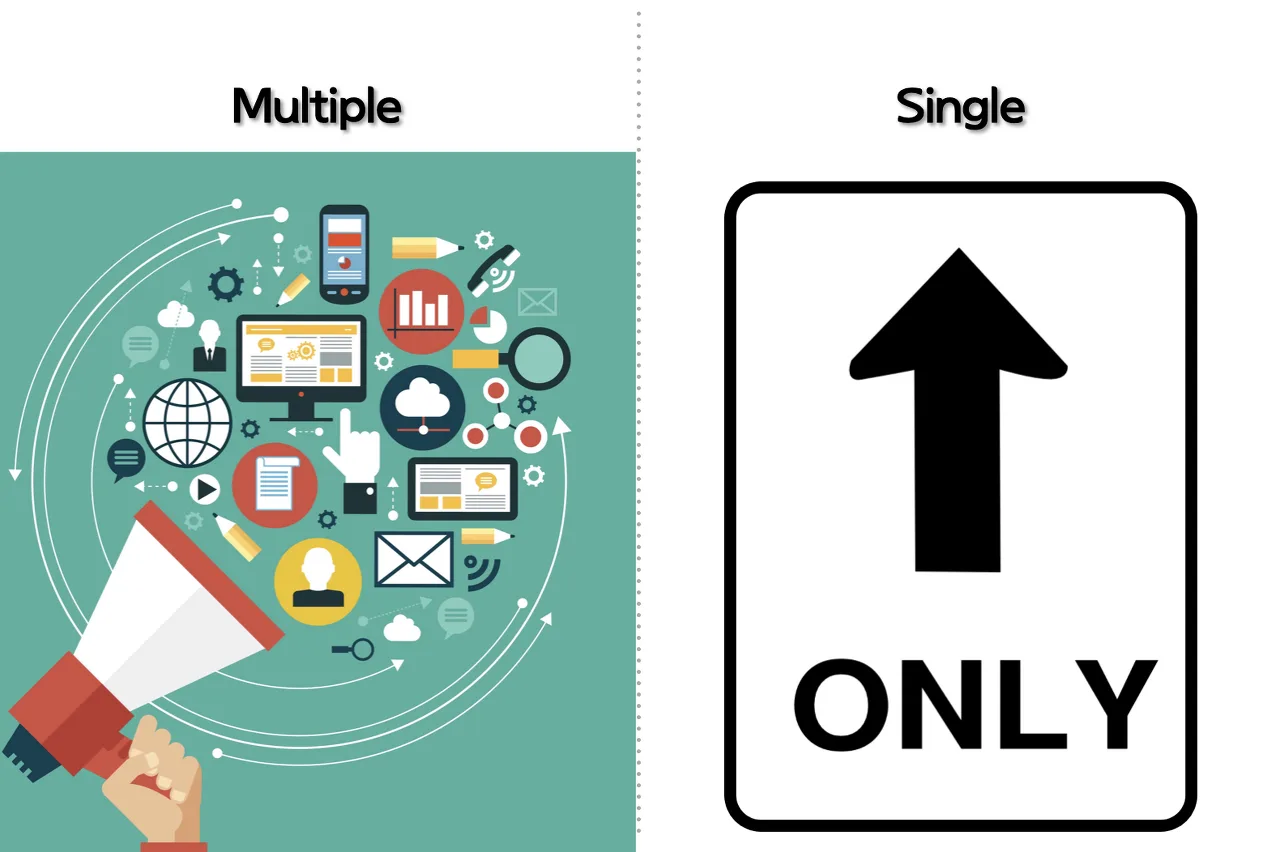
When a B2C product has a problem, the impact is smaller in scope and less complex than in B2B. If a foreign object turns up in delivered food, you first stop distributing that product, quickly identify where in the process it happened, and act on the findings, which keeps the damage from growing. Let me give a B2B example. The piston ring used in an internal combustion engine fits around the piston and seals the gap between the cylinder and the piston. It must keep oil from passing through and withstand pressure and heat. It costs about KRW 7,000 (≈ US$5) to 9,000 each. It is one of roughly 30,000 parts in a car, and not an expensive one, right? Now suppose the supplier uses too much nitrogen compound in the forging process, raising not only strength but also hardness too far, and the piston rings crack after a certain period. What happens then? At the least, engine oil is used up quickly, raising owners’ maintenance costs. At worst, an engine boring (engine teardown and repair) costing KRW 2 million (≈ US$1,500) or more may be needed. If the broken piston ring scrapes the cylinder wall, engine oil leaks into the engine, it overheats, and a fire causes injuries or deaths, the damage would be astronomical, in the trillions of KRW, for consumers, the automaker, and the dealers alike. The piston ring maker would very likely go bankrupt, wouldn’t it?
Ethical issues are also likely to be involved in B2B products. A representative case is Mitsubishi Motors. Through the 1970s and 80s and into the 90s, Mitsubishi won in various motorsport championships and was in its heyday with four-wheel-drive SUVs built on its excellent internal combustion engine technology. But in 2002 in Yokohama, Japan, the hub, an axle component of a Mitsubishi truck in motion, broke and a large tire came off, rolled on its own and struck a family walking on the sidewalk. Two children were seriously injured and their mother died, and the story made headlines in the Japanese press day after day. Mitsubishi tried to steer the blame toward a production worker who had tightened the bolts carelessly, but a whistleblower revealed that it was originally a design error, that the strength was insufficient, that many parts besides this one had the same problems, that numerous recalls had been concealed, and that quality control was sloppy. As a result, Mitsubishi Motors ran annual losses of trillions of won and came close to bankruptcy. In this way, a problem with a product traded in B2B does not merely cause extra cost in the manufacturing process. It affects the safety of end users, and it damages the brand image and trust of the entire value chain.
4. Distribution channels
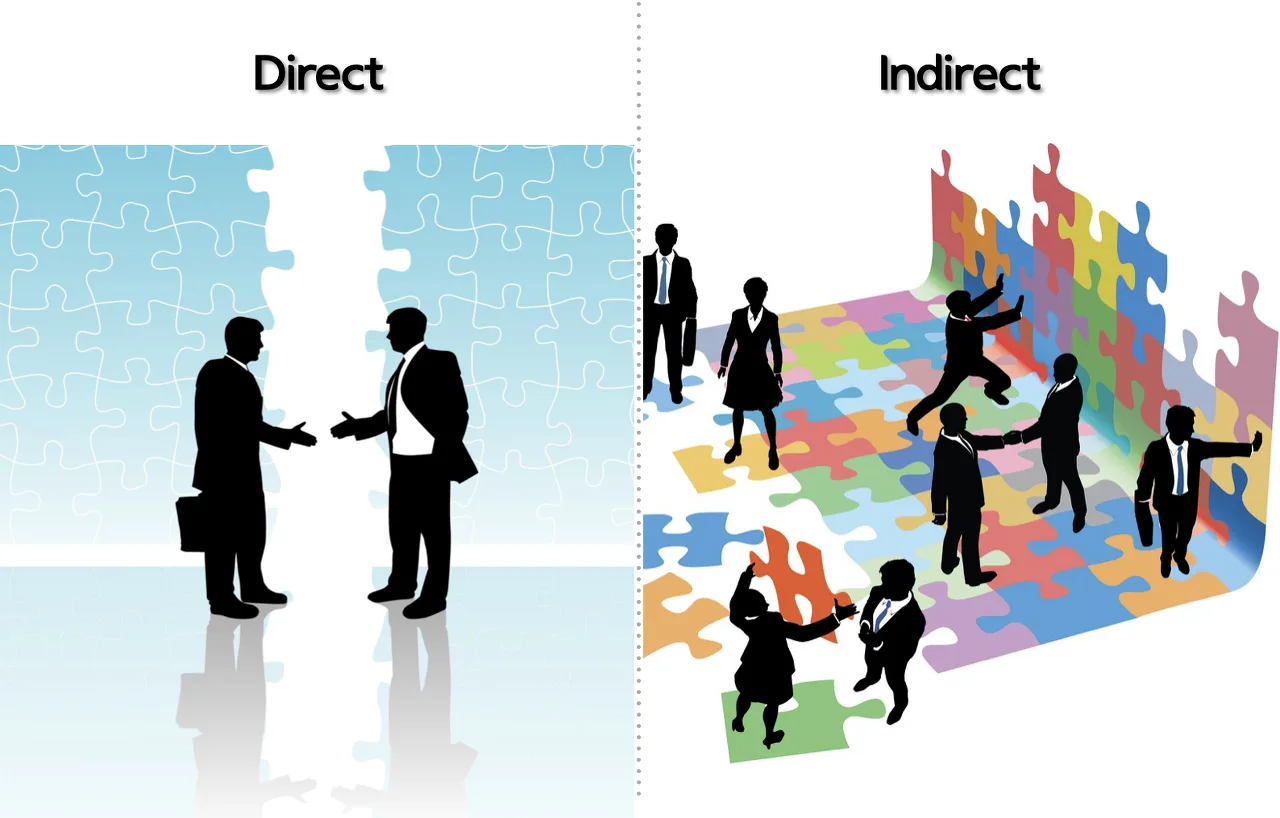
B2C distribution relies far more on indirect channels. Suppose you started a food business. The method you would want is direct sales: marketing that strengthens your brand image, managing customer relationships yourself, and selling through channels run directly by headquarters with your own sales staff. That would cost an enormous amount, and it is far too risky to attempt at the start of a venture. So the easier approach is wholesale distribution. You could write a proposal, contact merchandisers (MDs) at well-known online and offline retail channels by email, social media, KakaoTalk, text, or phone, hold meetings, and get listed. Or you could sell in bulk to wholesalers to reach retailers. Once you have improved sales and cash flow this way and scaled up, you could minimize conflict with existing distributors by launching a separate brand with slightly different products for online distribution, or by opening company-owned offline stores. The key here is to minimize conflict with your existing distribution partners. Once you have steadily raised your domestic market share, you could find partners in other countries through various channels and export your domestically made products through them, build local factories to manufacture and sell, or license partners to manufacture and sell. You could try franchising, or distribute through network marketing. That is the realm of B2C distribution.
B2B distribution relies far more on direct distribution. Let's think from the standpoint of a small company that makes piston rings for internal combustion engines, which I mentioned earlier under 'purchase influence.' I said the easiest way to segment the B2B market is by 'industry' and 'application.' You can divide it by field of use, right? Automobiles, motorcycles, generators, compressors, ships, aircraft, garden machinery, custom orders and so on. Depending on market size, you might set up an 'Automotive' division, a 'Marine & Aerospace' division and an 'Other' division, but a small company of a few dozen people would simply run a single 'Sales Department.' If the company is large enough, that department would be split into domestic and overseas, but if it is not large, they would be run together. The combined sales department would naturally split into 'direct sales' and 'dealer management,' though the names would differ. Experienced senior staff would visit the reception rooms of automakers such as Hyundai, Kia, GM Korea and SsangYong every day to sell, and each would handle fewer than 10 accounts. One staff member and one female employee would manage dealers nationwide. Overseas sales would be similar. A senior employee with experience and strong foreign language skills would attend trade shows and travel directly to win overseas customers, while junior employees would manage dealers in each region. If the business grew, it would be split into the Americas, Europe, Asia and so on, with one person in charge of each. There are differences depending on the type and nature of the industry, but compared with B2C, there are fewer layers. The share of revenue from 'direct sales,' which you manage directly, is relatively high. This brings the importance of key accounts back into focus. While raising their loyalty and strengthening the relationship, you also need to strengthen your BATNA (Best Alternative To a Negotiated Agreement) to increase your bargaining power, right?
5. Key sales skill: negotiation
For B2C, just think about our everyday lives. When my wife and I buy strawberries at the fruit shop in front of our house, we negotiate in completely different ways. Looking at a pack that came in today for KRW 15,000 (≈ US$11) and a pack that came in yesterday for KRW 13,000, (≈ US$10) I can't really tell the difference, but since our youngest son likes them, I pay KRW 15,000 (≈ US$11) without a second thought. My wife checks carefully first. She compares the freshness and condition of yesterday's and today's strawberries, quickly decides which to buy, and then asks for a little off. That is when all kinds of tactics come into play. The seller says no, but that would upset a regular customer, so she uses a volume-discount tactic and offers one more tangerine. The buyer takes it and counters by asking for an apple too. The seller turns that down, but tosses in some yakgwa (traditional honey cookies) from the shelf next to her, and as she takes the card to process the payment, she might even knock off KRW 500 (≈ US$1) or KRW 1,000, (≈ US$1) right?
As of 2023, I have been a corporate instructor for 12 years. When a training manager at a client company finds us through Naver or Google and calls or messages us on Channel Talk to ask, 'What is your instructor fee?', I use a particular technique. I quote a somewhat higher actual figure from references with clients of a similar size. People naturally feel reluctant to go lower than that. I also explain that the fee for a 2-3 hour special lecture differs from that of a program of 8 hours or more, and I quickly provide a curriculum, a quote and sample course materials to make the manager's job easier. At the end, I always add 'One more thing.'
"Assistant Manager, set the fee at whatever amount is easiest for you to get approved. Isn't getting this project off the ground the priority? I'll do my best to make sure it ends well, all the way to the finish."
That is how I wrap up. These days I always check how the client got in touch. Such a client is a B2B Direct customer. Because they come to me directly, the fee is higher. The longer you work as a corporate instructor, the more of these repeat corporate clients you will have. Training consulting firms (the agents and resellers of the training industry) also often reach out by messenger or phone. When one asks, 'A major corporation requested a 3-day B2B marketing course. What would you charge?', it becomes a complicated equation: their wish to secure the maximum commission, my opportunity cost of filling an open slot when a higher-paying special lecture might come along, and, if the firm is a large one, the long-term relationship with them.
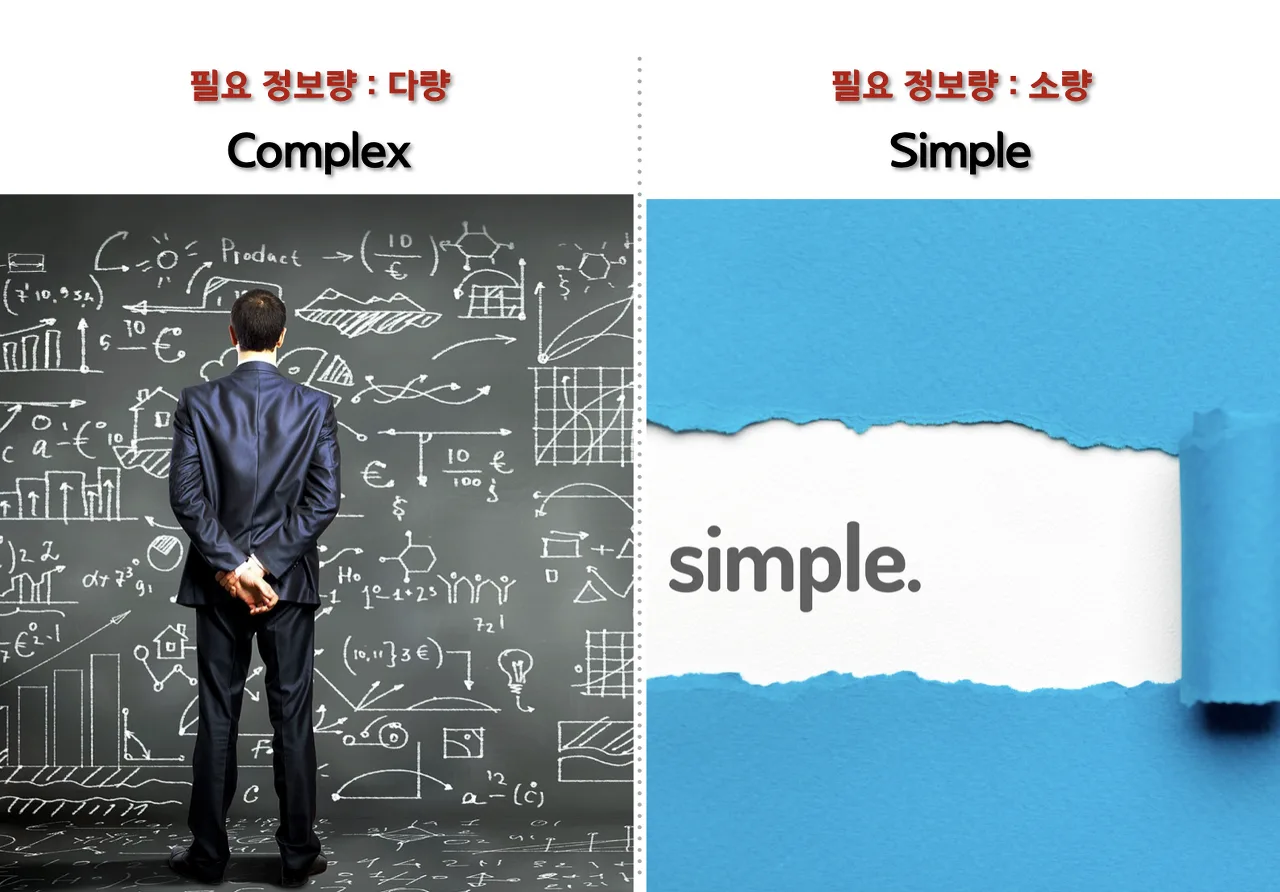
In short, B2B negotiation works in four stages. In the 'planning' stage, collect as much information as possible about the customer and competitors. In the 'conversation' stage, quickly separate surface requirements from underlying needs. In the 'proposal' stage, present value from the customer's perspective in quantitative terms. In the 'agreement' stage, close on terms that favor your company and sign the contract quickly. I will explain B2B negotiation in more detail another time.
To be continued