In marketing, empathy with the customer can never be overemphasized. Over 12 years of teaching startup marketing, I have met thousands of first-time founders, and most of them look at customers from their own point of view. They also tend to be overconfident in their own ideas, building products or services that meet their own needs rather than the customer’s needs, and many fail as a result. Over this six-part series, I will walk through best and worst practices for empathizing from the customer’s perspective.
Wooden blocks
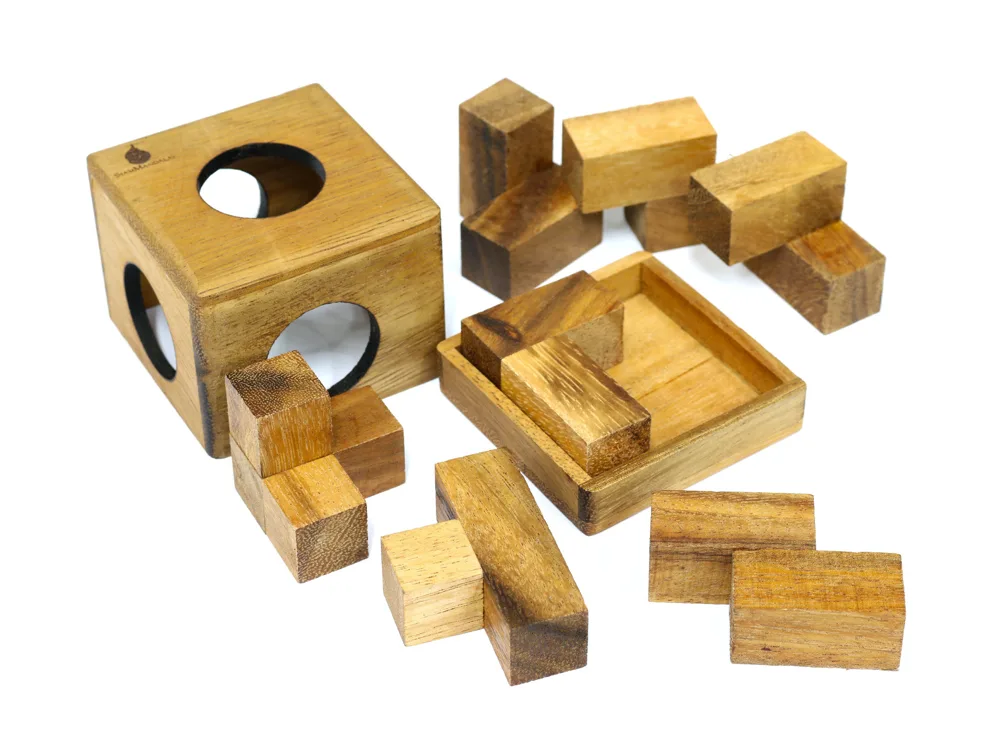
Wooden blocks! Who is the user of this product? From how people answer this question, you can easily tell whether they have childcare experience. Twenty- and thirty-somethings without childcare experience name an older age, like 6-7 years old. People with childcare experience say around 2-3. I am raising two sons, 9 and 2 as of 2022, so I know from experience. Kids rarely play with wooden blocks after age 5; from then on they move to complex cars, train sets, LEGO, and so on. The users of wooden blocks are 2-to-3-year-olds. So let us all put ourselves in the shoes of a 2-to-3-year-old. What is the value children most want from this product? What do you think? I have asked this question more than a thousand times over the past decade or so. What answer came most easily from first-time founders?
'Safety.'
When I hear that answer, I pause for a moment (2-3 seconds) and then say, "Think again. Is it really safety?" to give them time to reconsider. Their eyes light up, and after a moment they say quietly, "Fun?" Exactly. Children do not think deeply about 'safety,' do they? When we were kids, we stood in front of the stationery shop by the elementary school, melting sugar in a ladle over a coal fire and adding baking soda to make candy, and we ate all kinds of junk food of unknown origin. Would we have eaten any of it if we had thought about 'safety'? My 2-year-old son also puts things like ointment or lotion in his mouth the moment I look away. Wooden blocks: what 2-to-3-year-olds want most from them is fun. Let me break it down by the senses. Sight: interesting shapes and colors. Sound: a pleasant rattle when shaken. Touch: a warm, smooth feel. Smell: a subtle, pleasant scent. Even taste: a familiar, pleasant flavor. That is Fun.
Now, wooden blocks. Who makes the purchasing decision for this product? First-time founders say 'the parents.' I ask back: which parent? Then the second round of thinking begins. Dad? Mom? It may differ by country. In Korea, it would be Mom, right? How old is Mom? Some say early to mid 30s. So I tell them to take a close look at the mothers who come to the playground with their kids. These days people marry later and have children later, and when I take my younger son to the apartment playground, most of the mothers are in their late 30s or early 40s. So, what is the most important value for a mother in her late 30s or early 40s when choosing wooden blocks? It is
'Safety.'
They will check carefully which wood, from which region of which country, was processed how and where. They will have the composition analyzed for harmful substances, confirm that a trustworthy manufacturer made it safely, and read every user review on parenting forums one by one. The product they want most is Nordic: a KRW 1 million (≈ US$750) wooden block set built on the philosophy of a famous child educator. If a baby fair offers 30% off with various promotions, they will buy it in credit card installments. They might join a group purchase at the discounted price in a local parents’ forum, or buy a clean used set on Danggeun Market, a secondhand marketplace. The most important thing is “safety,” then “brand,” then “price”: that is how the priorities of Value get ordered. Even with something as simple as wooden blocks, you can see how hard it is, without experience, to identify the user and the purchase decision-maker and pin down their Needs and Value.
Ball pit balls for kids cafés

This is a case I came across around 2016. Two young women in their twenties, fresh out of college, asked for startup marketing consulting. Their product was unusual: ball pit balls for kids cafés. I was interested because at the time I often took my 3-year-old to kids cafés, letting him play while I prepared lecture materials. When I looked into the product, I was a little surprised. The balls were shaped like snowmen, as in the picture above. I asked, "Why did you decide to make the product in a snowman shape?" They answered, "Well, we thought kids would like it." We thought kids would like it... We thought kids would like it... I suddenly went blank. If they only thought kids would like it, that meant they did not actually know, and that was simply the view of women in their twenties with no childcare experience. I immediately texted a photo to an acquaintance who runs a kids café and asked for their opinion. The feedback was: "What is it made of? With that shape, the joints look like they would break easily while kids play, and if harmful substances come out or there are lots of fragments, it will be hard to clean..." They also planned to make the balls in several colors, and the reason was again "We thought kids would like it." So I advised them to rethink from the perspective of the users, the children, and get their feedback; to check the opinions of the mothers who pay for kids café visits; and above all, to recognize how important the views of kids café owners, who make the B2B buying decision, are. They needed not the perspective of a woman in her twenties, but the point of view (POV) of a 5-to-10-year-old child and the point of view (POV) of a kids café owner.
A similar case is the smokeless Premier cigarette.
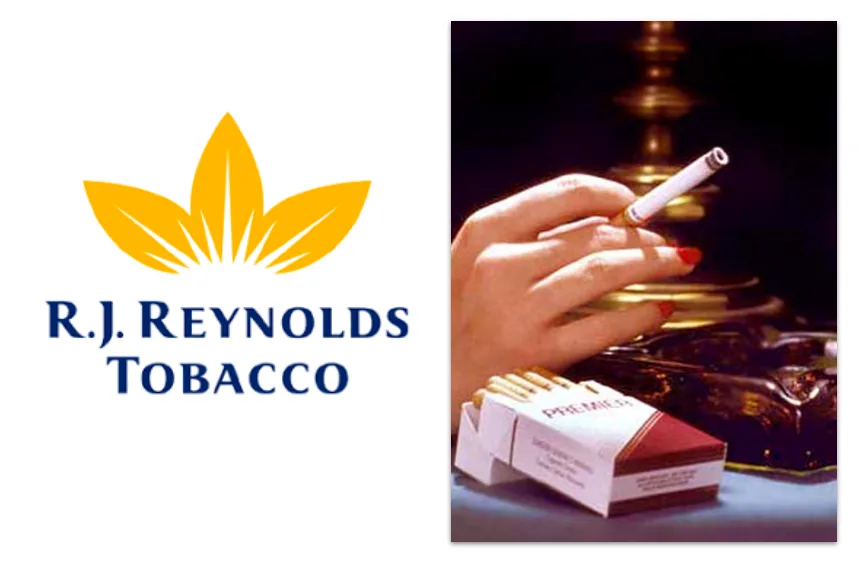
In 1988, as the anti-smoking movement gained strength, the American tobacco maker R.J. Reynolds spent a whopping 330 million dollars developing a smokeless cigarette called Premier. The idea was good: no smoke, and clean. But that Value was not for the cigarette’s user, the smoker; it was for the wives and children who suffered from secondhand smoke. To smoke this cigarette, the smoker had to light it for a long time with a lighter that produced a strong flame, like a welding torch, and draw hard, yet it barely caught fire. I used to smoke and quit nearly 2 years ago, so I know this well: smoking has a “throat hit.” Cola or beer tastes bad once the carbonation goes flat, right? A cigarette without that hit is like inhaling steam from a humidifier, and one with too much is like breathing in smoke from a stove. Chinese cigarettes are notorious for their awful throat hit. Premier, the smokeless cigarette R.J. Reynolds developed in 1988, was hard to draw on and tasted nauseating, delivering the worst CX (Customer eXperience) to its user, the smoker. It was a blunder that will go down in marketing history. Developing a product that its own users hate…
To be continued