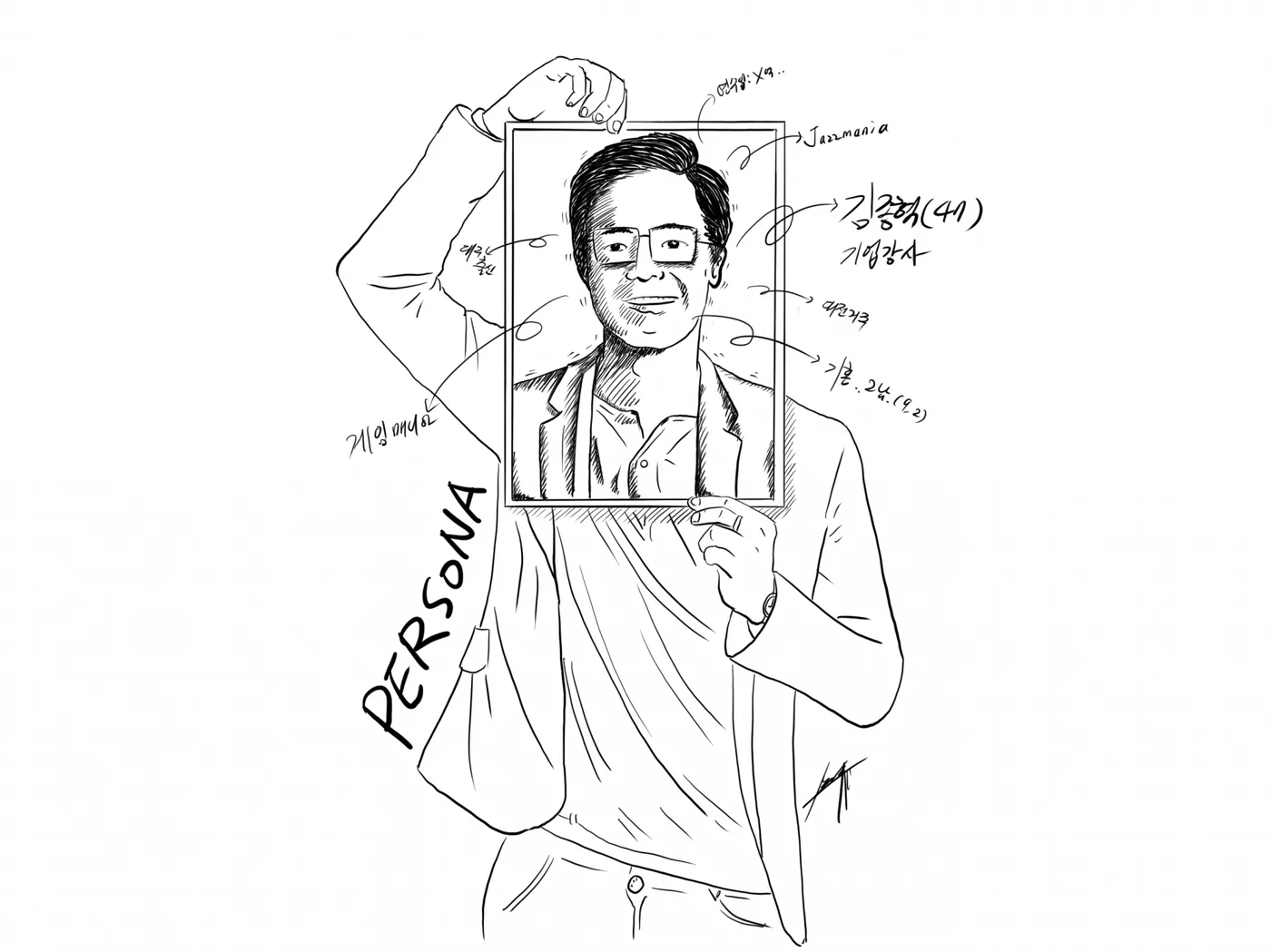
Hand-drawn illustration / Persona
The word ‘persona’, Greek for “mask”, has become an essential concept in modern marketing. In marketing, using personas means defining a fictional key customer by age, gender, background, preferences, personality, income, and so on, then building your marketing strategy around that customer.
This matters especially in B2C marketing, because once you can pin down the persona, the strategy you need follows naturally. Now, imagine a home with a broken boiler that needs replacing. It is an average household: a couple and two children, a family of four living in a 32-pyeong apartment. All of them are the boiler’s “Users,” right? So who is the “Decider”? If you had to build a B2C marketing strategy, whom should it be designed to appeal to?
Among the four users, we first need to identify the ‘Decider’, the person who makes the purchase decision. In Korea, that is usually ‘Mom’. But we shouldn't build a strategy around 'Mom' alone, because a persona has to be more specific and detailed. How old is the mother of a four-person Korean household, on average? Let's assume she is in her early 40s and named ‘Jihye Kim’, the most common name for that age group (the most common female name in the 1980s; 2nd Jiyoung, 3rd Hyejin, 4th Eunjung, 5th Sujin).

Now, this marketing strategy will be built around a persona named “Jihye Kim”: a woman in her early 40s, a mother in a family of four living in a 32-pyeong apartment in the city center. Next, think about which channels to use. The usual approach is to market through Instagram, mom cafés, or mid-roll ads and product placement in dramas this persona enjoys (for example, SKY Castle), right? Without this kind of strategy, you end up making mistakes like placing ads on morning-commute radio, on the front page of a print newspaper, or on TV Chosun’s “Mr. Trot.”
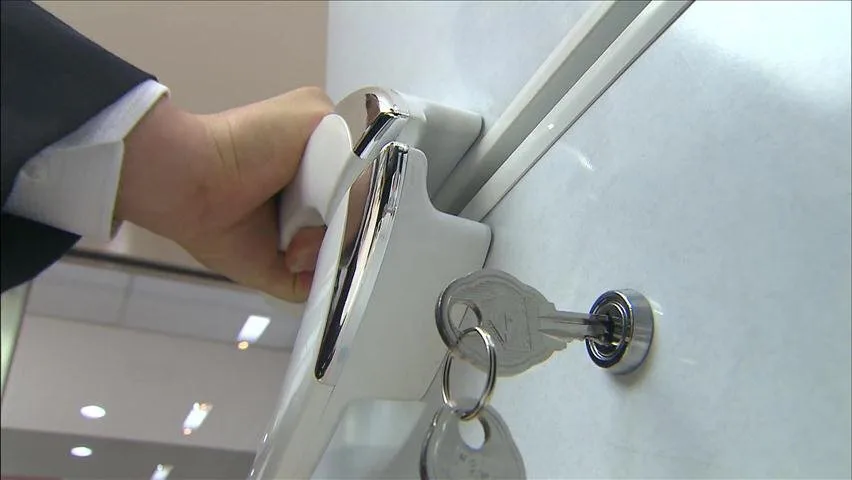
Interestingly, even for the same boiler, the purchase decision-maker can differ by country or region. I have asked international participants of many nationalities this question dozens of times in my classes, and in patriarchal countries (cultures with strong masculinity) such as 'India', 'Pakistan', 'Afghanistan' and the 'Middle East', most purchase decisions are made by 'Dad'. In that case, you need a strategy tailored to the country. Here is an example. In the late 1990s, Daewoo Electronics and LG Electronics launched refrigerators with locks in the Middle East and India and sold them in considerable volumes. Middle-class and wealthier households there often have a live-in housekeeper, so this was a localized product designed to stop expensive groceries from going missing. When advertising to wealthy men in their 40s and 50s, a good approach is to show, with numbers and real cases, how much money is actually saved by keeping people from helping themselves to the drinks and food in the refrigerator.
What does this persona consider when choosing a product? Safety? Design? Weight? Features? What does the persona worry about, and do they care more about value for money or emotional satisfaction? Who influences the persona: friends? Social media? Celebrities? Does the persona tend to share their experiences, and if so, through which channels? A strategy is built by weighing fine details like these. An empathy map can help you understand your persona in greater depth.
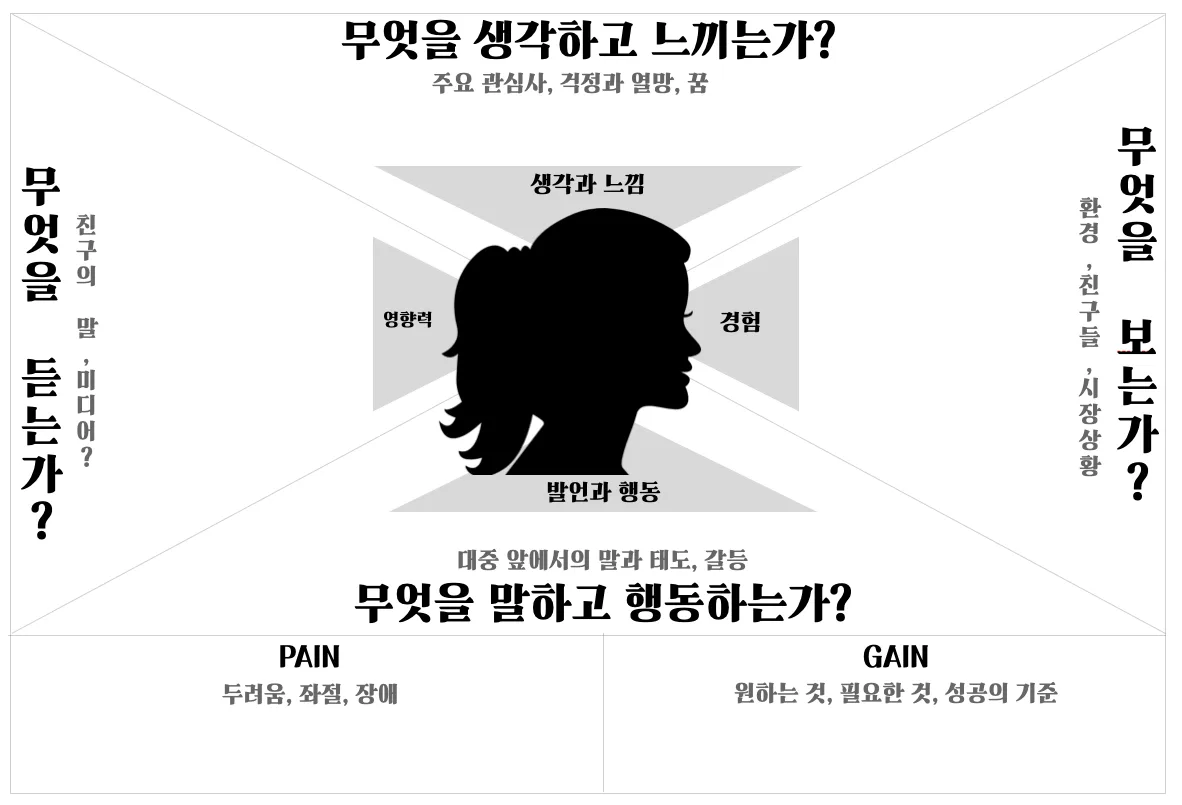
They say American startups spend a lot of time defining their personas, then give a mannequin a name, dress it, set it up at a desk in the office, and bring it to every brainstorming meeting. It sounds like a good approach. What food and clothes does our persona like? Which movies and shows do they watch on Netflix? What music do they listen to often, and what books do they enjoy? Where do they go on dates, what are their travel habits, and when shopping, do they go to a convenience store, a neighborhood grocery, or a big-box supermarket? Which social media do they use most, and which YouTube channels do they subscribe to? Do they drive their own car or mostly take public transportation? What are their political leanings? When you work through these questions, seeing the persona in physical form in front of you does far more for generating ideas and building empathy than just imagining it.
To be continued