In 1993, when I was 20, the Korean movie 'Two Cops' became a huge hit. It starred actors Ahn Sung-ki and Park Joong-hoon. Back then, adults would routinely fold a 10,000-won bill and slip it under the ticket when caught for a traffic violation. I remember stories of a friend's father, who rode a cool police motorcycle (a Harley-Davidson), making a lot of money as a traffic cop. Soon after getting my license, I was pulled over driving my mom's car. When I said, "I'm sorry. Please let me off just this once," the officer said, "Don't you have a 10,000-won bill, kid? Not even a 5,000-won one? None? Then go!" Stories like these were everywhere when this movie about corrupt cops came out, a genuinely satisfying and funny comedy.
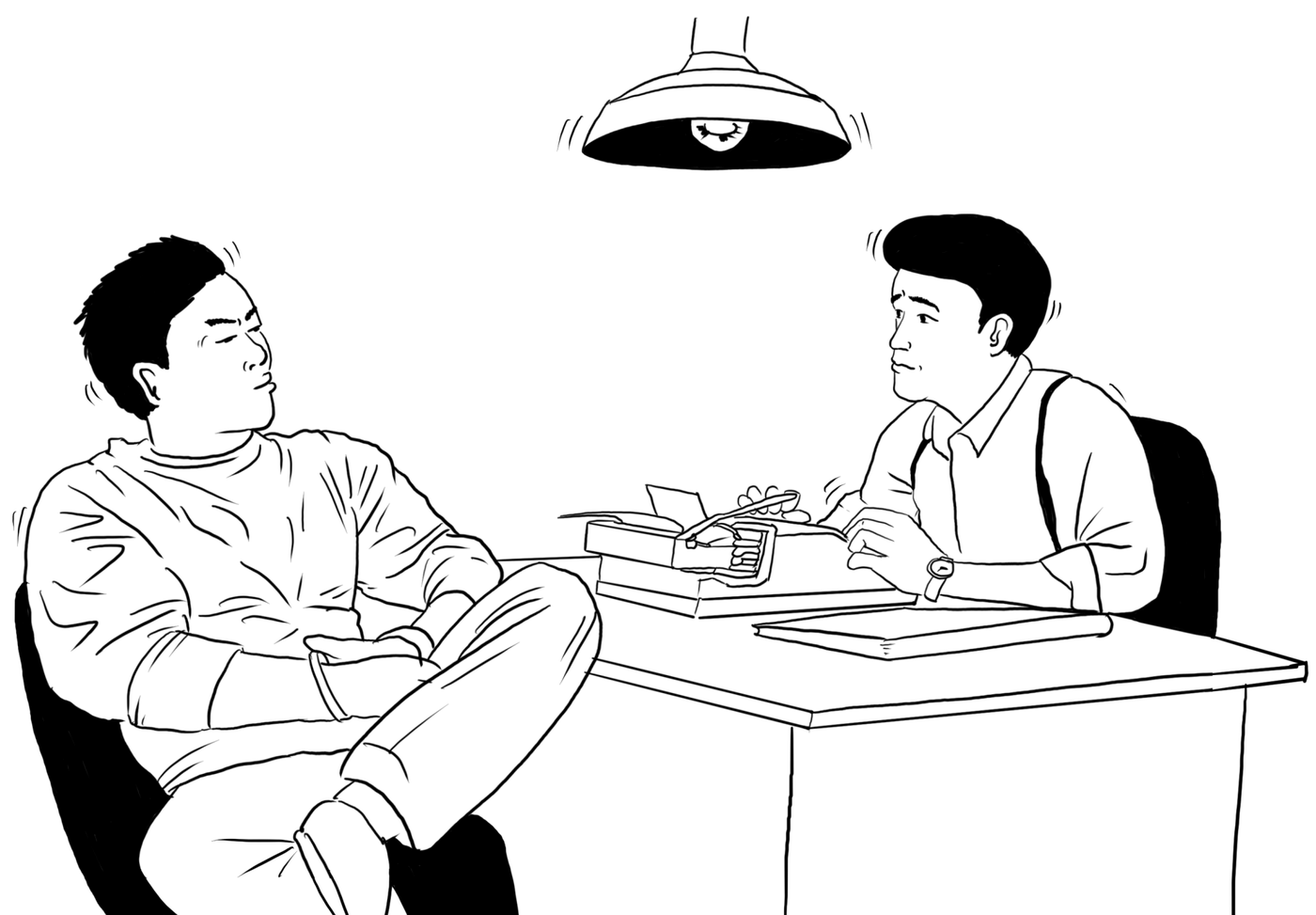
Thirty years later, the scene I still remember best from this movie is the one where a corrupt senior detective tries to intimidate the junior detective who wants to report him to their superiors. He has the junior detective interrogate a rough, notorious repeat offender known in the precinct for theft and violence. When the suspect starts hitting his own face with a typewriter to injure himself, the junior detective, played by Park Joong-hoon, panics. Then the senior detective, played by Ahn Sung-ki, walks into the interrogation room with the police chief. The chief sees the bloodied suspect and erupts: "What era do you think this is? You beat a suspect to a pulp? Fire that guy right now!" The senior detective then makes a secret offer to the junior one: "I'll smooth this over if you withdraw your report. How about it? No?" Alone in the room with the suspect, he starts hitting his own face with the typewriter. "Aaagh! This punk is hitting a cop!" I laughed out loud in the theater. Two Cops doesn't show a textbook Good Cop, Bad Cop routine, but other detective movies and dramas give you the dim interrogation room, the cheap folding chair, the slightly swaying bare bulb, and a typewriter or laptop. The two-way mirror, which looks like a mirror from inside the room but like a window from the next room, was an essential prop too. The first detective to appear is tough-looking or sharp and aggressive, and keeps pressing the suspect in a threatening way.
Bad cop : "Hey! Come over here and sit down. Sit up straight. You think the police station is your home? Look at that face, he's obviously the guilty one. Just admit it quickly and let's make this easy."
Good cop : "I'm telling you this like you were my own brother: it'll go badly if you keep this up. Admit what you need to admit, quickly. It'll be better for you."
Bad cop : "Hey. Why are we listening to this criminal at all? Wrap it up fast and file for the arrest warrant."
Good cop : "That detective (Bad Cop) is completely crazy. He's all fired up lately, and there's no telling what he'll do. In every similar case before, arrest warrants were issued. So just admit it quickly and let's move on."
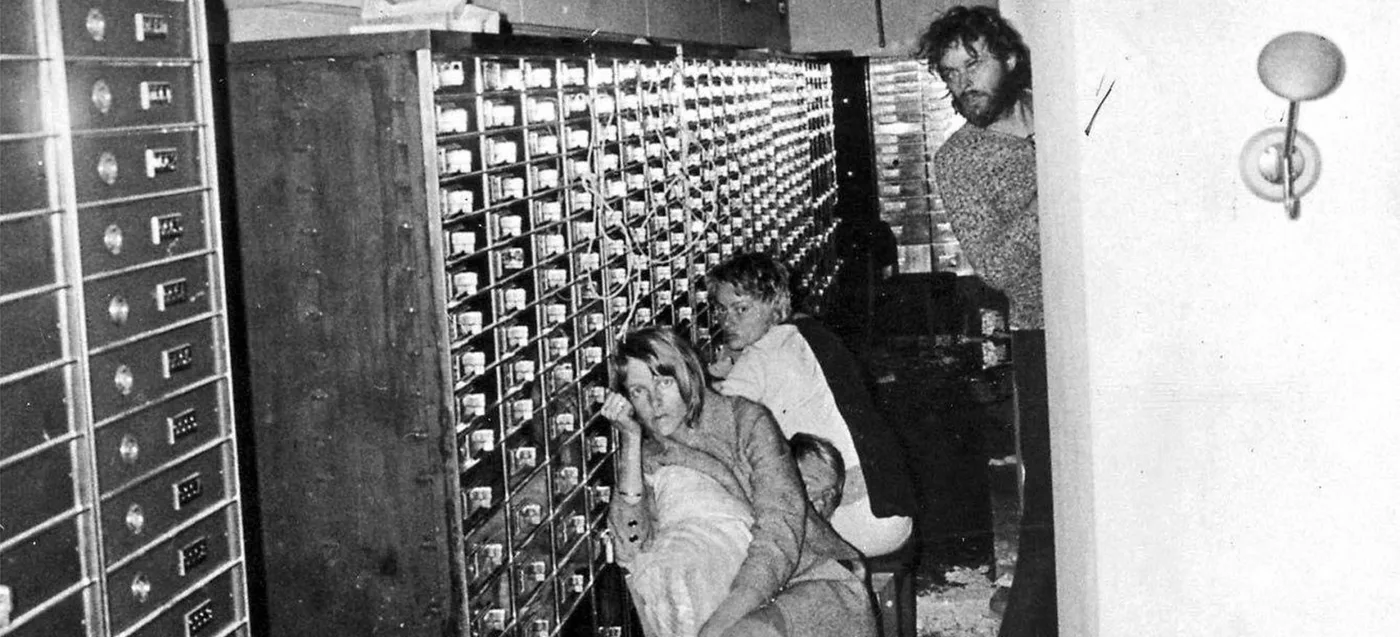
The Good cop, Bad cop tactic is widely used in real police interrogations and became famous through detective movies. After being hammered hard, people feel far more relieved by gentle treatment and end up complying. It seems closely related to 'Stockholm syndrome,' in which hostages grow attached to their captors and turn hostile toward the police. In the 1973 'Norrmalmstorg bank hostage crisis' at Kreditbanken in Stockholm, the captors threatened the hostages while also showing them kindness, winning their complete psychological submission.
The military offers plenty of similar examples. I served in the mid-1990s and experienced fairly brutal harassment and violence. I don't know if it's still like that, but back then a mid-ranking soldier near the end of his corporal rank handled unit 'discipline,' and being summoned and kicked in the chest with combat boots or slapped across the face was the bare minimum. I especially remember my first guard duty. It was an unusually cold winter, and I climbed to a post on a mountaintop wearing underwear, thermal underwear, a sweatsuit, my combat uniform, a liner jacket, a field jacket, and a ski parka. I don't remember the details now, but the senior soldier kept quizzing me on things I was supposed to have memorized, and whenever I couldn't answer, he mercilessly struck my helmet with the butt of his K2 rifle. After two hours of guard duty under that pressure, I came back down to the barracks and had to put away my rifle and various gear, which easily ate up another 30+ minutes in the early morning. Then a sergeant close to discharge would pour hot water into a cup of instant noodles, put it in my hands with a pair of wooden chopsticks, light a cigarette and place it in my mouth, and tears of gratitude would pour out. The senior corporal was the Bad cop, and the sergeant was the Good cop. I hated that kind of abuse, so when I became a senior corporal and then a sergeant myself, I went easy on my unit. I didn't force them to play soccer, find faults to punish them, nitpick when they went on leave, or give punishment over uniforms and cleaning. The result? They just ignored me and wouldn't listen. Wondering whether a leader really does have to use carrots and sticks, I started reading Machiavelli's 'The Prince,' agreeing with the line 'It is much safer to be feared than loved.'
Isn't it the same between parents and children? Parents rarely scold a child together at the same moment. When the father scolds sternly and picks up the switch, the mother hugs and comforts the child. When the mother scolds sternly and picks up the switch, the father hugs and soothes the child. Readers, you've probably cried harder and sobbed more in moments like that, haven't you? Early in my career, I was shocked by something an executive in charge of sales at a company said. On the way back from a business trip, while driving to pick up his middle-school daughter, he laid out his philosophy: "With employees or kids, every so often you have to find a reason, even one that doesn't exist, and give them a sharp dressing-down. Otherwise they get above themselves!"
I had a similar experience in sales. Fifteen years ago, when I heard that a product my company had delivered had a major defect, I rushed to visit an overseas customer together with our research director, who was in his 50s. Normally, no matter how serious the quality problem, it is customary for a customer not to push too hard when a foreign supplier makes the effort to visit in person. That day, though, the manager was hostile from the moment we arrived. He put photos of the defect up on the screen, wrote the reasons for the defect and the damages on the whiteboard, and dug into us sharply for about an hour. Looking back, that person was playing the Bad cop. I was in my mid-30s then and couldn't contain my youthful temper. I pushed forward, roughly erased the carefully written whiteboard notes with an eraser, and picked apart the flaws in the images he had brought as evidence of the defect, one by one. Now that I'm in my 50s, I see how unrefined and rough my response to the customer was. But from another angle, I seem to have ended up playing the Bad cop role unintentionally.
Back then, while I was glaring at my same-level counterpart on the customer side, the research director may well have been having this kind of conversation with the other executive in the smoking room: "First, I sincerely apologize for the rude and rough attitude of our sales rep who came with me. As you know, Director, those of us in our 50s were probably just like that 20 years ago. I failed to properly rein in a young man's unexpected outburst, and I apologize again. But if you look carefully at what our Manager Kim argued, there are points you can surely accept. Pinpointing the root cause of this defect will be extremely hard. Equipment, tooling, operators, software: there are far too many things to investigate. If you keep pressing only along the lines your team is claiming, some of the more aggressive people inside our company might take actions we can't predict, such as requesting an investigation. Why don't you and I work out a compromise that minimizes mutual liability?"
To be continued