Witnessing a Quiet Revolution
I recently ran an online design thinking workshop with trainees in their mid-20s and noticed something interesting. Even in breakout rooms of 5-6 people, they muted their mics and started communicating in the chat. During brainstorming, instead of speaking, they typed ideas in real time as sticky notes in a shared document, and even after listening to other teams' presentations, they asked questions only in the chat. At first I thought they were simply comfortable in online settings, but I gradually realized this was no coincidence. They are 'Corona Kids.' They spent their high school and college years during the pandemic, from 2019 to 2022, and lived through an unprecedented digital transition.
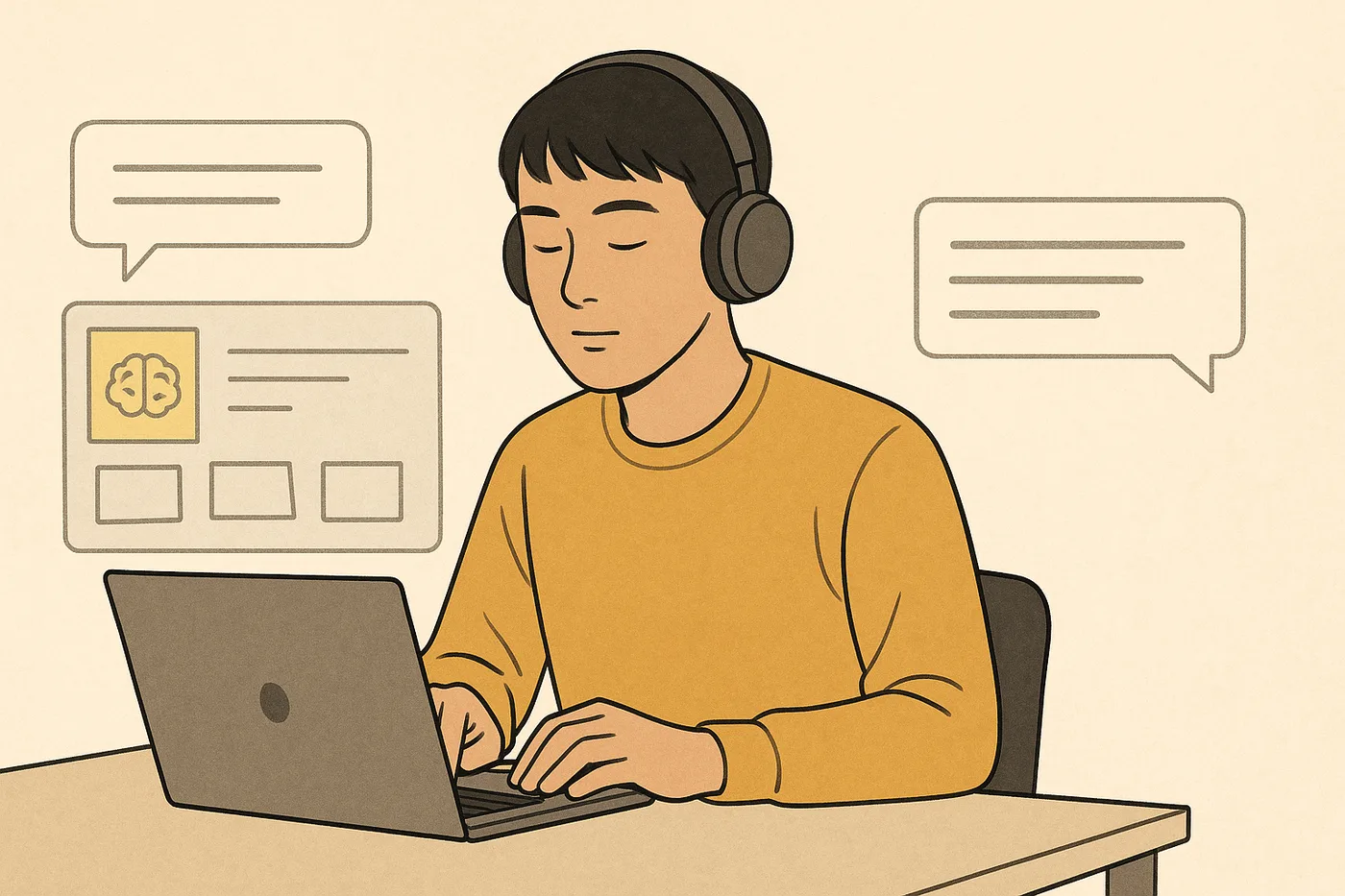
The Rise of Silent Digital Collaborators
The most striking trait of Corona Kids is their preference for non-verbal communication. For them, text is not just a supplement but a primary channel. Still, I don't think we should see them simply as a 'passive generation.' Their digital skills are on another level from earlier generations. They can create concept images with Midjourney, build wireframes in Figma, and even produce a working app with Beautify in no time. In our workshops, too, they quickly turn out everything from AI-generated images and video to simple app prototypes. Their speed at building apps with vibe coding tools is especially astonishing.
I believe this comes from the unique learning environment of the pandemic years. Remote classes, which began in early 2020, gave them a completely different educational experience. "I only took classes on Zoom from my first year of college. Group projects were all online too. It felt awkward at first, but I realized that focusing on your own area of expertise and sharing the results is actually more efficient," one trainee said. In fact, many Corona Kids seem to prefer digitally documented collaboration over the traditional 'get together and talk it out' approach. For them, Google Docs and Notion are not just tools; they are a language of communication.
Creators of a New Communication Culture
The influence of Corona Kids is already visible in many fields, and their way of working stands out. "The new hires who joined recently record meetings, have AI summarize them in real time, and systematically manage follow-up actions in Slack. They are far more organized and efficient than earlier employees," says one startup CEO of the 'Corona Kids.' Change is clearly being felt in education, too. I naturally adopted a 'hybrid discussion format' myself: speaking and a real-time comment system run side by side, creating an atmosphere where more students can take part. I think the communication culture Corona Kids create shows the value of 'quiet participation.' Unlike traditional meetings led by the loudest voices, they prefer an environment where every member can share opinions on equal footing.
What this means for the future
I believe the rise of Corona Kids signals more than a generational turnover; it marks a shift in how we collaborate. They are showing a new way that pursues efficiency and inclusiveness at the same time. Corona Kids speak little, but they act decisively. They are redefining what older generations call 'poor communication' as 'efficient communication.' Thoughts organized in text, well-structured documents, and fast execution with AI—this is the language they are fluent in. The global crisis of the pandemic left an unexpected by-product: a generation that is more than digital native, one fully fused with technology. What will the collaboration culture they lead look like? One thing is certain: that change has already begun. Quiet but powerful, seemingly slow but precise, seemingly individual but collaborative—this is the new world Corona Kids are building. Fascinating.
To be continued