These days I often hear that sales reps can’t get people on the phone like they used to. But the strange part comes next. When an inquiry does arrive, the contact at the other company has already put together our pricing structure and even a competitor comparison table. Early inquiries have dropped, yet the questions in the ones that arrive have actually gotten sharper.
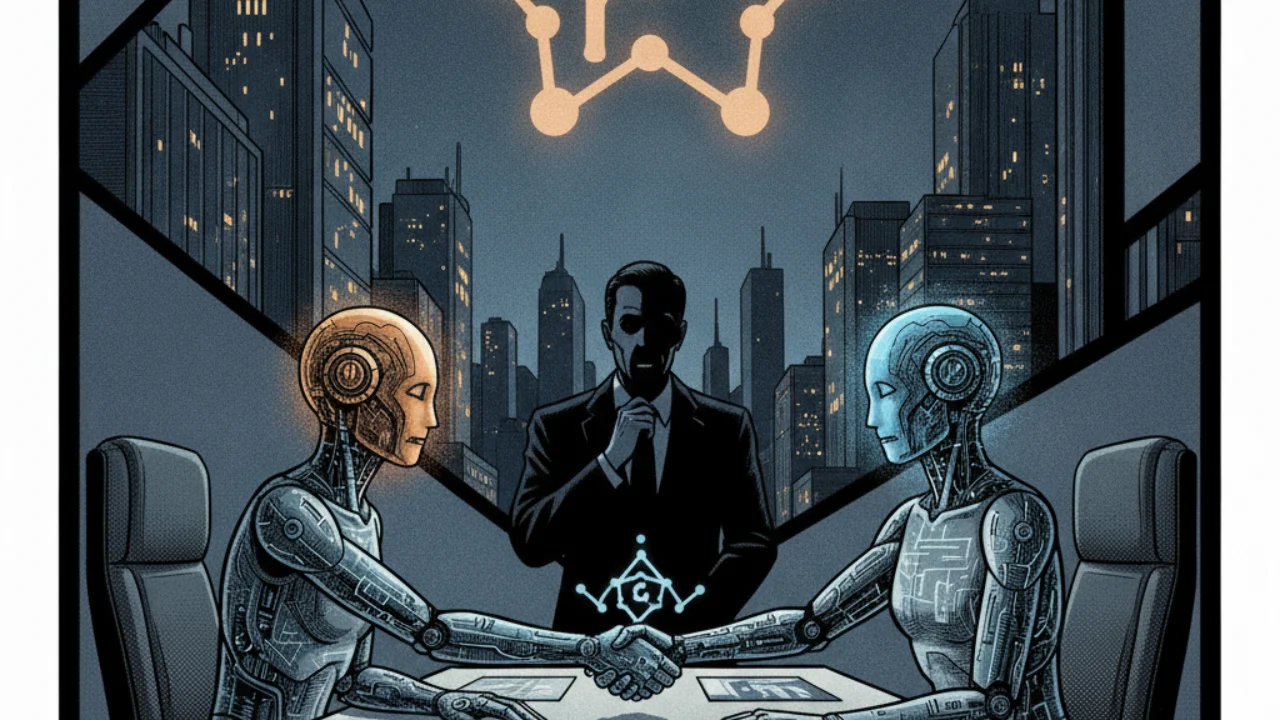
It’s hard to say purchasing managers have suddenly become more diligent. It looks more like the early research stage, once done by people, has moved to AI agents. More sales teams on our side also hand research to AI, so in effect we are heading toward a structure where the AIs on both sides meet first and the people meet later.
We can’t take part in the screening stage
In the past, a purchasing manager would fax, email, and call several candidate vendors to get an overview. Now they have AI do that step, and contact only the few that make the cut.
The problem is that we have no way to take part in that screening stage. In the past, the first reply to a client’s RFP or quote request was our chance to explain our strengths directly. That chance is shrinking, and instead the documents and records left on the web speak for us.
The first conversation hasn’t disappeared. It may already be over, somewhere we can’t see.
B2C, B2B, B2G, D2C… and B2A
For the past 30 years, we have divided business by who we sell to: individuals are B2C, companies are B2B, governments and public institutions are B2G, and selling direct, skipping the middle distributors, is D2C. They looked like different strategies, but they shared one premise: in the end, it was a game of persuading people.
The party that reads and judges our company first has now changed. I call this shift B2A (Business to Agent AI): designing sales and marketing around the “AI agent” the other company uses, rather than its people, as the first customer touchpoint.
You may think it’s too early to call it a fifth category. Still, one thing seems clear: the order of touchpoints has changed. It isn’t so much a crisis as a reordering.
AI doesn’t call to ask
AI tools have never met our company. They read only what they can find: the homepage introduction, job postings, press releases, client reviews, community posts, even company reviews on recruiting sites. Context that a sales rep used to supply in conversation doesn’t exist for them if it isn’t in a document.
Say your website has only lines like “best-in-class solution” and “customer-centric,” with no quantified scope, no names of integrated systems, and no explanation of how pricing is calculated. A person thinks, “Let’s call and ask.” An AI simply marks it as “insufficient information” and moves on to the next candidate.
Writing vaguely and clarifying later in the meeting doesn’t work at this stage.
The fastest diagnosis is to ask directly
You don’t need fancy tools. Just open an AI chatbot and ask three questions.
- Ask by category — Ask, “Compare the Korean providers of OO solutions.” First check whether your company is mentioned.
- Ask by company name — enter your company name and ask about its strengths, weaknesses, and major clients. The answer shows how AI describes you today.
- Compare with competitors — Ask the same question using a competitor’s name, and compare how much is written and how specific it is.
Try it and you will often find that your company isn’t mentioned at all, the information is outdated, or a competitor’s description has your features mixed in. The next step is to close that gap with documents: state the industries and company sizes you serve, name the systems you integrate with, publish how you calculate pricing, and write up about three cases from the past year.
This work overlaps with SEO, but the goal is different. It isn’t about raising rankings; it’s about writing sentences worth citing. This is now called AEO (Answer Engine Optimization) or GEO (Generative Engine Optimization).
I have built our website myself through three generations. I started with Namo WebEditor and FrontPage, moved on to WordPress and Imweb, and the site you are looking at now I built with Claude Code. I added AEO and GEO through conversation, and I have deployed an llms.txt file, made for AI to read. In the stats I check every day, I can see traffic from AI bots rising noticeably. The data isn’t refined enough to publish numbers yet, but the direction is clear.
Three things to watch out for
First, unverified citations. If the information an AI compiled contains errors and you repeat it in a meeting, you lose trust all at once. Executive names, installed systems, and investment history are especially error-prone.
Second, mass outreach. More recipients are screening with AI too, so pushing volume can only damage your domain reputation.
Third, role boundaries. Hand research and first drafts to AI, but keep price negotiation and adjusting terms with people. Write this boundary down in a document, not just in your head, so the whole team follows the same rule.
“Don’t state information you haven’t verified.” I think this one line is the cheapest safeguard available right now.
Six things to check today
- When someone asks about our category, is our company mentioned?
- Are the industries, company sizes, and integrated systems listed by name?
- Are the numbers needed for a decision, such as price or how it is calculated, publicly available?
- Do you have at least three case studies from the past year written up?
- Does the sales team use one standard format for pre-meeting research, rather than a different one for each rep?
- Do you have a written rule on how far to rely on AI-compiled information?
If three or more of the six are “no,” fix your documents before adopting new tools. You can add tools later, but if there is nothing to read, no tool will help.
Your first customer may now be an agent. That is why documents come before tools.
I have organized this topic into a B2A course (4 hours) and run it regularly. Through four hands-on exercises, you write it yourself: the three-step diagnosis above, a product-page gap check, standardized pre-meeting research, and a 30-60-90-day roadmap. If you are considering in-house training, feel free to reach out through the contact page.
In the next piece, I’d like to go deeper into the marketing side: “How do you write sentences that get cited?” I’ll lay it out as Before/After examples.