Dinner time in my childhood: the family had gathered around the table and started to eat. With one hand I lifted my warm rice bowl, dipped the rice deep into the kimchi stew, and brought it to my mouth. At that moment, my father, sitting beside me, snapped.
“Only beggars and commoners eat holding their rice bowls! You leave the bowl on the table when you eat! Do you know why servants in the old days ate with the bowl in their hands? They worked outdoors and couldn’t afford a proper table! When you work in a rush, you have to eat fast, so you held the bowl in one hand, mixed in the side dishes and soup, and shoveled it in with a spoon. Understand? Put the bowl down and eat."
That scolding seems to be table manners (what Koreans call “education at the dinner table”) that every Korean takes for granted. Come to think of it, a heavy, scalding-hot brass bowl or stone pot would have been hard to hold in the hand anyway.
That assumption was shattered in the summer of 1995, when I visited the home in Fukuoka of a Japanese friend I had grown close to while studying English together in the US. His grandmother, father, mother, my friend, and his two younger siblings all ate holding their rice and soup bowls. So I asked. I put the question to my friend’s father, a high school ethics teacher: is it rude to leave the rice bowl on the table and eat with a spoon? He answered, "Kim-kun, a person should hold their head up and eat gracefully, right? In Japan, only animals like dogs and pigs lower their heads toward the bowl to eat, which is why we have the word 'inu-gui (犬食い) - the way a dog eats.' Holding the bowl is the polite way."
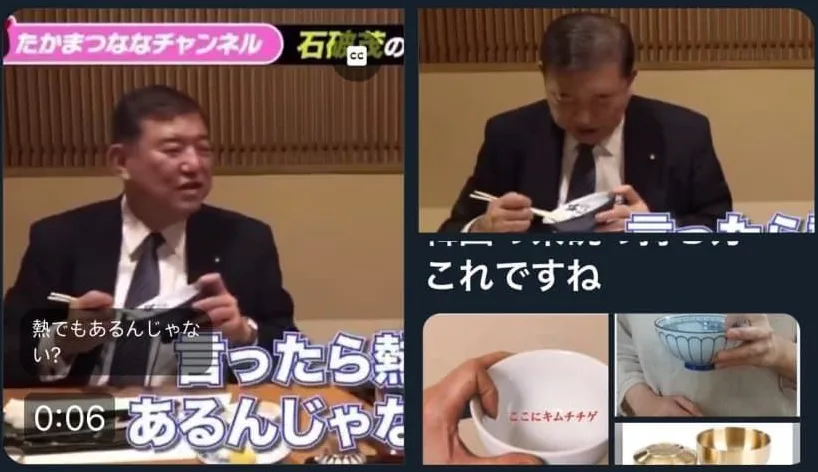
The thumb rests on the outer rim of the bowl, the index and middle fingers support the base, and the ring and little fingers assist naturally. Recently, Japan’s Prime Minister Ishiba stirred controversy over the position of his index finger while eating. He was accused of holding the bowl the “Korean way” (持ち方) for putting his index finger inside the bowl, and was even insulted as a Korean resident of Japan.
In China, too, it is common to eat rice with chopsticks while holding the bowl. In Chinese culture, holding the bowl is not seen as rude or crude. It is the most common and natural way to eat. When eating rice with chopsticks in particular, people find it convenient to lift the bowl, since you can eat efficiently without spilling.
The chopsticks differ among Korea, China, and Japan, too. Japanese and Chinese friends always say the same thing at Korean restaurants: "Don’t metal chopsticks get hot when you eat hot food, since metal conducts heat so well?" I have been asked this many times. Korea mostly uses metal chopsticks, Japan pointed wooden ones, and China long, square-ended wooden ones. Korea’s metal chopsticks seem to reflect a focus on practicality and hygiene, tied to a food culture of sharing many side dishes, rice, soup, and grilled meat together. Japan, by contrast, has many seafood dishes and delicate cuisine, so pointed wooden chopsticks suit separating flesh from bone and make it easy to pick up food in small, bite-sized pieces. China has a strong tradition of sharing food in large groups with family and friends, so long chopsticks have the advantage. Long chopsticks make it easy to serve hot food or large dishes and are useful for handling large quantities at once. They also work well for Chinese stir-fries and noodle dishes.
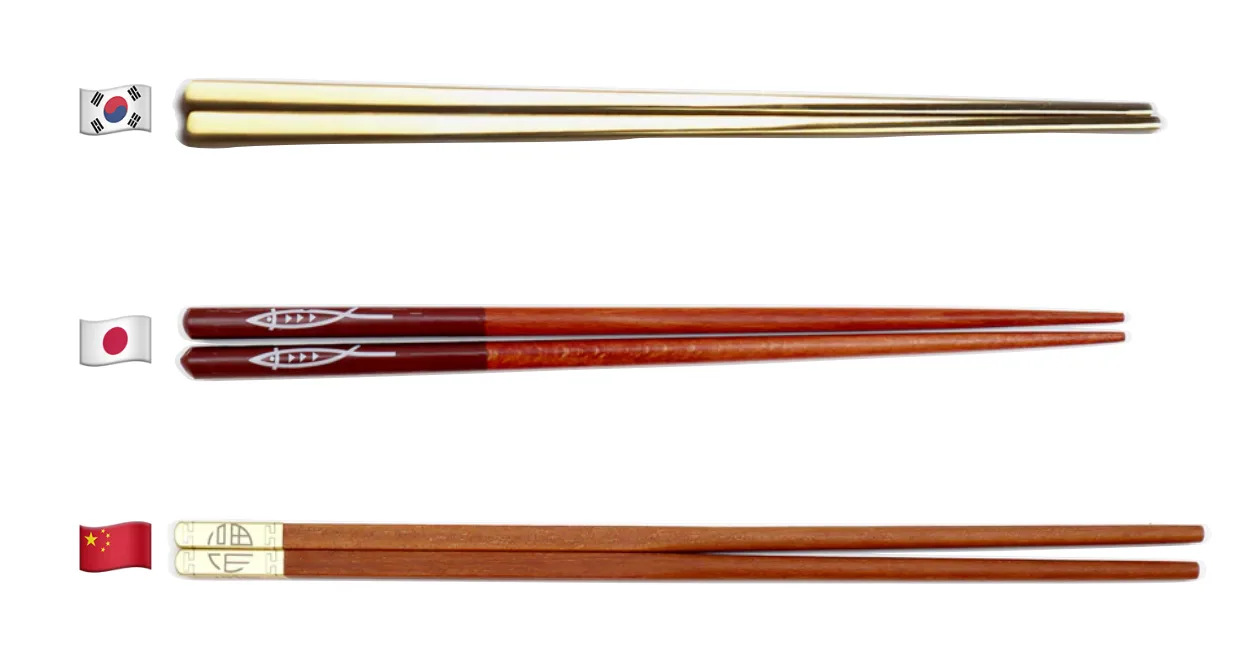
Table manners and utensils in these three East Asian countries show how each culture lives. Korea’s metal chopsticks and the custom of leaving the bowl on the table, Japan’s graceful way of lifting the bowl, and China’s practical long chopsticks and bowl-lifting style each grew out of their own traditions and needs. These differences are a good way to understand each other’s cultures more deeply. Whether you lift your rice bowl or leave it on the table, what matters is the warmth you share with the people at the meal.