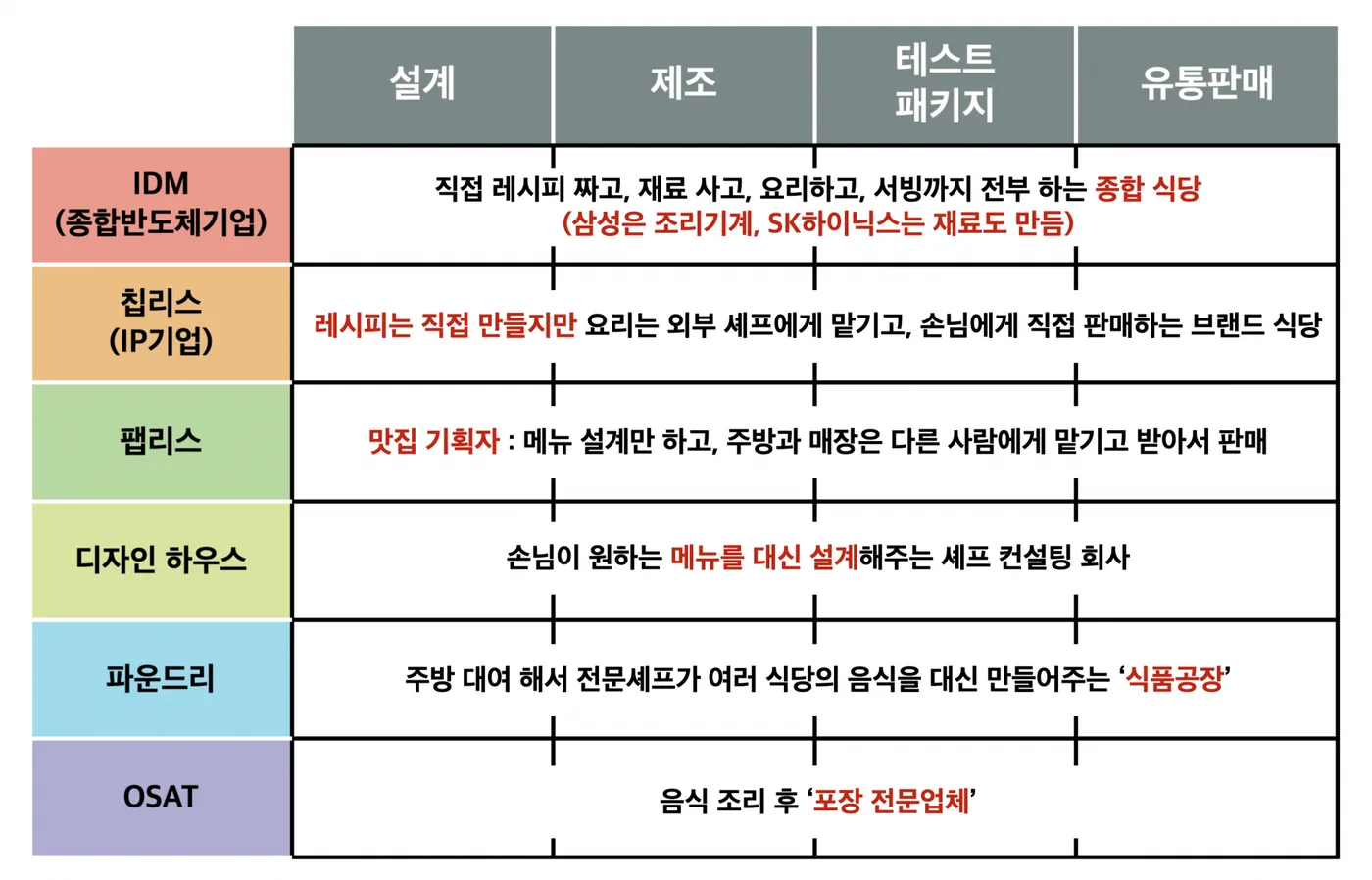
Think of the semiconductor industry as a restaurant business. An IDM is a “full-service restaurant” that writes the recipe, shops, cooks, and serves, all on its own. A chipless company is a “brand restaurant” that creates only the recipe and leaves the cooking to an outside chef. A fabless company is like a restaurant planner who designs only the menu and hands the kitchen to someone else. A design house is a “chef consulting firm” that designs the menu a customer wants. A foundry is a “food factory” that cooks dishes for many restaurants, and OSAT is a “specialist packaging company” that packs the finished food.
Hello, this is John Kim, CEO of Nanum Consulting.
With the recent news that TSMC’s Kumamoto fab in Japan is up and running, many faces come back to me: a sales rep from a U.S. chemical company, about my age at the time, in my mid-30s, at Hsinchu Science Park in Taiwan in the mid-to-late 2000s; the engineer from a small Japanese semiconductor equipment maker who stayed in the next room at the business hotel where I lived for long stretches; and the Taiwanese distributor owner, who has since passed away and taught me so much. Working alongside industry people (mostly senior to me) at TSMC and UMC in Taiwan and SMIC in China was a precious experience that taught me the true nature of the semiconductor industry.
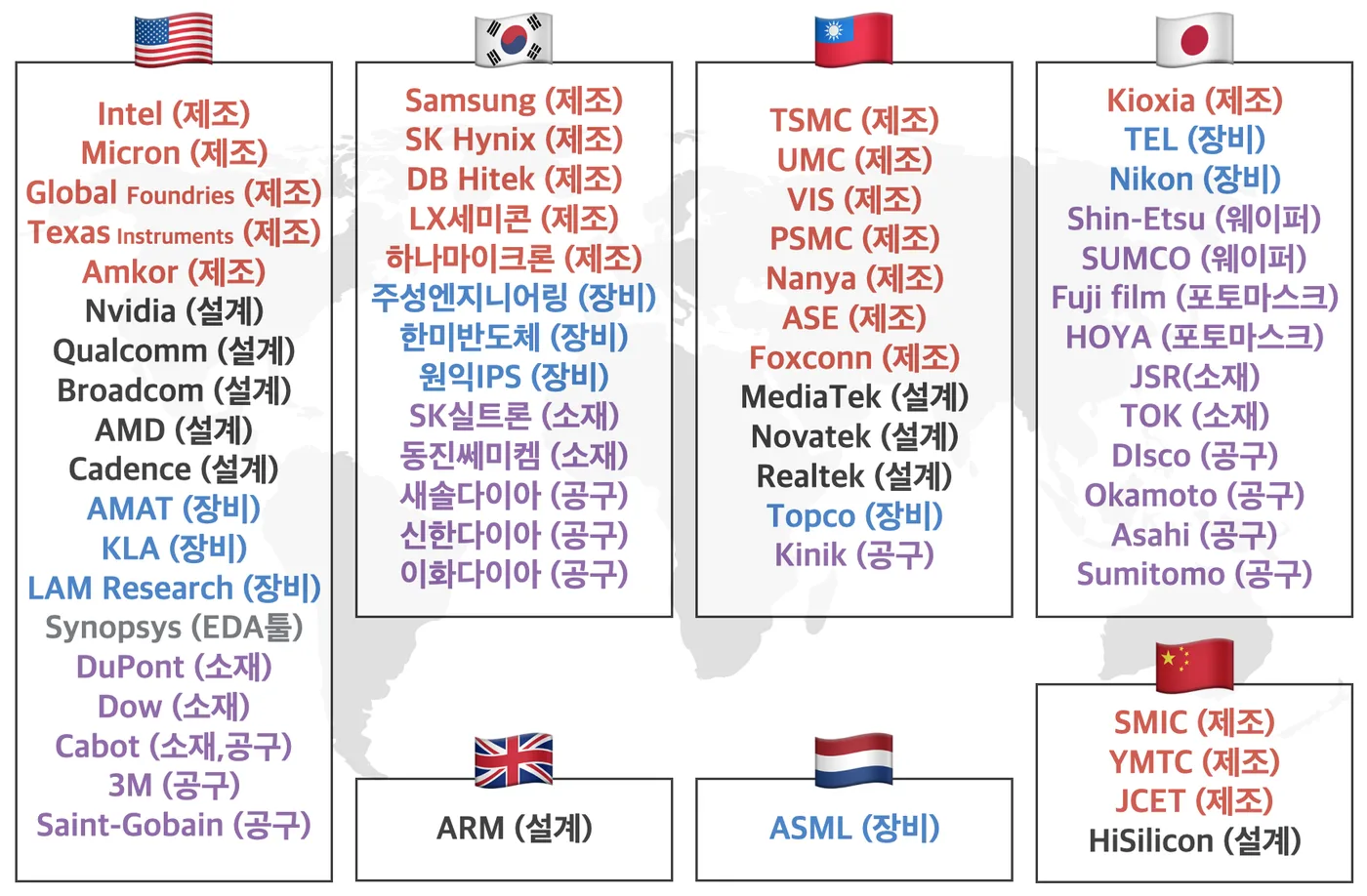
The secret of semiconductor powerhouses was their 'service mindset'
In 2007, while I was waiting for my contact in the lobby of TSMC Fab 8, many people showed me an article saying 'Korea’s per-capita GDP has overtaken Taiwan’s.' It was the height of the memory chip price war, and sighs of "Samsung is a bunch of devils" were heard all around. A purchasing executive even told me, "I’m sick of you Koreans. Get out of my sight." And yet I still vividly remember the pride I sensed in their passion and the intensity in their eyes. I am convinced that TSMC’s share of over 60% of the global foundry market came not only from cutting-edge technology but from its sincere devotion to customers. Jason, who was then in charge of processes at Powerchip (PSC) and is still in touch with me, recently sent me a Facebook message: "John, I still find it really impressive how you opened your laptop in the reception room and explained the root cause using your own drawings of macro scratches and micro scratches on wafers. It was so easy to understand..."
Semiconductors: Now Essential Knowledge for Everyone
As chipmaking moves past 5nm and 3nm toward 2nm, semiconductors are no longer the preserve of one industry. They underpin every advanced technology, from AI and autonomous driving to the metaverse and life sciences, and have become basic knowledge for anyone working today. Yet many people still see semiconductors as difficult and highly specialized. "I studied the humanities and my job has little to do with chips. Can I really follow this?" That is a common worry. My own undergraduate degree is in English literature and my graduate degree is in business administration. Seventeen years ago, engineers at TSMC, PSC, and MXIC valued my knack for explaining things simply. I drew on that to build this course, which I spent a long time developing.
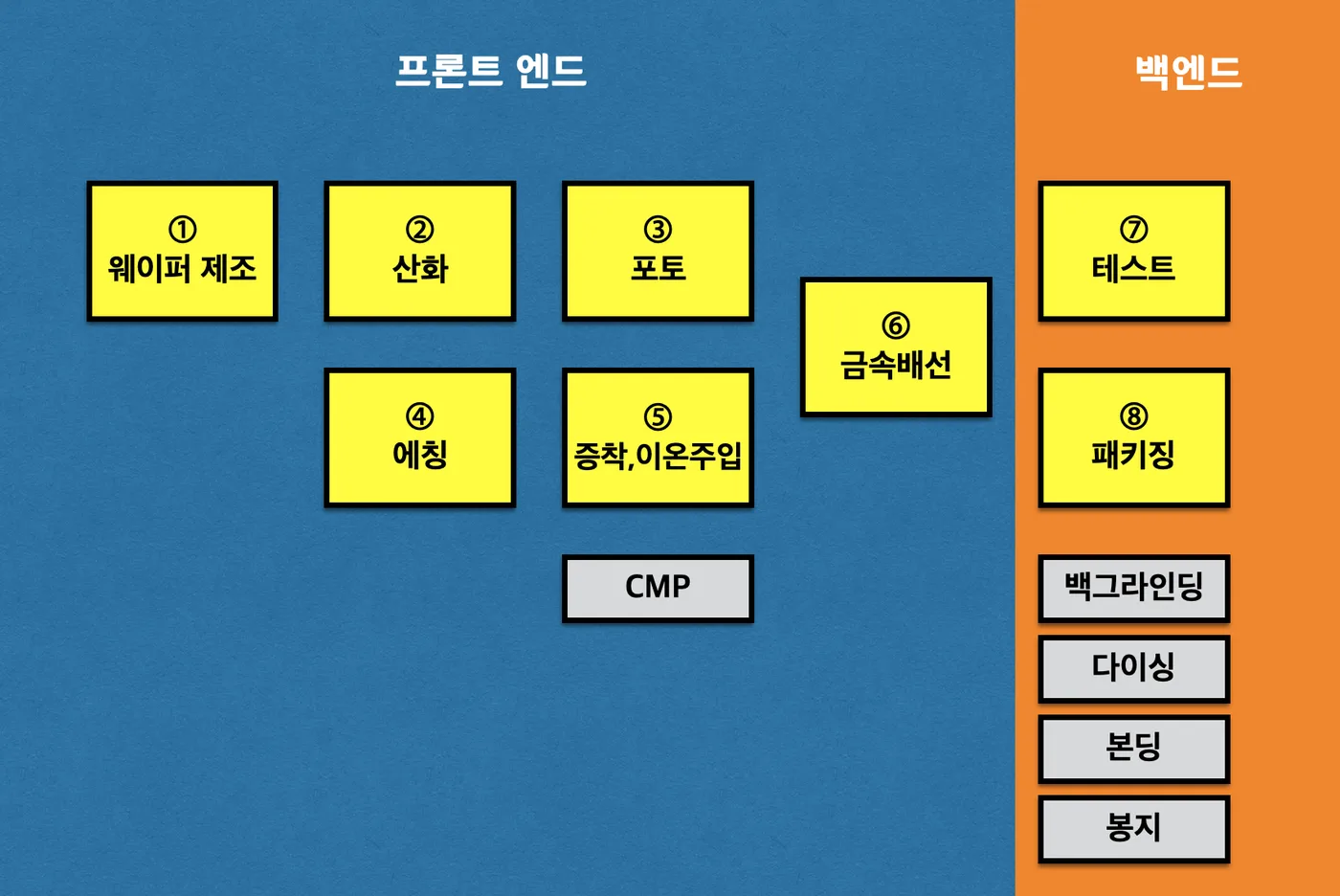
“Semiconductors Made Easy” – In everyday language, not expert jargon
The “Semiconductors Made Easy” course moves beyond memorizing terms or listing technical explanations. You understand through pictures, connect ideas to everyday analogies, and remember them through behind-the-scenes industry stories (people and anecdotes).
For example, when explaining the semiconductor photolithography process:
The old way: "In the exposure process using a DUV light source, through the reticle..."
The new way: "Just as a photo studio shines light onto film to imprint an image, we draw patterns on a semiconductor wafer with a special kind of light..." and "EUV is an ultra-fine mechanical pencil. The old pen (light) was thick, so the circuit lines smeared. But circuits keep getting smaller. So we needed a sharper, more precise pen, and that is EUV, the ultra-fine pen."
Built on hand-drawn illustrations and vivid real-world experience, the stories are designed so that even people new to semiconductors can understand them easily and enjoyably.
Customized semiconductor training for companies and organizations
Just as TSMC invests heavily in developing its people, companies and organizations now need systematic training to understand semiconductors.
See the detailed curriculum and teaching approach at the link below.  https://nanumcon.com/198
"If you can’t explain it simply, you don’t really understand it."
Putting Einstein’s words into practice, we explain semiconductors in a truly simple and enjoyable way.
Deep understanding, simple explanations. See for yourself in the ‘Semiconductors Made Easy’ training.
Thank you.
John Kim, Nanum Consulting