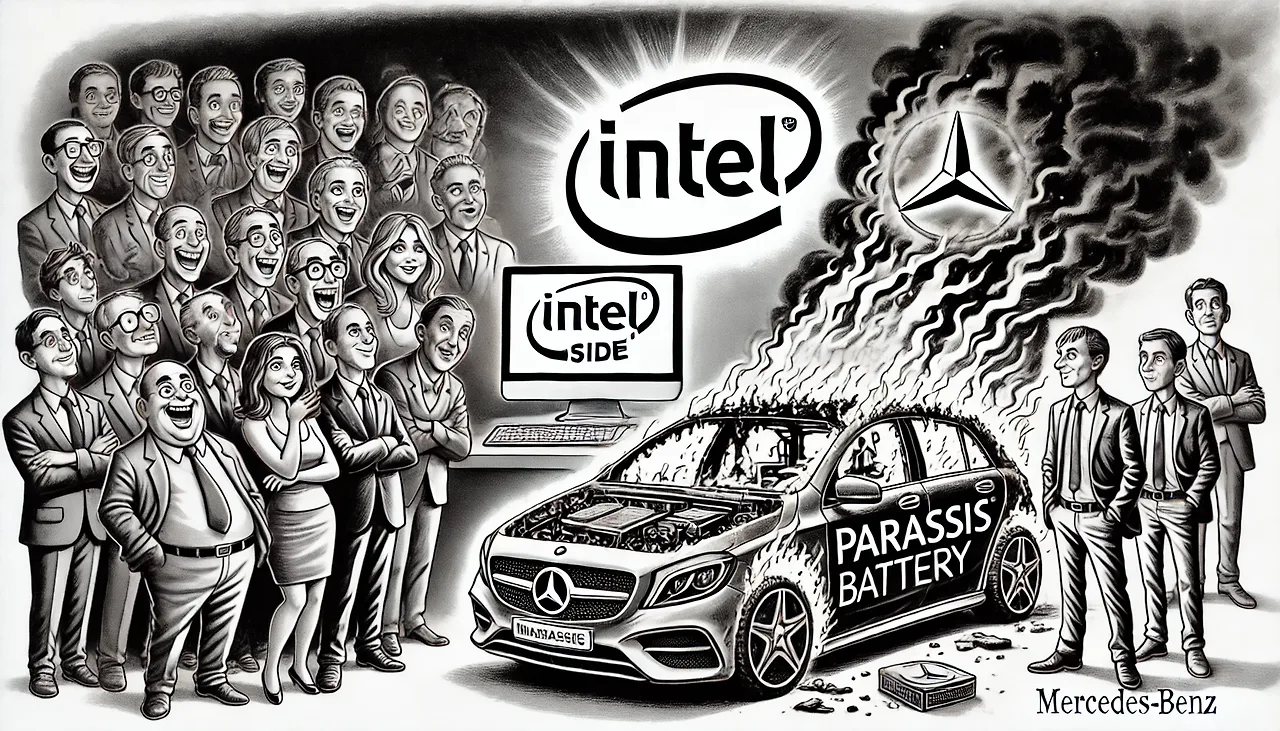
B2B (business-to-business) brands, especially those tied to components and materials, rarely catch consumers’ eyes, yet their impact is far greater than most people assume. These brands can make or break a company. Today, we compare two contrasting cases: the successful B2B brand ‘Intel Inside’ and the recent battery controversy surrounding the Mercedes-Benz electric vehicle fire.
First, let’s look at the success story behind ‘Intel Inside’. Intel launched the campaign in 1991. At the time, most consumers paid little attention to the CPU, a component inside the computer, and tended to notice and care only about computer makers such as Samsung and LG. Intel’s strategy was to give marketing support to any manufacturer that put an ‘Intel Inside’ sticker on computers equipped with its processors. It was a huge success: Intel built strong brand power even in the consumer market and gained the upper hand in its relationships with computer makers. Before long, consumers came to see computers with Intel CPUs as superior products. The ‘Intel Inside’ campaign is a classic example of a B2B brand directly influencing consumers, and it rested on trust in the quality of Intel’s products and services.
By contrast, the recent Mercedes-Benz EV fire at an apartment complex in Cheongna, Incheon shows how a B2B brand like 'Farasis' can create a negative perception. The incident badly damaged the premium image and consumer trust that Mercedes-Benz has built over many years, and raised doubts about its quality and safety. Would buyers who paid nearly KRW 100 million (≈ US$74,800) for a car trust Mercedes-Benz when the battery, the core component of an EV, comes from 'Farasis', a manufacturer ranked only around 10th in the industry? Doubts like these push consumers toward brands they see as safer. In fact, competitors are already exploiting Mercedes-Benz’s weak spot by publicly naming their own battery suppliers. Moreover, Mercedes-Benz is increasingly likely to face recalls and legal action, which could mean not only financial losses but also lasting damage to the company’s reputation.
These two cases are a reminder of why B2B brand strategy matters. Quality-based B2B branding can create a strong link that reaches past business relationships to the end consumer. But if a company neglects the management of components and materials that deeply affect end consumers and focuses only on short-term profit, the result is a chain reaction of distrust that can seriously damage the brand value of both suppliers and their clients.
‘Intel Inside’ and the Incheon Mercedes-Benz EV fire show starkly how a B2B brand can affect consumers, for better or worse, at the point where it reaches them. Intel built strong brand awareness, while the Mercedes-Benz case will likely remain a textbook example of how the way a company handles supplier management and quality problems can badly damage brand value.
Can ‘Mercedes-Benz’ remain a luxury premium brand in the age of electric vehicles?