This 6-hour Diversity course, led by John Kim, CEO of Nanum Consulting, builds the diversity management skills that modern workplaces require. Across six modules, from the core elements of diversity management to gender, generational, and globalization issues, participants gain a broad view and develop the creative thinking needed to improve communication and collaboration at work. A hands-on curriculum that links diversity management with change management shows how to raise inclusion and productivity at the same time. Theory and practice are balanced, so participants leave with diversity management skills they can apply on the job right away. The curriculum draws on Nanum Consulting’s training experience with 50+ major corporations and institutions.
Who is this course for?
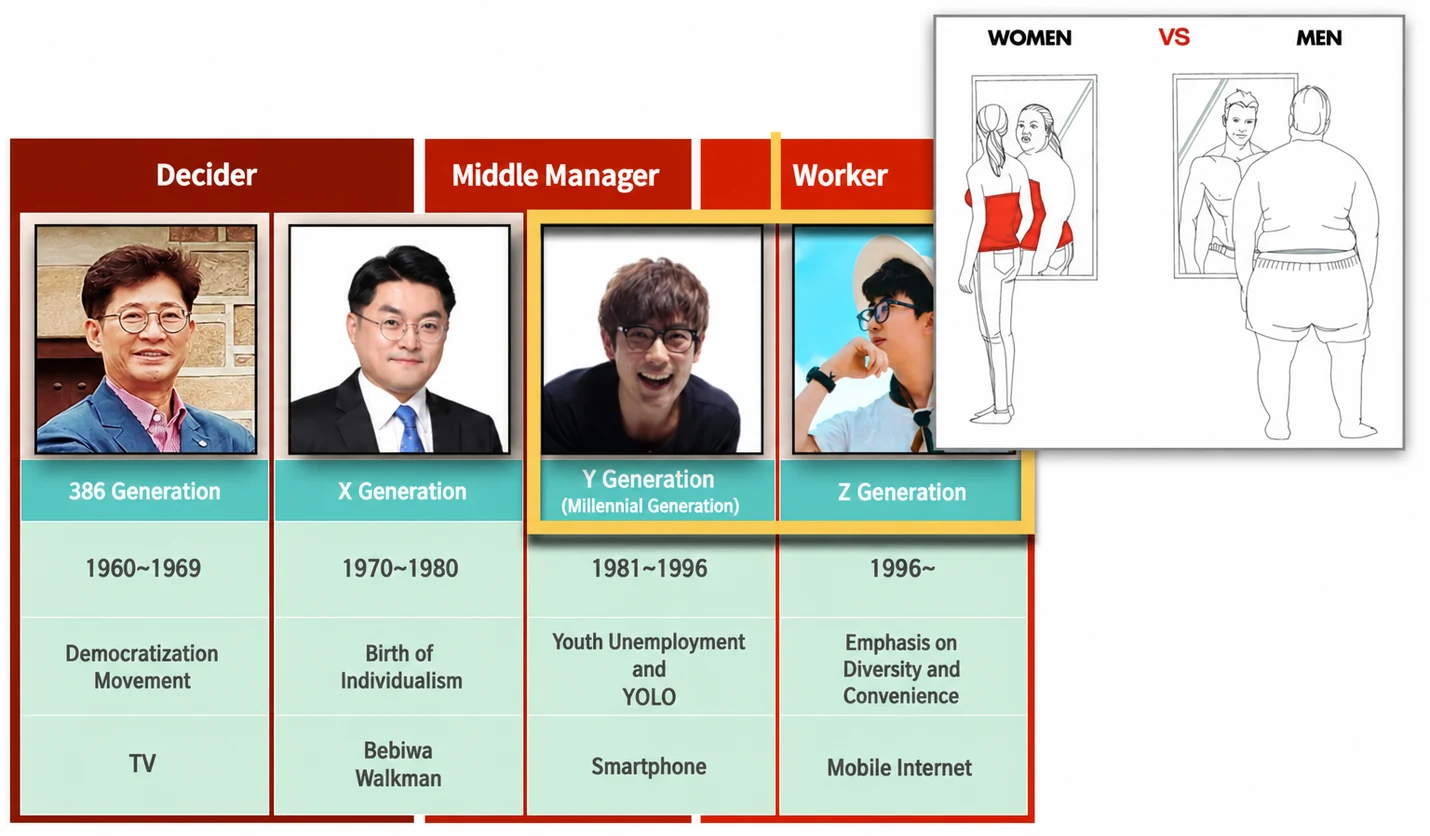
Managers and team members in organizations where multiple generations work together, from the 386 generation to Gen Z. It is essential for employees at every level, including decision-makers, middle managers, and practitioners, who need cross-generational understanding and collaboration.
What will you learn?
- Strengthening Systematic, Creative Thinking on Diversity Management
- Systematic learning of foundational knowledge on diversity
- Improves employees’ communication and collaboration skills
Curriculum
- Cirque du Soleil (best) and Nokia (worst) cases
- The meaning and importance of diversity management (essential, not optional)
- Results of diversity management (e.g., Citibank, Johnson & Johnson)
- Diversity issues at global companies
- (More women in the workforce, new generations joining, growing numbers of overseas customers & employees)
- Elements of diversity management (3G: Gender, Generation, Globalization)
- Sharing case studies on gender differences
- Root causes of differences and recent trends
- How to maximize synergy between men and women (1:1 exercise)
- Physical distance and psychological gap
- Generations in the workplace and how they see each other
- Handling workplace situations (team activity: Situations 1, 2, 3)
- Korean business culture through foreigners’ eyes
- Cultural differences across countries (quantitative analysis)
- Preparing for business meetings by country (group exercise)
- Change management self-assessment (radar chart)
- Change and success for individuals and organizations (ownership)
- Motivation for change
Expected results / After the course
- Greater awareness of the importance of diversity management across the company
- Gaining insight into how to collaborate
- Diversity management: success and failure case studies
On-site training references
About the instructor

Related courses
We tailor this course to your company
From diagnosis to execution — Nanum Consulting
FAQ

Diversity
The 6-hour Diversity training program led by John Kim, CEO of Nanum Consulting, builds the diversity management skills that today’s workplaces demand.
- Strengthening Systematic, Creative Thinking on Diversity Management
- Systematic learning of foundational knowledge on diversity
- Improves employees’ communication and collaboration skills
- Greater awareness of the importance of diversity management across the company
- Gaining insight into how to collaborate
- Diversity management: success and failure case studies
- Cirque du Soleil (best) and Nokia (worst) cases
- The meaning and importance of diversity management (essential, not optional)
- Results of diversity management (e.g., Citibank, Johnson & Johnson)
- Diversity issues at global companies
- (More women in the workforce, new generations joining, growing numbers of overseas customers & employees)
- Elements of diversity management (3G: Gender, Generation, Globalization)
- Sharing case studies on gender differences
- Root causes of differences and recent trends
- How to maximize synergy between men and women (1:1 exercise)
- Physical distance and psychological gap
- Generations in the workplace and how they see each other
- Handling workplace situations (team activity: Situations 1, 2, 3)
- Korean business culture through foreigners’ eyes
- Cultural differences across countries (quantitative analysis)
- Preparing for business meetings by country (group exercise)
- Change management self-assessment (radar chart)
- Change and success for individuals and organizations (ownership)
- Motivation for change