Understanding Millennials & Gen Z: Emotional Leadership (for Gen X)
Gen X managers often struggle with a communication gap with Millennials and Gen Z. In this course, John Kim, CEO of Nanum Consulting, shows how to work better with your frontline teams. Across a focused 2 hours, you learn the 'Adapt' module, which helps you understand and adjust to generational differences, and the 'Empathy' module, which builds empathy-driven execution. Drawing on Gen X leaders' existing leadership experience, the course develops emotional leadership skills suited to Millennial and Gen Z traits, so communication and teamwork improve across your organization. The curriculum draws on Nanum Consulting's experience training 50+ major corporations and institutions.
Who is this course for?
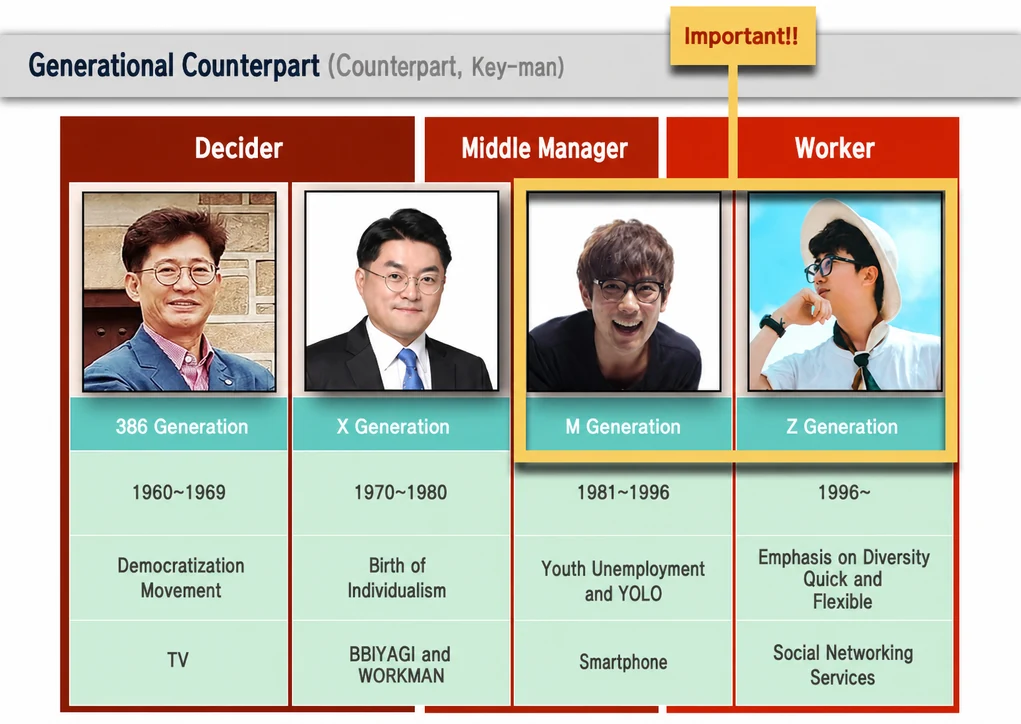
This course is for Gen X middle managers and team leaders. It is designed for leaders who manage and lead Millennial and Gen Z employees, helping them learn how to communicate across generations and lead effectively.
What will you learn?
- Improve communication and collaboration with Millennials and Gen Z
Curriculum
- Traits of the 1970s, 1980s, and 1990s Generations
- → Born in 1975: caught between the college entrance exam, the IMF crisis and the financial crisis (the sandwich generation)
- Rapid Change: Individuals, Companies, Society
- → Change the Driver: Millennials and Gen Z (internal and external customers)
- Am I an Out-of-Touch Boss? (Checklist)
- Working Together with the 1990s Generation
- → Why they work, how they see things, and their work style
- A Close Look at Those Born in the 1990s: Their Background and Empathy
- (Pure, Fun, Frank)
- → No micromanaging; yes to collaboration, fun, learning, breathing room and meaning
- Emotional Leadership / Elements of Emotional Intelligence
- → Self-awareness, self-management, social awareness, social skills
- Super STAR Model (Action Plan)
- Self Talk: Recognize Your Own and Your Team’s Limits, Build Empathy (Praise)
- Stop: Control Emotions and Impulses (Time & Space), No Blame or Reprimand
- Target: Empathize with and Respect Followers’ Goals and Roles & Responsibilities (Forms of Address)
- Ask: Analyze the Causes of Conflict (e.g., Work-Life Balance, Expectations of Rewards)
- Rule Reminder: From Coercion and Avoidance to Cooperation and Compromise (Share the Vision)
- Communication Basics: Listening, Praise, Questions
- Remind! Focus on These Basics (Action Guidelines)
Expected results / After the course
- Better Communication with Millennials and Gen Z
On-site training references
About the instructor

Related courses
We tailor this course to your company
From diagnosis to execution — Nanum Consulting
FAQ

Understanding Millennials & Gen Z: Emotional Leadership (for Gen X)
Gen X managers often struggle with a communication gap with Millennials and Gen Z. In this course, John Kim, CEO of Nanum Consulting, shows how to work better with your frontline
- Improve communication and collaboration with Millennials and Gen Z
- Better Communication with Millennials and Gen Z
- Traits of the 1970s, 1980s, and 1990s Generations
- → Born in 1975: caught between the college entrance exam, the IMF crisis and the financial crisis (the sandwich generation)
- Rapid Change: Individuals, Companies, Society
- → Change the Driver: Millennials and Gen Z (internal and external customers)
- Am I an Out-of-Touch Boss? (Checklist)
- Working Together with the 1990s Generation
- → Why they work, how they see things, and their work style
- A Close Look at Those Born in the 1990s: Their Background and Empathy
- (Pure, Fun, Frank)
- → No micromanaging; yes to collaboration, fun, learning, breathing room and meaning
- Emotional Leadership / Elements of Emotional Intelligence
- → Self-awareness, self-management, social awareness, social skills
- Super STAR Model (Action Plan)
- Self Talk: Recognize Your Own and Your Team’s Limits, Build Empathy (Praise)
- Stop: Control Emotions and Impulses (Time & Space), No Blame or Reprimand
- Target: Empathize with and Respect Followers’ Goals and Roles & Responsibilities (Forms of Address)
- Ask: Analyze the Causes of Conflict (e.g., Work-Life Balance, Expectations of Rewards)
- Rule Reminder: From Coercion and Avoidance to Cooperation and Compromise (Share the Vision)
- Communication Basics: Listening, Praise, Questions
- Remind! Focus on These Basics (Action Guidelines)